

Quick Answers
- Is Young Jedi Adventures canon? Yes. Star Wars: Young Jedi Adventures is part of the modern Star Wars canon, not a separate non-canon preschool universe.
- The series takes place during the High Republic era, roughly 200 years before Star Wars: The Phantom Menace.
- That places it centuries before the Clone Wars, Order 66, the Galactic Empire, Luke Skywalker, and most events in the Skywalker Saga.
- Familiar characters such as Yoda can appear because they were already alive during the High Republic. In contrast, characters such as Anakin Skywalker, Obi-Wan Kenobi, and Luke Skywalker had not yet been born.
- Within the broader Star Wars animation timeline, Young Jedi Adventures comes long before The Clone Wars, The Bad Batch, Rebels, and Resistance.
- Its child-friendly tone does not affect its canon status. Star Wars canon includes stories written for very different age groups and audiences.
Proof & Sources
The series' official Star Wars material identifies Young Jedi Adventures as a story set during the High Republic era. The High Republic is an established period in modern Star Wars continuity, set generations before the prequel trilogy.
- Star Wars: Young Jedi Adventures – StarWars.com
- Star Wars: The High Republic – StarWars.com
- Star Wars Official Site
If Young Jedi Adventures features familiar Jedi concepts, Yoda, lightsabers, and the Force, but looks much lighter than The Clone Wars or the films, does it really happen in the same canon galaxy?
Yes, Young Jedi Adventures is canon.
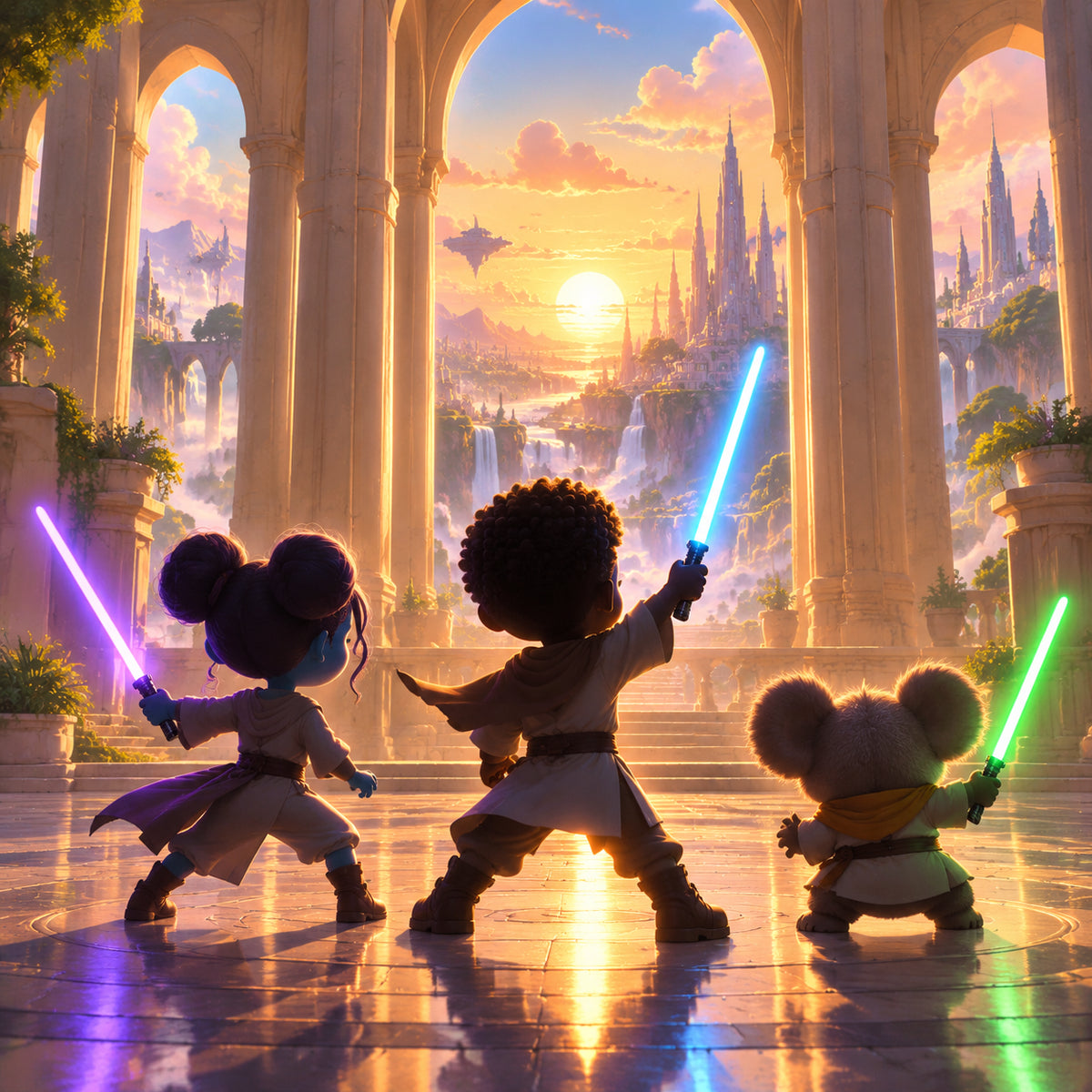
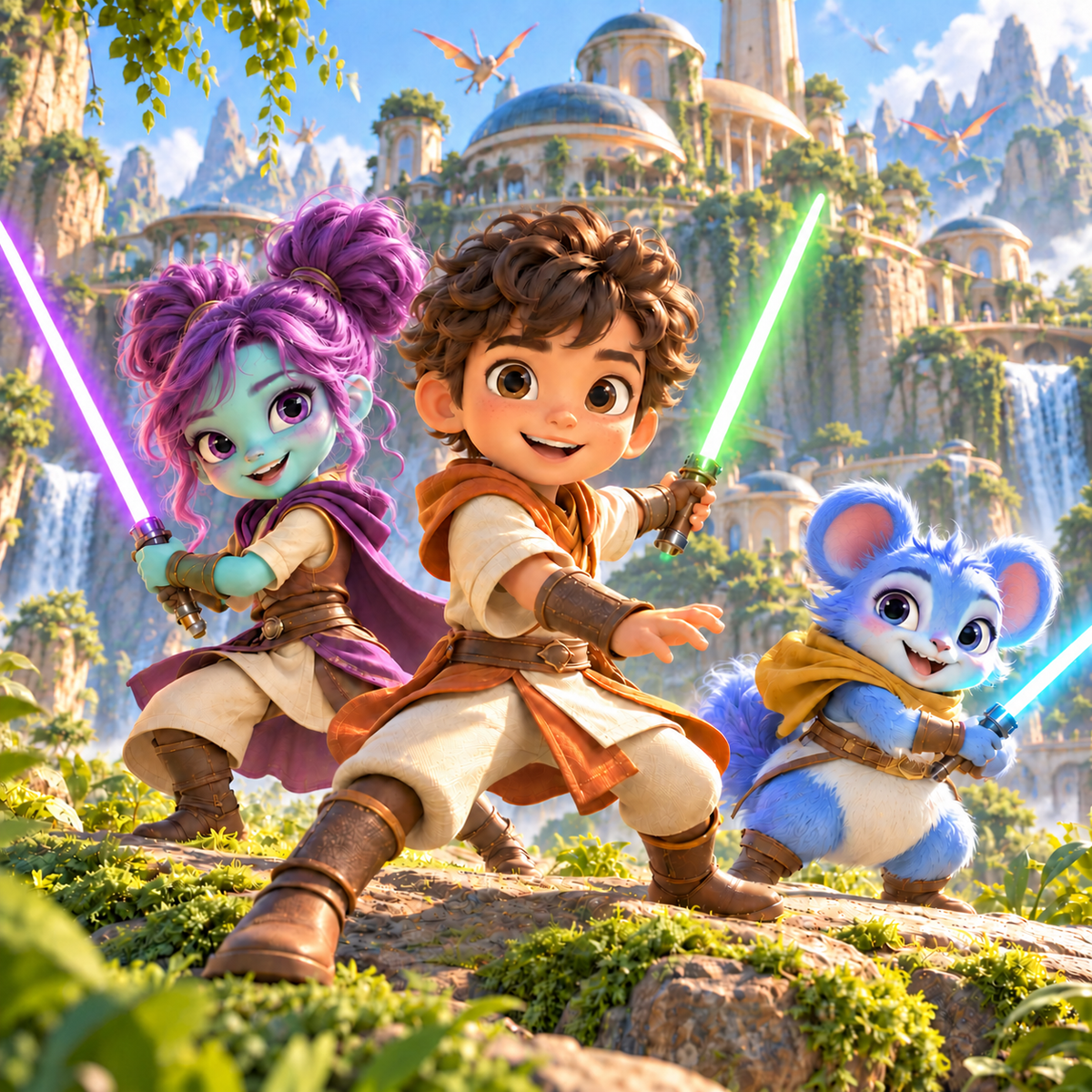
The answer to Young Jedi Adventures canon is straightforward: the series belongs to modern Star Wars continuity. Its younger target audience doesn't place it in a separate universe, and its colorful animation doesn't make its events automatically less official than stories told in live action. Kai Brightstar, Lys Solay, Nubs, Master Zia Zanna, Nash Durango, and the locations and adventures surrounding them exist within the same broad continuity that contains the High Republic, the prequel trilogy, the original trilogy, and the later sequel era.
This distinction matters because Star Wars has a long history of animated productions with very different relationships to continuity. Some older projects were created before the modern canon structure was established. At the same time, current productions can belong directly to the official narrative even if their style or intended age group differs dramatically. Young Jedi Adventures should therefore be evaluated by its official continuity placement rather than by how serious or visually realistic it appears.
The series is especially easy to misunderstand because its tone is much gentler than The Clone Wars. Its heroes learn lessons about cooperation, patience, responsibility, creatures, friendship, and helping local communities rather than spending most episodes inside a galactic military conflict. That difference is intentional. It reflects both the characters' age and the historical period they live in.
Canon does not require every Star Wars story to operate at the same scale. A small rescue on Tenoo and the Battle of Coruscant can exist in the same fictional history even though they serve completely different narrative purposes.
Why some viewers assume it might not be canon
The confusion usually comes from presentation. Young Jedi Adventures is explicitly designed for younger children, so its visual language, episode structure, humor, danger level, and moral lessons are more straightforward than those of many other Star Wars productions; for audiences accustomed to The Clone Wars, Rebels, or live-action series, that can make it feel almost like an educational spin-off.
But tone and continuity are separate questions. Star Wars can tell a simple story about a Jedi student learning to cooperate and still place it in the same timeline as darker events centuries later.
Animation creates similar misconceptions. Some viewers still treat live action as inherently "more canon" than animation, even though modern Star Wars continuity doesn't work that way. Characters and events introduced in animation can matter directly to live-action stories, and the medium itself does not determine whether something belongs to continuity.
The correct test, therefore, is not whether a series looks serious enough. The correct question is whether official Star Wars material places it inside canon. In the case of Young Jedi Adventures, the answer is yes.
The key to the timeline is the High Republic.
To understand exactly where the series belongs, the most important term is High Republic. This historical era is set generations before the Skywalker Saga, when the Galactic Republic and Jedi Order operate very differently from the institutions viewers encounter in the prequel films.
The Jedi are widespread, visible, and actively involved in exploration and peacekeeping across the galaxy. Their Order has not yet reached the final decades leading up to the Clone Wars and its destruction under Order 66. That lets the series show Jedi temples, Masters, students, and community service without the shadow of immediate collapse hanging over every story.
The High Republic also gives the show room to create new young characters without constantly colliding with Anakin, Obi-Wan, Palpatine, or the political crises surrounding the Skywalker era. The setting feels Star Wars recognizably while remaining historically separate from the most familiar film conflicts.
That distance is one of the series' biggest advantages. Children can learn what the Jedi aspire to be before learning what eventually happens to the Order.
Learn more: A Complete Timeline Of The High Republic In 'Star Wars' (So Far)
How long before The Phantom Menace does it happen?
A useful approximation is about 200 years before The Phantom Menace. That means the young Jedi of this series live many generations before Anakin Skywalker enters the Jedi story.
This gap is enormous by ordinary character standards. Humans who appear in Young Jedi Adventures would not normally be expected to survive into the prequel trilogy. Political conditions would change dramatically over the intervening centuries, and the Jedi Order would evolve before reaching the version Qui-Gon Jinn and Obi-Wan Kenobi knew.
That is why viewers shouldn't expect Kai Brightstar to cross paths with a young Obi-Wan or Anakin casually. Those characters belong to a much later period.
At the same time, the gap is not so large that the entire galaxy is unrecognizable. The Republic exists, the Jedi Order exists, lightsabers are established, hyperspace travel is normal, droids are widespread, and many institutions familiar to Star Wars viewers already operate.
The High Republic is therefore distant enough to feel historically different but close enough to remain unmistakably part of the same galaxy.
Yoda helps prove how the eras connect.
Yoda is one of the most useful characters for understanding the timeline because his exceptionally long life lets him appear in both the High Republic and the Skywalker-era films.
His presence in Young Jedi Adventures doesn't mean the series happens close to The Phantom Menace. It shows the opposite: Yoda is unusually long-lived and acts as a bridge across centuries of Jedi history.
During the High Republic, he is already an experienced Jedi. Much later, he will still be alive to train generations associated with the prequel era and eventually Luke Skywalker.
That creates fascinating historical perspective for older viewers. Young children can see Yoda as a wise Jedi Master. Fans who know the broader timeline understand that he will eventually witness the rise of the Sith, the Clone Wars, Order 66, the destruction of the Jedi Temple, and decades of exile.
The series does not need to mention any of those events for the connection to exist.
The Jedi Order is very different from the one seen in the prequels.
One of the most valuable timeline differences is the Jedi Order's condition. In The Phantom Menace, Attack of the Clones, and Revenge of the Sith, viewers encounter an institution moving toward an enormous crisis. Political tension rises, the Sith return, war begins, and the Jedi gradually become military leaders.
Young Jedi Adventures takes place before that final decline.
Its Jedi can therefore focus more openly on the responsibilities normally associated with guardianship. Training may involve helping communities, understanding creatures, mediating problems, rescuing people, developing patience, or learning how to use the Force responsibly.
This does not mean the entire High Republic is peaceful or that nothing dangerous occurs elsewhere in the era. Other High Republic stories explore major threats and serious conflicts. The difference is that Young Jedi Adventures shows the period through the eyes of young students whose education doesn't yet revolve around becoming generals.
That perspective makes the later prequel era feel more tragic by comparison.
Young Jedi Adventures is not a direct prequel to The Phantom Menace.
Calling the series "before The Phantom Menace" is accurate, but calling it a direct prequel would be misleading.
A direct prequel typically focuses on events that immediately set up the next story. Young Jedi Adventures is separated from Episode I by roughly two centuries. Its characters don't spend each episode building toward the Trade Federation blockade of Naboo, Anakin's discovery, or Darth Maul's emergence.
Instead, the series adds to the Jedi Order's broader historical background.
It shows that the Jedi had a long institutional life before the Skywalker Saga. Younglings trained, Masters taught, temples operated, and Jedi helped communities long before the specific crisis that would eventually destroy the Order.
The series therefore enriches context rather than directly setting up Episode I.
Where does it sit compared with The Acolyte?
Within the broader High Republic period, different Star Wars stories can occur at very different points. The Acolyte, for example, is also associated with the High Republic era but takes place much closer to the beginning of the prequel trilogy than the earliest High Republic stories.
The key takeaway is that "High Republic" isn't a single year. It covers a substantial period of history.
Young Jedi Adventures occupies its own place within that larger historical framework. Viewers should therefore avoid assuming that every character from every High Republic story is active at the same time.
This is like saying both The Phantom Menace and Revenge of the Sith belong to the prequel era. They fall within the same broad historical phase while still taking place at different moments.
Understanding eras, rather than treating them as single dates, makes the full Star Wars animation timeline much easier to follow.
Young Jedi Adventures comes long before The Clone Wars.
The chronological gap between Young Jedi Adventures and The Clone Wars is one of the most important differences for viewers entering Star Wars through animation.
The Clone Wars takes place after Attack of the Clones and before Revenge of the Sith. By then, a galaxy-wide war has transformed the Jedi Order. Jedi Knights and Masters command clone armies, young Padawans are exposed to military campaigns, and the conflict increasingly pulls the Order far from its traditional peacekeeping role.
None of that has happened during Young Jedi Adventures.
Kai, Lys, and Nubs are learning Jedi principles in a world where the Order still has the institutional stability to educate young students through comparatively normal experiences.
This means the two animated series can almost be viewed as opposite portraits of Jedi life. One shows how the Order hopes young Jedi will learn. The other shows what happens when an entire generation is forced to develop during war.
The Clone Wars takes place centuries later.
Chronologically, there is no direct character progression from Kai's childhood adventures to Ahsoka Tano's Padawan years. The historical gap is too large for normal human characters.
Instead, the connection exists at the institutional level.
Kai and Ahsoka are both young Jedi students, but they inherit very different versions of the Order. Kai trains during a period associated with High Republic confidence and expansion. Ahsoka trains as the Republic collapses into military conflict.
Comparing their experiences can therefore reveal how dramatically the Jedi environment changed over time.
The same organization that can teach one generation through exploration and community service eventually has to send another generation into battle.
That contrast is more useful than forcing direct narrative connections between the two series.
The Bad Batch comes after the Jedi Order falls.
If Young Jedi Adventures shows a thriving Jedi institution, The Bad Batch belongs to almost the opposite historical moment.
The series begins around the transition from the Clone Wars into the rise of the Galactic Empire. Order 66 has devastated the Jedi, the Republic is transforming, clone soldiers face an uncertain future, and Imperial rule begins to change life across the galaxy.
Chronologically, The Bad Batch happens long after Young Jedi Adventures.
This comparison is especially dramatic because the earlier series presents temples, students, Masters, and Jedi activity as ordinary parts of the galaxy. By the time of The Bad Batch, that world has effectively collapsed.
Watching both can make the timeline feel less like a sequence of dates and more like an institution's life cycle.
Rebels belongs to the Imperial era.
Star Wars Rebels takes place years after the Empire has consolidated power and shortly before the original trilogy.
By this point, surviving Jedi are rare. Characters such as Kanan Jarrus carry the trauma of Order 66. At the same time, Ezra Bridger learns about the Jedi in a galaxy where the Order no longer exists as a functioning public institution.
That makes Rebels almost unimaginable to Kai, Lys, and Nubs.
For them, becoming a Jedi means joining an active tradition supported by teachers, temples, and a functioning organization. For Ezra, Jedi identity must be reconstructed through fragments, survivors, old teachings, and personal experience.
Chronologically, this places Rebels long after the High Republic and the prequel trilogy.
It also demonstrates why timeline placement matters to understanding what the word "Jedi" means in each series.
Tales stories can move around the timeline.
Anthology-style stories can be harder to place because individual episodes may occur at very different points.
Rather than assigning an entire anthology to one single year, viewers should place each story according to the character and event it follows.
This differs from Young Jedi Adventures, which has a much clearer historical home in the High Republic.
This distinction helps when building a Star Wars animation timeline. Some animated shows represent a continuous phase of history, while others deliberately jump between different moments.
A chronological viewing order therefore cannot always treat every series as one unbroken block.
Resistance belongs near the sequel era.
Star Wars Resistance sits at the opposite end of the familiar animation chronology from Young Jedi Adventures.
Its story takes place during the First Order and the sequel trilogy, meaning generations of galactic history separate it from the High Republic.
By then, the Republic seen in the young Jedi's era had already undergone multiple transformations: the Clone Wars, the Empire, the Galactic Civil War, the New Republic, and the rise of the First Order.
This enormous distance helps show just how early Young Jedi Adventures really is.
Calling both shows "Star Wars animation" tells us almost nothing about their chronological relationship. One fits into the Jedi Order's ancient background compared with the films; the other overlaps with one of the latest major eras of the Skywalker Saga.
A simple way to understand the animation chronology
Rather than memorizing exact dates immediately, it is easier to think in historical stages. Young Jedi Adventures belongs to the High Republic, well before the prequels. The Clone Wars belongs between Episodes II and III. The Bad Batch begins as the Republic becomes the Empire. Rebels takes place during Imperial rule before the original trilogy. Resistance belongs around the sequel-era conflict.
This sequence creates a clear picture of galactic change.
At the beginning, the Jedi are numerous and publicly established. Centuries later, they become wartime generals. Then their Order is destroyed. Later, survivors and new students operate in hiding, and entirely new political conflicts eventually emerge.
This historical progression is more useful than viewing each animated show as an isolated production.
Read also: How the Clone Wars Shaped the Galaxy: A Look Between Episodes II & III
Why a kids series can still add meaningful lore
A story does not need galaxy-changing consequences to contribute to canon.
Young Jedi Adventures adds detail about what everyday Jedi training looks like during the High Republic. It shows students learning values that older Jedi often discuss in more abstract terms: patience, compassion, cooperation, responsibility, and restraint.
These lessons matter because later stories repeatedly test the Jedi Order's ability to uphold those same principles.
A simple episode about helping someone rather than immediately fighting them can therefore fit naturally into the larger mythology. It shows the ideal being taught before later stories show how difficult it becomes to maintain that ideal.
The series' younger tone changes the lesson's complexity, not the underlying Jedi concept.
Does every episode have major consequences for canon?
No, and it does not need to.
Canon means that the events belong to the same continuity. It does not mean every event must alter the fate of the galaxy.
Luke destroying the Death Star is canon. A young Jedi helping a community on Tenoo can also be canon. The difference is narrative scale, not continuity status.
This distinction matters because fans sometimes treat "canon" as if it means "essential to understanding the main films." Those ideas are not identical.
Some canon stories are central historical turning points. Others show what daily life is like in a particular era.
Young Jedi Adventures primarily operates in the second category.
Does the series contradict the films?
Its broad premise fits comfortably with the known timeline because it occurs centuries before the films.
The Jedi Order is expected to exist during this period, Yoda's presence is consistent with his long lifespan, and the absence of characters such as Anakin or Obi-Wan follows naturally from the chronology.
The much lighter atmosphere also does not create a contradiction. Historical conditions change.
A peaceful Jedi training environment two centuries before the prequels does not mean the later Clone Wars cannot happen. In fact, the contrast helps show how much the galaxy changes between eras.
The key is to avoid treating every High Republic story as though it happens immediately before Episode I.
Why the High Republic is useful for a children's Star Wars series
Setting the show centuries before the Skywalker Saga gives its creators enormous narrative freedom.
They can use Jedi, lightsabers, Yoda, the Force, alien worlds, droids, and familiar Star Wars technology without needing every adventure to interact with Darth Sidious's rise or the coming Clone Wars.
That makes the period ideal for introducing younger viewers to the Jedi as an institution.
The series can teach what a Jedi is supposed to value before viewers encounter stories that put those values under severe pressure.
The High Republic therefore does more than place it on the timeline. It creates the conditions necessary for the show's tone.
Why the series feels more optimistic than later Jedi stories
Historical perspective explains much of the optimism.
In the prequel era, viewers know that the Jedi are moving toward disaster. During the Imperial era, simply surviving as a Jedi can be dangerous. In the sequel era, the question often becomes whether the Jedi tradition can be rebuilt.
Young Jedi Adventures exists before all of that.
Its students can imagine becoming Jedi without assuming their temples will be destroyed, or their teachers hunted. The Order has problems, like any large institution, but it remains a normal part of the galaxy.
That allows the show to focus on possibility rather than survival.
For its intended audience, that difference matters even more.
Where Kai, Lys, and Nubs fit into Jedi history
Kai Brightstar, Lys Solay, and Nubs shouldn't be seen as early versions of Luke, Anakin, or Ahsoka. They belong to their own generation and historical context.
Their significance lies in showing what Jedi childhood can look like when young students have access to teachers, a temple, peers, and an institution not currently fighting for survival.
That perspective fills a part of Jedi history that the major films rarely have time to explore.
The prequels show younglings, but the central narrative quickly turns toward political crisis and war. Young Jedi Adventures can stay focused on that developmental stage.
This makes its characters historically modest but conceptually useful.
Why the series does not need to explain the Sith constantly
A High Republic Jedi story can exist without every episode revolving around a Sith conspiracy.
The Jedi serve an enormous galaxy. Most problems they encounter would naturally involve ordinary people, criminals, travel, accidents, creatures, disputes, or local emergencies rather than another Force-sensitive warrior with a red blade.
This is especially appropriate for young students.
Their education should teach them to respond to many kinds of situations rather than prepare them exclusively for lightsaber duels.
That broader role also helps explain why the Jedi were respected as guardians before becoming military leaders during the Clone Wars.
What the timeline tells us about Yoda
Yoda's presence in the series carries more historical weight than it may initially appear to.
During the High Republic, he already belongs to an ancient Jedi tradition. Yet from the audience's perspective, he still has centuries of history ahead of him.
He will live long enough to see the Order change, watch former students train new generations, confront the return of the Sith, survive the Jedi purge, and eventually teach Luke Skywalker.
That makes Yoda one of the rare characters who can connect the optimistic Jedi world of Young Jedi Adventures with the much darker later eras.
The series does not need to emphasize that future. Simply knowing it exists adds another layer for older fans.
What should viewers watch next if they want chronological context?
For strict chronology, viewers interested in the larger Jedi history should think in eras rather than jumping immediately from Young Jedi Adventures to another children's show.
High Republic material fills the next broad historical gap before the saga approaches the final century leading toward the prequels. The prequel trilogy and The Clone Wars then show the Republic and Jedi entering their great crisis.
After Revenge of the Sith, The Bad Batch explores the Republic's immediate transformation into the Empire. Rebels comes later during Imperial rule, and sequel-era animation such as Resistance belongs much farther ahead.
This Order helps viewers see institutions evolve rather than simply following release dates.
Release order and chronological Order are not the same thing.
Star Wars has rarely been released in strict chronological Order. The original trilogy arrived before the prequels, later series filled gaps between films, and High Republic projects moved centuries backward.
The same principle applies to animation.
A newer animated production can take place much earlier in the fictional timeline than a show released years earlier.
This is why viewers should not assume Young Jedi Adventures belongs near recent live-action stories simply because it is a relatively modern production.
Its production date is modern. Its fictional setting is ancient compared with the Skywalker Saga.
How Young Jedi Adventures fits the complete Star Wars animation timeline
As part of the broader Star Wars animation timeline, Young Jedi Adventures holds one of the earliest major positions among current canon animated series centered on familiar Jedi-era storytelling.
It comes before the prequel trilogy's political crisis, the Clone Wars, the Empire, the Rebellion, and long before the First Order.
That makes it a useful starting point for understanding how radically the Jedi's status changes over centuries.
In the High Republic, a functioning Order supports Jedi identity. During the Clone Wars, that identity becomes entangled with military leadership. During the Imperial period, revealing it becomes dangerous. Later generations must decide whether the tradition can survive or be rebuilt.
The child-focused series therefore sits at the beginning of a much larger historical transformation. 👉 [Explore more lightsabers here.](https://nsabers.com/collections/knight-saber)
Its importance is not that Kai, Lys, and Nubs secretly determine everything that happens later. Their stories matter because they show a functioning Jedi culture before the major collapses familiar to film audiences.
That makes the series easier to place once we stop asking whether it directly connects to Anakin or Luke and instead ask what stage of Jedi history it represents.
The answer is relatively early and optimistic: a High Republic period in which young students can learn what being a Jedi is supposed to mean before later generations discover how hard those ideals are to preserve.
So, is Young Jedi Adventures really part of the same Star Wars story?
Yes. The series is canon; its High Republic setting places it roughly two centuries before The Phantom Menace, and its lighter tone doesn't create a separate continuity.
Its relationship to later animated series is primarily historical rather than character-based. The Clone Wars, The Bad Batch, Rebels, and Resistance all occur much later and show different stages of the galaxy's political and Jedi history.
That chronology is precisely what makes Young Jedi Adventures useful. It gives viewers a picture of Jedi life before war, purge, exile, and reconstruction become dominant themes.
The series may be designed for children, but its place in the timeline isn't imaginary or symbolic. Kai, Lys, Nubs, Yoda, Tenoo, and their adventures belong in the canon High Republic.
For anyone trying to understand Young Jedi Adventures canon, the simplest conclusion is the most accurate: it is a genuine part of Star Wars continuity, set far earlier than most familiar animated shows and offering one of the franchise's clearest looks at Jedi training during a more hopeful age.
FAQs
Is Young Jedi Adventures canon?
Yes. Star Wars: Young Jedi Adventures is part of the modern Star Wars canon.
When does Young Jedi Adventures take place?
It takes place during the High Republic era, roughly 200 years before The Phantom Menace.
Is Young Jedi Adventures part of the High Republic?
Yes. Its characters and stories exist within the broader High Republic era.
Does Young Jedi Adventures happen before The Phantom Menace?
Yes. It is set approximately two centuries before Episode I.
Does Young Jedi Adventures happen before The Clone Wars?
Yes. It takes place centuries before the Clone Wars.
Does Young Jedi Adventures happen before The Bad Batch?
Yes. The Bad Batch begins around the transition from the Clone Wars into the Imperial era, long after the High Republic.
Does Young Jedi Adventures happen before Rebels?
Yes. Rebels takes place during Imperial rule, centuries after Young Jedi Adventures.
Does Young Jedi Adventures happen before Resistance?
Yes. Resistance takes place around the sequel trilogy era, so it occurs much later.
Why can Yoda appear in Young Jedi Adventures?
Yoda belongs to a very long-lived species and was already active as a Jedi centuries before the prequel trilogy.
Are Anakin Skywalker and Obi-Wan Kenobi alive during Young Jedi Adventures?
No. The series takes place far too early for Anakin or Obi-Wan to be alive.
Is Young Jedi Adventures a direct prequel to The Phantom Menace?
No. It occurs much earlier and does not directly set up the events of Episode I.
Is Young Jedi Adventures only canon for children?
No. Canon status doesn't change based on audience age. Its events belong to the same overall continuity as other modern Star Wars stories.
Does the lighter tone make Young Jedi Adventures less canon than The Clone Wars?
No. Tone and target audience do not determine canon status.
Where should Young Jedi Adventures go in a chronological animation watch order?
It belongs much earlier than The Clone Wars, The Bad Batch, Rebels, and Resistance because it takes place during the High Republic.
Is the High Republic the same period as the prequel trilogy?
No. The High Republic occurs generations before the prequel trilogy, although both periods feature an active Jedi Order and Galactic Republic.
Does Young Jedi Adventures contradict the Jedi shown in the prequels?
No. It shows the Order at a much earlier stage in history, before the crises that shape the prequel era.
Do I need to watch Young Jedi Adventures to understand The Clone Wars?
No. The stories are separated by centuries and can be understood independently.
Why is Young Jedi Adventures useful for understanding the Star Wars timeline?
It shows an earlier stage of Jedi history, making it easier to understand how dramatically the Order and Republic change before the Clone Wars, Empire, and later eras.
Join the Nsabers Community
Bring the Force into your world with Nsabers.
✨ Follow Nsabers across the galaxy:
💬 We'd love to hear from you!
Share your thoughts, leave a comment below, or tag us on social media.
May the Force be with you!

Leave a comment
All comments are moderated before being published.
This site is protected by hCaptcha and the hCaptcha Privacy Policy and Terms of Service apply.