

Quick Answers
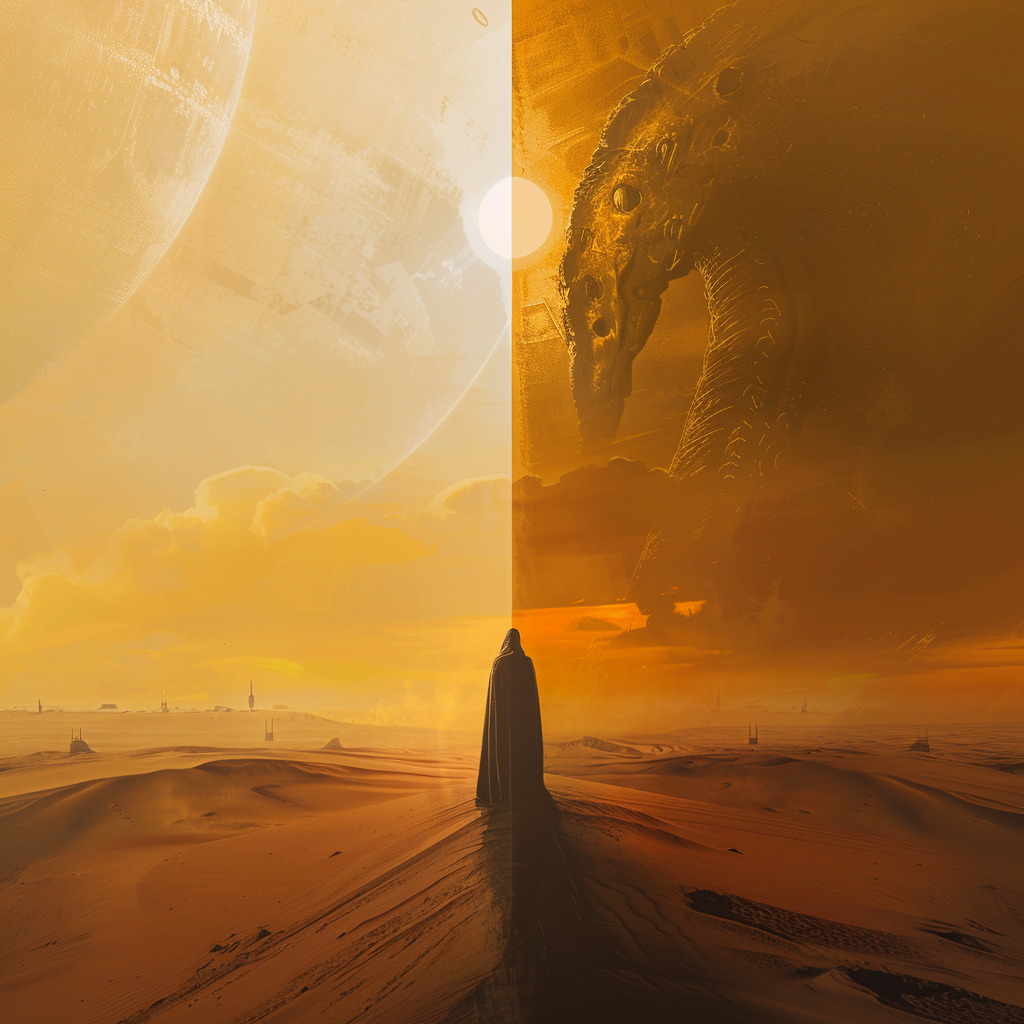
- Dune vs. Star Wars is one of the most enduring sci-fi comparisons because both stories feature desert worlds, prophecy, empires, sacred power, and destiny-driven heroes.
- The strongest Star Wars-Dune comparisons are in atmosphere, symbolism, and worldbuilding logic, not in one-to-one plot copying.
- The most convincing case for sci-fi inspiration, Star Wars, is that Dune helped expand what epic science fiction could feel like before Star Wars arrived on screen.
- But the two stories do not mean the same thing. Dune is more suspicious of saviors and power, while Star Wars is more mythic, emotional, and redemptive.
- The fairest conclusion is that Star Wars likely inherited some of the imaginative space Dune helped open, then transformed it into a very different cinematic saga.
- So if readers ask whether one directly became the other, the answer is no. If they ask whether they share deep creative DNA, the answer is much closer to yes.
Proof & Sources
Have you ever watched Star Wars and felt a strange flicker of recognition—as if the desert, the prophecy, the empire, and the weight of destiny all belonged to an older science-fiction dream you had seen somewhere before?
Why This Comparison Never Really Disappears
That feeling is exactly why Dune vs. Star Wars remains such a persistent conversation among readers, film fans, and long-time science-fiction followers. The resemblance is visible enough to feel obvious, yet the differences are meaningful enough to keep the debate alive. Every time someone notices Arrakis beside Tatooine, spice beside spice, or ancient spiritual orders beside Jedi and Sith, the question returns with fresh energy.
Part of the reason the comparison feels so natural is timing. Frank Herbert's Dune, published in 1965, changed the scale of speculative fiction. It showed that science fiction could be political, spiritual, ecological, symbolic, and psychologically layered without losing its epic sweep. When Star Wars arrived in 1977, audiences encountered another universe shaped by imperial conflict, mystical power, desert hardship, and a hero pulled toward destiny.
That does not mean George Lucas translated Herbert onto the screen. Lucas drew from many sources, including myth, Akira Kurosawa, pulp serials, fairy-tale structure, westerns, and war cinema. Yet it is difficult to imagine later space fantasy developing in total isolation from Dune once Herbert had already reshaped the genre's imaginative horizon. That is why the best Star Wars Dune comparison is never about proving plagiarism. It is about understanding inheritance, transformation, and creative divergence.
The phrase**" sci-fi inspiration, Star Wars"** also matters here because the influence of a landmark work is not always direct. Sometimes a novel changes what later creators believe is possible. It changes the emotional weather of a genre. It makes certain combinations of scale, politics, spirituality, and symbolism feel newly viable. In that broader sense, Dune matters even when Star Wars is doing something clearly different with similar ingredients.
Desert Worlds and the Power of Harsh Beginnings
The most obvious bridge in any Dune vs. Star Wars discussion is the desert. Arrakis is one of the greatest settings in science fiction history because it is never just scenery. It shapes culture, religion, economy, survival, and political struggle. The world itself becomes destiny. Nothing on Arrakis is neutral. The desert disciplines every body, every belief, and every dream of power.
Tatooine in Star Wars works differently, but it carries a similar symbolic force. It is remote, punishing, weathered, and seemingly forgotten by the centers of civilization. Yet it is also where hidden significance begins. Luke Skywalker grows up in a place that appears small, but the narrative quietly treats it as a threshold between obscurity and revelation. The sand becomes a kind of mythic silence before history erupts.
This is why the Star Wars Dune comparison goes deeper than visual design. In both stories, the desert is where the future protagonist begins in weakness, distance, and limitation. The desert strips away comfort. It also places the hero close to an older, harsher truth about the universe. Whether that truth leads toward political awakening, spiritual vision, or personal transformation, the setting feels like a crucible rather than a backdrop.
Still, the difference matters. Arrakis is inseparable from ecology and empire. Tatooine is more mythic and emotional in function. Herbert makes the desert part of a living system of resources, adaptation, and planetary consequence. Lucas uses the desert as an origin landscape, a place where longing and destiny can breathe. Similar image, different narrative purpose. That contrast becomes one of the most useful ways to read sci-fi inspiration in Star Wars without flattening either work.
Read also: The Secret Sith History Of Tatooine Explains So Many Star Wars Mysteries
Spice, Power, and the Echo That Fans Always Notice
If the desert starts the comparison, spice keeps it alive. The word alone has become one of the most repeated points in every Dune vs. Star Wars argument. In Dune, spice is central to the structure of civilization. It touches commerce, prophecy, addiction, power, religion, interstellar travel, and the ability to see beyond ordinary perception. It is not a side detail. It is one of the pillars holding the universe together.
In Star Wars, spice is depicted as a dangerous or illegal substance associated with smuggling and the criminal underworld. But it does not hold the same cosmic, political, or spiritual status that it does in Herbert's world. That difference is important. It shows that the resemblance is real, but the function is transformed. Lucas did not simply import Herbert's concept unchanged. He absorbed the texture of the idea and redirected it into a different narrative economy.
This is one reason the Star Wars Dune comparison can be so productive. It helps us see how influence often works in storytelling. A later creator may echo a vocabulary, a symbolic field, or a thematic mood without reproducing the full structure behind it. In that sense, spice is less evidence of direct borrowing than evidence of how imaginative motifs can migrate, thin out, and change form.
What matters most is not the word alone, but the world around it. In Dune, spice reveals a civilization built on dependency, hierarchy, and exploitation. In Star Wars, spice points more closely align with criminal networks and the dangers of the frontier. One is civilization-defining. The other is world-texturing. That difference reminds us that sci-fi inspiration Star Wars should be understood as creative inheritance, not simple duplication.
Empire, Houses, Rebellion, and the Feeling of Large History
Another reason Dune vs. Star Wars keeps resurfacing is scale. Both stories place individual lives inside vast systems of power. Herbert builds a world of imperial authority, noble houses, resource struggle, and elaborate political positioning. Lucas presents a galaxy of republic collapse, authoritarian domination, rebellion, and dynastic consequence. In both cases, no one important lives in a purely private world.
That shared scale gives both works an ancient, heavy atmosphere. History feels large before the main plot fully begins. Institutions already exist. Orders, rituals, and structures of power already shape the universe. The protagonist enters a conflict that is older than personal desire. This feeling of being born into unfinished history is one of the strongest points in any Star Wars Dune comparison, because it changes the emotional weight of both sagas.
Yet here too the differences are decisive. Herbert's political system is denser, more feudal, and more analytical. Lucas turns politics into clearer cinematic shapes, allowing the audience to feel the moral stakes quickly. Dune wants readers to sense the machinery of power in detail. Star Wars wants viewers to enter the conflict emotionally and mythically. Both are large in scale, but one is more systemic while the other is more archetypal.
This difference helps explain why Star Wars became more universally accessible while Dune retained a reputation for intensity and complexity. Herbert wants the reader to live inside political entanglement. Lucas wants the audience to feel the drama of oppression and resistance with immediate clarity. In terms of sci-fi inspiration, Star Wars, the lesson is not that one copied the other. Both stories discovered different ways to make history feel enormous.
Sacred Orders, Spiritual Discipline, and Ancient Knowledge
No serious Dune vs. Star Wars reading can ignore the role of disciplined spiritual orders. In Dune, the Bene Gesserit represent training, selective knowledge, bodily mastery, political influence, and long-range design. In Star Wars, the Jedi embody discipline, inherited wisdom, self-control, and connection to a mysterious force that shapes life and destiny. The institutions are not equivalent, but they live in related imaginative territory.
What links them is the belief that the deepest forms of power are not merely mechanical. They are trained, internal, ritualized, and connected to something older than technology. Both worlds insist that the future will still be shaped by memory, ceremony, teaching, and spiritual inheritance. That insistence gives the Star Wars Dune comparison much of its Force. These are futures that feel ancient.
The Sith complicate this comparison even more interestingly. If the Jedi embody discipline aimed toward balance, the Sith reveal what happens when spiritual power joins ambition, domination, and ego. Dune is also intensely concerned with what happens when power is directed by control, prophecy, lineage, and strategic manipulation. Both sagas understand that sacred knowledge can be redemptive or catastrophic depending on who wields it and why.
This is one of the clearest examples of sci-fi inspiration in Star Wars, working at the level of atmosphere rather than blueprint. Herbert and Lucas are both fascinated by futures in which mystery has not vanished. Scientific advancement does not erase spiritual authority. Instead, modernity and ancientness coexist. The galaxy remains haunted by ritual, destiny, and hidden teachings. That shared belief may be more important than any single parallel detail.
The Chosen One Problem: Warning Story vs Hopeful Myth
The most important difference in the entire Dune vs. Star Wars debate is the meaning of the hero. This is where the apparent closeness of the two stories gives way to a profound separation. Dune does not trust the savior figure the way Star Wars does. Herbert uses Paul Atreides to question charisma, prophecy, and the dangerous seduction of messianic power.
Paul is not simply a triumphant chosen one. His rise is tied to violence, expectation, manipulation, and historical catastrophe. The more exceptional he becomes, the more the novel asks what that exceptionality will cost. Herbert is not content to celebrate destiny. He wants readers to feel the danger hidden inside their desire for a hero strong enough to solve everything. In Dune, greatness is shadowed by dread.
Luke Skywalker stands inside a very different narrative faith. He suffers, doubts, and confronts darkness, but his story still believes in compassion, redemption, and moral choice. Even when Star Wars grows darker, it continues to hold onto the idea that the hero can interrupt the machinery of evil without becoming its prisoner. Luke matters not because he proves the savior is dangerous, but because he proves hope can still act.
This contrast is the beating heart of the best Star Wars vs. Dune comparison. Both stories use prophecy, inheritance, spiritual calling, and a large history. But one uses those elements to warn the audience against hero worship, while the other uses them to renew mythic confidence in heroic resistance. That is why readers who only count the similarities miss the deepest part of the argument. The same ingredients can carry opposite meanings.
Ecology and the Difference Between a Planet and a Symbol
Another major fault line between Dune and Star Wars lies in how each story treats the world itself. In Dune, ecology is not background decoration. Arrakis is a total condition. Politics, religion, economics, and destiny all emerge through the environment. Herbert makes the planet central in a way that transforms the entire narrative. To understand power, one must understand sand, scarcity, adaptation, and ecological interdependence.
In Star Wars, planets are often emotionally and symbolically powerful, but they do not usually operate according to Herbert's ecological density. Tatooine is a hardship and an origin. Hoth is endurance. Dagobah is a spiritual trial. Mustafar is a destructive passion. Lucas turns planets into memorable, dramatic spaces with mythic clarity. Their importance is often emotional before it is systemic.
That difference matters because it reveals what each creator values most. Herbert wants the reader to think structurally. Lucas wants the viewer to feel archetypically. One builds outward from conditions. The other builds outward from symbolic experience. Both approaches are artistically successful, but they create very different worlds. This is why sci-fi inspiration from Star Wars should not be read as a claim that Lucas borrowed Herbert's philosophy wholesale. He inherited part of the epic atmosphere, but not the same relationship to the system and environment.
The result is that Dune often feels heavier, more analytical, and more suffocating in its intelligence. Star Wars feels brighter, clearer, and more emotionally open. One traps the reader inside complexity. The other invites the audience into the realm of myth. That is not a hierarchy. It is a distinction. And it helps explain why the two works stand beside each other so often without ever becoming interchangeable.
Learn more: The Symbolism of Luke Skywalker's Lightsaber in Star Wars
Why Star Wars Became the More Universal Pop Myth
If Dune vs. Star Wars reveals so many overlaps, it also explains why Star Wars became the broader popular mythology. Lucas took epic material and translated it into cinematic immediacy. Viewers do not need to understand feudal systems, resource monopolies, or ecological transformation to grasp Luke's longing, fear, loyalty, and awakening. The story moves in emotionally readable shapes.
Readability is one of Star Wars' greatest strengths. The farm boy, the dark father, the wise mentor, the rebellion, the fallen knight, the emperor, the mystical energy field—these are symbols that can travel instantly across generations and media. Dune offers a more demanding experience. It asks the audience to think politically, ecologically, and historically, even while it delivers grandeur. Star Wars distills grandeur into mythic clarity.
This does not make Star Wars a simpler imitation. It makes it a different artistic answer to some of the same epic possibilities. That is why sci-fi inspiration, Star Wars, is best understood as a form of transformation. Lucas recognized that large-scale speculative storytelling could carry spiritual Force, imperial scale, and old-world texture. He then reorganized that possibility into a form that could move faster, shine brighter, and live more easily in collective memory.
Seen this way, the Star Wars Dune comparison becomes less about "which came first," and more about "what did each one do with epic science fiction once the genre was open enough to hold it?" Herbert expanded the literary horizon. Lucas turned part of that expanded horizon into one of cinema's most enduring myth systems. Their relationship is not identical. It is creative tension.
Hidden Influences Are Usually Bigger Than Direct Borrowing
The word "influence" can sometimes mislead readers into imagining a simple line from one work to another. But hidden influence is often broader than direct borrowing. It lives in tone, permission, atmosphere, pacing, symbolic confidence, and the sense of what a genre can now contain. That is why Dune vs. Star Wars continues to reward careful attention. It is not just about shared details. It is about a shared imaginative field shaped by different artistic goals.
Herbert helped prove that science fiction could feel ancient, ceremonial, spiritually charged, and politically immense. Lucas then built a saga that made some of those qualities accessible through cinematic archetypes. If Herbert widened the language of epic science fiction, Lucas popularized one powerful dialect of that language. In that sense, sci-fi inspiration from Star Wars is real, even where direct parallels become thin.
This also explains why fans keep rediscovering the comparison after each new Dune adaptation and each new era of Star Wars. The conversation is not exhausted because it is not really about accusation. It is about perspective. Seeing the two works together helps us understand both more clearly. Dune shows how dangerous and complicated destiny can become. Star Wars shows how destiny can still function as hope without losing scale.
👉 Explore more lightsabers here: https://nsabers.com/collections/lightsabers
So the strongest conclusion is not that Star Wars secretly is Dune, nor that the resemblance is accidental. The stronger answer is that both sagas belong to a larger conversation about empire, spirituality, power, inheritance, and the longing for meaning in a vast universe. Herbert built one of the great monuments of modern fiction. Lucas turned part of that monumental feeling into a myth the whole world could enter.
FAQs
Is Dune more influential on Star Wars than most fans realize?
In some ways, yes. The influence is strongest at the atmospheric, scale, and symbolic design levels rather than in direct plot copying, which is why it can be easy to notice but hard to define.
Why is the Dune vs. Star Wars comparison so common?
Because both stories share desert origins, empire-scale conflict, sacred power, destiny, and a hero drawn into history larger than himself. Those similarities are strong enough to invite comparison again and again.
What is the biggest difference between Star Wars and Dune?
The biggest difference is the hero. Dune questions the savior figure, while Star Wars still believes that a hero's moral choice can bring hope and redemption.
Is Arrakis the same planet as Tatooine?
Not really. Both are desert worlds, but Arrakis is central to ecology, empire, and civilization, while Tatooine functions more as a mythic origin world and emotional threshold.
Why do people always mention spice in Dune vs. Star Wars?
Because the word appears in both universes, in Dune, spice is central to the structure of the entire civilization, whereas in Star Wars, it plays a much smaller, more localized role.
Are the Jedi similar to the Bene Gesserit?
Only partly. Both are disciplined ancient orders tied to knowledge and influence, but their goals, methods, and narrative roles are very different.
Does sci-fi inspiration from Star Wars mean Lucas copied Herbert?
No. Influence does not require copying. It often works through shared atmosphere, symbolic echoes, and a changed sense of what the genre can do after a landmark work appears.
Why does Dune feel denser than Star Wars?
Herbert emphasizes systems, ecology, religion, politics, and consequences much more; Star Wars favors mythic clarity and cinematic movement.
Why did Star Wars become a more universal cultural myth?
Lucas translated epic ideas into emotionally clear symbols that work across generations, while Dune remains more intellectually demanding and structurally complex.
What is the best final answer to the Dune vs. Star Wars debate?
The best answer is that Dune likely influenced part of the imaginative field from which Star Wars emerged. Still, Star Wars transformed those possibilities into a very different kind of epic story.
Join the Nsabers Community
Bring the Force into your world with Nsabers.
✨ Follow Nsabers across the galaxy:
💬 We'd love to hear from you!
Share your thoughts by dropping a comment below or tagging us on social media.
May the Force be with you!


Commenta
Nota che i commenti devono essere approvati prima di essere pubblicati.
Questo sito è protetto da hCaptcha e applica le Norme sulla privacy e i Termini di servizio di hCaptcha.