

Quick Answers
● Identity: Trilla Suduri, former Jedi Padawan turned Second Sister Inquisitor
● Era: Imperial reign, aftermath of Order 66
● Allegiance: Dark Side — the Inquisitorius
● Core Conflict: Trauma, betrayal, and coerced devotion to the Empire
● Why She Matters: One of the most emotionally layered Dark Side figures in modern Star Wars
Proof & Sources
- Wookieepedia: Trilla Suduri (Second Sister)
What happens when a Jedi survives Order 66—but only by becoming what she once feared?
That question sits at the heart of Trilla Suduri, better known as the Second Sister, whose tragic arc in Star Wars Jedi: Fallen Order transforms a masked villain into one of the saga’s most haunting figures.
Trilla’s story is not about simple evil. It is about pain that curdles into obedience, about survival purchased at the cost of identity, and about how the Dark Side often begins not with hatred—but with abandonment.
From Jedi Padawan to Imperial Target
Before she was an Inquisitor, Trilla Suduri was a Jedi Padawan under the guidance of Cere Junda. Like many young Jedi during the final days of the Republic, Trilla believed in the Order’s ideals: balance, restraint, and trust in the Force.
Order 66 shattered that world overnight.
While many Jedi were executed immediately, Trilla was captured. This distinction mattered. Death would have been mercy. Survival, for Trilla, became the beginning of something far worse.
She was imprisoned, isolated, and subjected to prolonged psychological and physical torture by the Empire. Her interrogators did not merely want information—they wanted conversion. They exploited her fear, her rage, and most devastatingly, her sense of betrayal when she believed her master had abandoned her.
This is the crucial fracture point in Trilla’s life: not the torture itself, but the belief that she had been left behind.
The Making of the Second Sister
The Inquisitorius was designed precisely for Jedi like Trilla—those broken but still powerful. Through relentless conditioning, Sith teachings, and emotional manipulation, Trilla was reshaped into the Second Sister, a Dark Side hunter tasked with exterminating her former brethren.
Unlike Sith Lords, Inquisitors were not promised freedom or mastery. They were weapons—replaceable, controlled, and disposable.
Yet Trilla excelled.
Her combat style combined disciplined Jedi training with aggressive Dark Side techniques. She wielded a double-bladed spinning lightsaber, not as spectacle, but as intimidation—a symbol of how thoroughly she had been remade.
Her mask erased her former self. Her title replaced her name.
And still, fragments of Trilla remained.
A Mirror to Cal Kestis
Trilla Suduri’s narrative significance deepens through her connection to Cal Kestis, whose journey runs parallel to hers in haunting ways. Both were still Padawans when Order 66 shattered the Jedi Order, and both were marked by sudden loss, fear, and betrayal at the moment their world collapsed. Where Cal survives by retreating inward—hiding his trauma, suppressing his connection to the Force, and attempting to live unnoticed—Trilla survives by confronting that trauma directly, allowing it to consume her identity rather than contain it.
The difference between them is not strength or conviction, but support. Cal eventually finds connection, guidance, and the space to heal, slowly rebuilding his sense of purpose through friendship and trust. Trilla, by contrast, is isolated at her most vulnerable moment, offered only pain, interrogation, and manipulation by the Empire. Without anyone to help her process grief, she is reshaped by it.
This is why Trilla’s interactions with Cal feel intensely personal. Her taunts are not born from cruelty alone, but from recognition. She sees in Cal the version of herself that might have survived without surrendering her conscience, and that realization fuels both her anger and her despair. In confronting him, she is confronting the life she was never allowed to live.
The Fortress Inquisitorius and Absolute Control
The Fortress Inquisitorius on Nur is more than a headquarters—it is a monument to fear. Here, Trilla serves under constant surveillance, aware that failure means death.
Her loyalty is enforced, not chosen.
Even as she hunts Jedi across the galaxy, she remains a prisoner herself. The Dark Side empowers her, but never frees her. This contradiction defines her tragedy: strength without agency.
Read more: Fortress Inquisitorius Explained: Star Wars History & Canon Appearances
Cere Junda and the Wound That Never Healed
Trilla’s hatred for Cere Junda is not rooted in ideology, but in pain. She believes Cere gave her up. Worse, she believes Cere survived by sacrificing her.
When the two finally confront each other, the encounter is not heroic—it is raw and devastating. Trilla’s anger collapses into grief, and for a brief moment, the Second Sister falters.
This moment matters.
It proves that Trilla was never fully lost—only buried.
Redemption Interrupted
At the climax of Jedi: Fallen Order, Trilla finally acknowledges the truth: she was manipulated, used, and discarded by the Empire. She reaches toward redemption—not triumphantly, but quietly, painfully.
And then Darth Vader arrives.
Her death is swift and merciless. There is no forgiveness arc, no second chance—only the brutal reminder that the Dark Side does not reward loyalty.
Trilla’s end reinforces one of Star Wars’ oldest truths:
The Dark Side consumes its servants.
👉 Explore more lightsabers here.
Why Trilla Suduri Resonates
Trilla endures in fan memory because she feels real. Her fall is not driven by ambition or ideology, but by trauma. She does not choose the Dark Side out of hunger for power—she is cornered into it.
Her story reframes the Inquisitors not as monsters, but as casualties.
She is not evil. She is what happens when survival is weaponized.
Visual Symbolism: The Second Sister’s Design
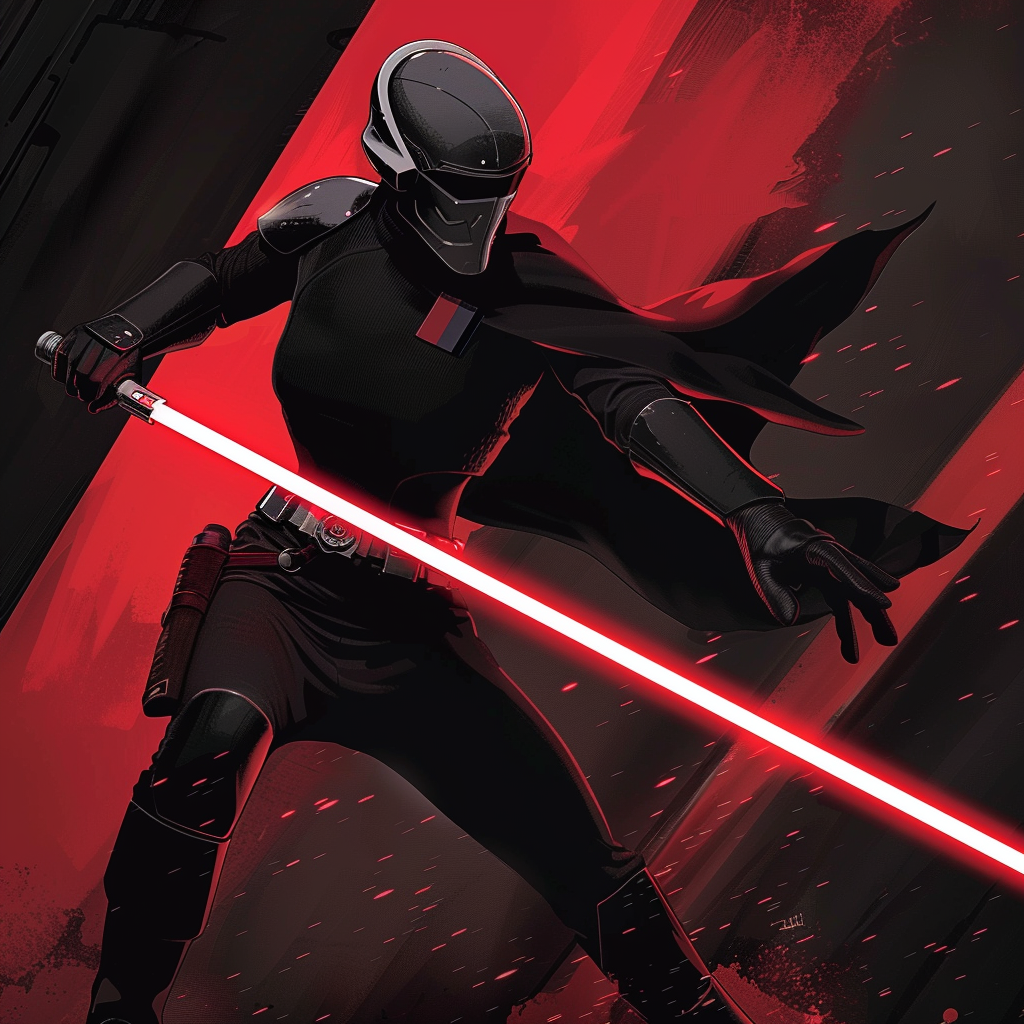
Trilla Suduri’s visual design is a deliberate extension of her fractured identity. The mask she wears is not merely armor, but a barrier that suppresses emotion and removes individuality, forcing her to exist as a title rather than a person.
Her Inquisitor uniform strips away personal history, reducing her presence to a function within the Empire’s machinery. Even her red lightsaber carries a different weight from that of traditional Sith—its glow feels less like domination and more like contained suffering, a manifestation of pain shaped into obedience.
Unlike Sith who revel in excess and arrogance, Trilla’s presence radiates restraint and fury held tightly in check. Everything about her appearance communicates control imposed from the outside, reinforcing the idea that the Second Sister is not empowered by the Dark Side, but imprisoned within it.
Learn more: Jedi Survivor Lightsaber Styles: From Crossguard to Dual Wield Explained
The Inquisitor as a Concept
Trilla represents the Inquisitorius at its most tragic: Force-sensitive survivors stripped of autonomy and turned against their own kind.
In this way, her story expands the mythology of the Dark Side. Not all who fall do so willingly—and not all who serve are free.
Why the Second Sister Still Matters
Trilla Suduri stands as one of modern Star Wars’ most effective warnings. Her life shows that the line between Jedi and Inquisitor can be heartbreakingly thin when fear and abandonment take root.
She is not remembered for the Jedi she killed—but for the person she almost saved.
FAQs
Who is the Second Sister?
The Second Sister is Trilla Suduri, a former Jedi Padawan turned Imperial Inquisitor.
Why did Trilla fall to the Dark Side?
She was captured, tortured, and psychologically manipulated after Order 66, leading her to believe she was abandoned.
Is Trilla a Sith?
No. She is an Inquisitor—trained in the Dark Side but subordinate to Sith Lords.
Does Trilla seek redemption?
Yes. She briefly renounces the Empire before being killed by Darth Vader.
Why is Trilla considered tragic?
Her fall is driven by trauma and coercion, not ambition or ideology.
What weapon does the Second Sister use?
A red double-bladed spinning lightsaber used by Inquisitors.
How does Trilla compare to Cal Kestis?
They share similar origins but differ in support, healing, and choice.
What does Trilla symbolize in Star Wars?
The cost of survival without compassion—and the cruelty of systems that weaponize pain.
Is Trilla canon?
Yes. She appears in Star Wars Jedi: Fallen Order, part of the official canon.
Why do fans remember her so strongly?
Because her story feels human, intimate, and devastatingly plausible.
Join the Nsabers Community
Some villains fall because they choose darkness.
Others fall because the light abandoned them.
Trilla Suduri reminds us which fate is more terrifying.
May the Force be with you.


Deixar comentário
Os comentários precisam ser aprovados antes da publicação.
Este site é protegido por hCaptcha e a Política de privacidade e os Termos de serviço do hCaptcha se aplicam.