
Quick Answers
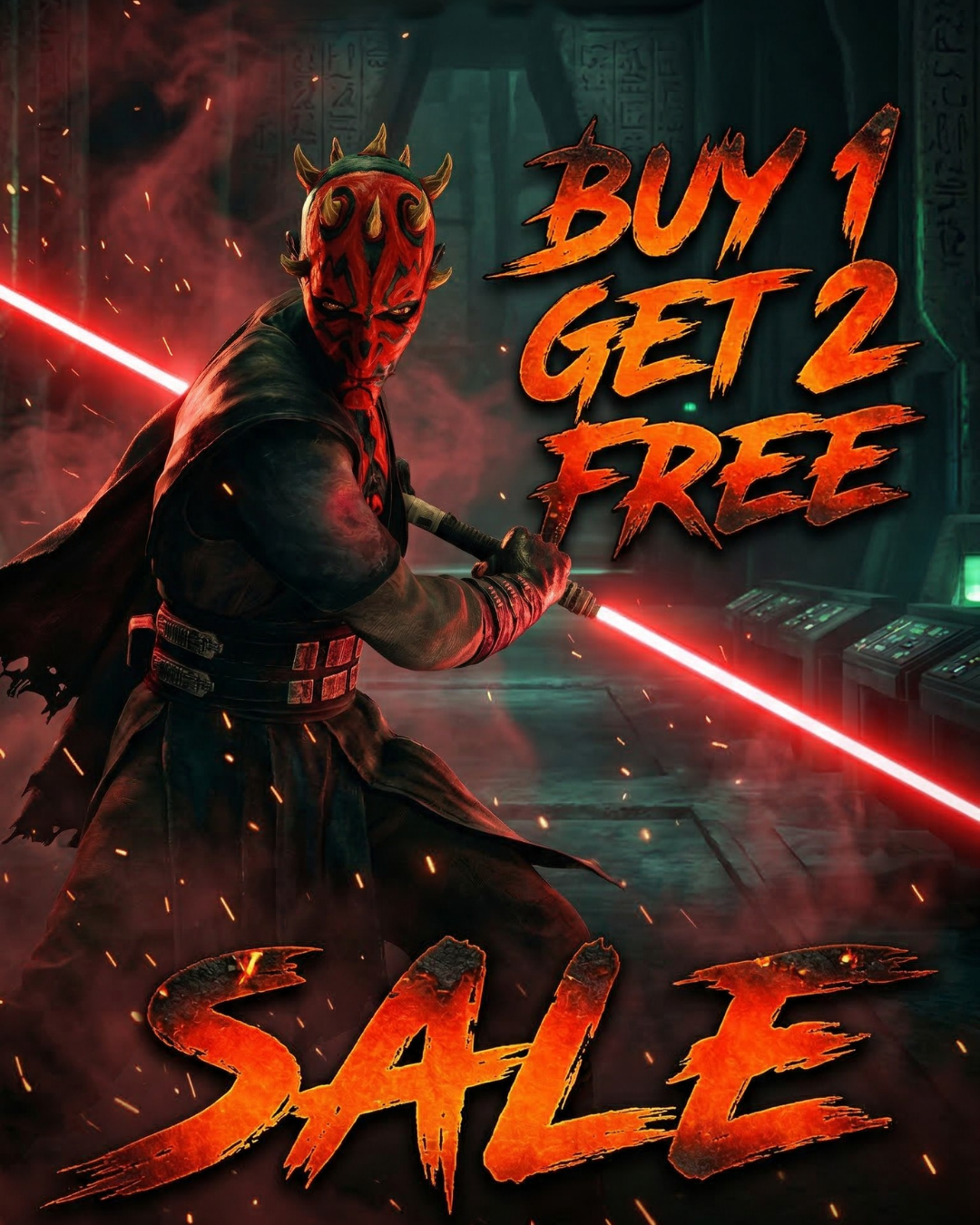
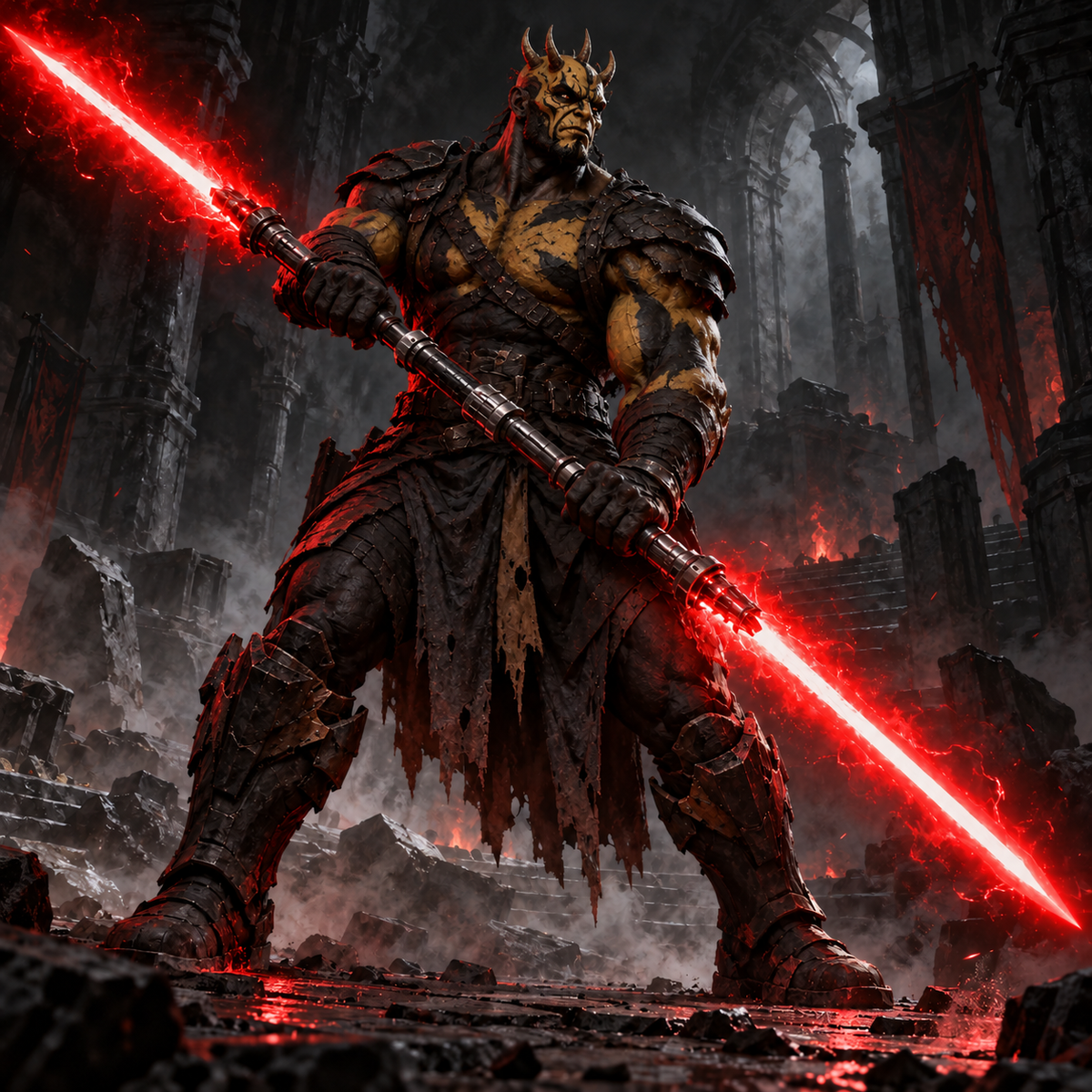
- The Savage Opress lightsaber is a double-bladed red saberstaff that visually reflects his size, physical power, and aggressive fighting style.
- Savage's weapon uses two red blades, placing it firmly within the visual language of dark-side warriors and Sith-associated lightsabers.
- His saber resembles Darth Maul's preference for double-bladed weapons, but Savage's weapon should not be treated as simply another version of Maul's original lightsaber.
- Savage fights with heavy, forceful strikes, broad attacks, and constant physical pressure rather than the elegant precision associated with duelists such as Count Dooku.
- The Savage Opress saber is red, but The Clone Wars doesn't show a detailed on-screen crystal-bleeding sequence, so don't invent the exact history of his individual crystals.
- His weapon works best as part of his character design: the saberstaff, red blades, enormous frame, and brutal movement all reinforce the same identity.
Proof & Sources
Savage Opress is best understood through his appearances in Star Wars: The Clone Wars, where his transformation, brief training under Count Dooku, alliance with Darth Maul, and combat style are shown directly. Official Star Wars material also provides broader context for lightsabers and the character.
Why does Savage Opress carry a double-bladed red lightsaber when his greatest strength was never elegant swordsmanship, but overwhelming physical power?
The Savage Opress lightsaber tells you who he is before he attacks
Savage Opress is one of those Star Wars characters whose weapon immediately feels inseparable from his physical presence. He is massive even by Zabrak standards, moves with intimidating weight, and fights as though every exchange should force the opponent backward. Giving that character a small, refined dueling weapon would have created a visual mismatch. Instead, the Savage Opress lightsaber extends his silhouette and makes his attacks feel even larger than his already imposing frame.
The weapon is a double-bladed lightsaber, often described as a saberstaff, with a long central hilt and red blades extending from both ends. That configuration gives Savage an enormous threat radius around his body. When he turns the weapon, the second blade follows the same motion, so opponents must account for danger on both sides rather than a single conventional blade.
Just as importantly, the saberstaff gives Savage a distinct connection to Darth Maul without making the brothers identical. Both are Dathomirian Zabraks associated with double-bladed red weapons, but their movement reveals very different personalities. Maul usually looks controlled, deliberate, and technically refined. Savage often looks like he is trying to break through the opponent's guard through sheer Force.
Savage did not begin as a trained Sith warrior.
To understand the weapon, remember that Savage's path into lightsaber combat was unusually compressed. He wasn't raised through the Jedi Order, and he didn't spend years receiving the kind of structured instruction that shaped someone like Obi-Wan Kenobi. Asajj Ventress and Mother Talzin shaped his transformation into a dark-side warrior, after which he entered Count Dooku's orbit as a potential apprentice and weapon.
Dooku attempted to train Savage in both lightsaber combat and the Force, but their relationship was defined more by domination than patient mentorship. Savage possessed enormous natural strength, yet Dooku repeatedly exposed the gap between physical power and disciplined technique. That gap would remain one of the defining features of Savage's combat throughout The Clone Wars.
His weapon therefore becomes particularly interesting. It looks like the armament of an experienced dark-side warrior, yet the man holding it is still developing control over the abilities he has been given. The result is a fighting style that can be terrifyingly effective without ever becoming as polished as Dooku's Makashi or as sophisticated as Maul's mature technique.
Why Savage uses a double-bladed lightsaber
The most obvious answer is that a double-bladed weapon suits Savage's fighting style. His strength lets him wield a long hilt aggressively without making the weapon seem cumbersome. When he attacks, he can generate momentum through both his arms and torso, turning the saberstaff into a rotating zone of danger rather than simply a blade held in front of him.
A conventional single-bladed weapon places most of the threat on one side of the grip. A saberstaff changes the geometry. Every large movement can carry a second blade through the opposite side of the arc, so an enemy cannot casually move around Savage after avoiding the first strike. His sheer size makes that control of space particularly intimidating.
The weapon also supports Savage when he faces several enemies. A broad rotation lets him transition from one opponent to another without resetting the entire weapon. This doesn't make the saberstaff automatically superior, but it does reinforce a fighter who wants to dominate the immediate space and force everyone nearby to respond.
The weapon looks related to Maul, but it is not simply Maul's saber.
The association with Darth Maul is impossible to ignore. Maul made the double-bladed red lightsaber one of Star Wars' most recognizable weapons, and Savage later fights alongside his brother using the same broad weapon type. Visually, the parallel helps establish the two Zabraks as a frightening pair.
Yet Savage's lightsaber shouldn't be treated as merely a copy of Maul's original weapon from The Phantom Menace. Their sabers belong to the same general family of double-bladed weapons, but they are separate constructions associated with different stages of the characters' lives.
That difference matters because the weapon reflects the user. Maul's saberstaff is strongly associated with his disciplined, highly trained movement and his ability to shift between offense, defense, and acrobatics with remarkable precision. Savage uses the same basic weapon concept with far more emphasis on Force, leverage, and intimidation.
The similarity between the weapons therefore strengthens the brothers' bond, while the difference in movement keeps them from becoming duplicates of one another.
Why is the Savage Opress saber color red?
The Savage Opress saber color is red, placing him visually alongside the Sith and other dark-side lightsaber users. When he activates his weapon, the red blade immediately signals hostility. It links Savage to the same dark-side visual tradition associated with Darth Maul, Darth Sidious, Count Dooku, and Darth Vader.
In current Star Wars canon, red lightsabers are associated with kyber crystals subjected to a process commonly called bleeding. A dark-side user imposes pain, anger, and domination upon the crystal, corrupting it and producing the familiar red blade.
However, don't turn that general rule into a specific scene Star Wars never showed. The Clone Wars doesn't pause to show Savage personally bleeding the crystals in his weapon. His saber is already red when he uses it as a dark-side apprentice and warrior.
That means the safe lore conclusion is straightforward: Savage carries red blades consistent with Sith and dark-side tradition. The video doesn't explain the step-by-step history of his individual crystals.
Read more: Asajj Ventress' Magenta Lightsaber: Ambition and Spiritual Depth
Red works especially well with Savage's visual design
Color isn't just lore; it is also storytelling. Savage wears yellow-and-black markings, dark armor, and horns that exaggerate his already enormous silhouette, and he's introduced as something closer to a living weapon than a conventional apprentice. Two red blades cut sharply through that palette.
The result makes Savage readable instantly during chaotic action scenes. Even when multiple characters fight, his size and the two red blades distinguish him from Jedi using blue or green lightsabers.
Red also reinforces the idea that Savage has been pulled into a world defined by Sith manipulation. He may not occupy the same philosophical position as Sidious or Dooku throughout his life. Still, the weapon visually marks the period when violence and the dark side dominate his identity.
This is why discussing the Savage Opress weapon only as a mechanical device misses part of its importance. Its shape and color are part of its character design.
His combat style centers on pressure.
Savage rarely looks as if he wants to conduct a patient fencing match. He wants to overwhelm the opponent. His attacks often use large movements, powerful swings, direct forward pressure, and his physical strength.
This makes his combat easy to distinguish from Dooku's. Dooku uses small, efficient movements and tries to defeat opponents through timing and precision. Savage often appears to do the opposite. He uses his size to make every exchange physically uncomfortable for his opponent.
When an opponent blocks Savage, that defense still has consequences. The defender must absorb or redirect the Force behind the strike, which can upset balance even if the blade itself never reaches the target.
That approach fits the saberstaff perfectly. The second blade lets Savage keep threatening the opponent as the weapon rotates through a heavy attack. Instead of treating each strike as an isolated action, he can turn one motion into another.
Savage is powerful, but he is not the most refined duelist.
One of the most important things to understand about Savage is that raw combat effectiveness and technical refinement are not the same thing. Savage can defeat Jedi and create enormous danger, but the series repeatedly shows that more experienced duelists can expose limitations in his technique.
Dooku does this during Savage's training. Maul also occupies a very different technical level. Later, Darth Sidious makes the contrast even more dramatic when he confronts both brothers on Mandalore.
Savage's strength lets him survive situations a less powerful fighter might not. He can compensate for imperfect positioning with physical Force, force an opponent away with heavy strikes, and use rage to maintain pressure.
Against a truly elite lightsaber combatant, however, those advantages become less reliable. A master who controls distance and timing can turn Savage's commitment to large movements into a vulnerability.
This difference is essential to the character. Savage is frightening because he can destroy an average opponent through overwhelming power, not because he is secretly the most sophisticated swordsman in the Clone Wars.
The long hilt gives Savage leverage.
A saberstaff is not simply a regular lightsaber with another blade attached to the bottom. Its longer central grip changes how the weapon moves.
Savage can place his hands farther apart and use the distance between them to generate leverage. For someone with his physical strength, that makes broad rotational attacks especially powerful. One hand can guide the weapon while the other drives the movement, allowing the entire hilt to turn through the attack.
The longer grip also gives him options for repositioning his hands during combat. He can move the weapon around his body, reverse direction, or transition between orientations without treating the saber like a short, one-handed hilt.
That mechanical advantage helps explain why the weapon appears so natural in Savage's hands despite his relatively short period of formal lightsaber training. The weapon lets him exploit abilities he already possesses: strength, aggression, reach, and physical commitment.
But the second blade also puts Savage in danger.
The saberstaff gives Savage additional offensive options, but it also demands greater spatial awareness. When one blade moves toward the opponent, the other moves behind the user or across the opposite side of the body.
A fighter who forgets that relationship risks striking himself. Any rotation around the shoulders, waist, or legs has to account for both ends of the weapon.
Savage's size makes the weapon look easy to control, but you shouldn't ignore the underlying difficulty. The central grip must stay carefully oriented, and any dramatic movement brings the inactive side of a conventional sword into a space a lethal blade would occupy.
This is also why the weapon is less ideal in confined environments. A technique that controls an open hall becomes much harder beside walls or in narrow passages: the saberstaff rewards space, momentum, and continuous awareness.
Savage uses intimidation as part of combat
A large opponent is intimidating before he moves. Savage adds two red blades to that physical presence, making intimidation part of his tactical identity whether he consciously plans it or not.
An opponent facing a single saber can roughly locate the weapon's threatening end. With Savage, the eye must track both blades while also accounting for his reach and physical strength. The weapon makes him appear larger because the red blades extend danger far beyond his body.
This can force defensive reactions before Savage fully commits to an attack. An opponent may retreat because staying close feels too risky, letting Savage control ground without landing a blow.
That psychological dimension matters most against fighters who have never dealt with a saberstaff. The unusual weapon creates hesitation, and Savage's style thrives when the other person is already reacting rather than setting the pace.
Savage and Maul fight differently despite using similar weapons.
Watching Savage beside Maul is one of the best ways to understand both characters. Maul's body control is much more sophisticated. He can change levels, use kicks, alter angles, manipulate distance, and move between highly controlled sequences without making it look like the saberstaff dictates his movement.
Savage more often makes the weapon an extension of his mass. He swings through the opponent's space, pushes directly forward, and uses heavy contact to create openings.
The distinction becomes especially clear when the brothers fight together. Their visual similarity makes them look like a unified threat, but their mechanics are not identical. Maul often brings technical subtlety, while Savage brings overwhelming pressure.
That difference also reflects their histories. Maul was shaped through prolonged Sith training under Sidious. Savage was transformed and accelerated into the dark side much later. He became extremely dangerous quickly, but he never had the same foundation.
Read also: Dark Side Force Powers You Didn't Know About (And the Sabers That Match)
His strength changes what counts as a successful block.
Against many lightsaber users, successfully placing the blade in the path of an incoming attack may be enough to stop the strike. Against Savage, blocking the blade does not necessarily end the problem.
His physical strength can continue driving through the contact. A defender who catches the saber at a poor angle can still be pushed backward, forced to change footing, or lose the ability to counterattack.
That is why his combat often feels heavy, even though a lightsaber blade itself doesn't function like a massive steel sword. The weight comes from the man behind the weapon and the hilt's leverage.
Savage's combat therefore shows something important about Star Wars sword fighting: the same lightsaber can behave very differently depending on the body and intentions of the person using it.
Force power makes the weapon even more dangerous.
Savage's physical transformation is only part of the threat. He also develops substantial Force ability, though his control does not match the refinement of masters such as Dooku, Maul, or Sidious.
When physical aggression combines with Force-enhanced power, the saberstaff becomes even harder to confront directly. Savage doesn't need every attack to be technically perfect if he can force the opponent into an increasingly desperate defensive position.
His Force usage also allows him to affect the battlefield beyond blade range. An opponent focused entirely on the two red blades can still be vulnerable to a shove or other dark-side attack.
This combination explains why Savage can be extremely dangerous despite being relatively inexperienced by elite Jedi and Sith standards. His threat comes from several advantages that reinforce one another, not from pure fencing mastery.
The weapon works against multiple opponents.
Savage repeatedly enters situations involving more than one enemy, making the saberstaff particularly useful. The two blades let him redirect attacks across a wider arc and move between targets without always turning his whole body.
Against multiple opponents, controlling space becomes more important than winning a perfect one-on-one exchange. Savage can force one enemy back with a sweeping attack while the opposite blade discourages another from moving too close.
His aggressive temperament makes that approach natural. Rather than patiently separating opponents and defeating them one by one, he often tries to create chaos and make everyone around him respond simultaneously.
This does not guarantee victory against coordinated opponents. Two skilled Jedi can exploit the fact that Savage still has to divide his attention. The weapon expands his options, but it cannot remove the basic tactical disadvantage of being attacked from multiple angles.
Savage's fight with Adi Gallia shows the brutality of his approach.
Savage's confrontation with Jedi Master Adi Gallia clearly shows that his combat identity extends beyond conventional swordsmanship. He uses the saberstaff, but he also uses his entire body as a weapon.
That differs sharply from highly formal duelists. Savage does not treat a lightsaber engagement as an isolated contest of blades. If a horn, shoulder, kick, Force attack, or physical impact can create an opening, he'll use it.
The approach makes him unpredictable because traditional defensive assumptions are less reliable. A fighter concentrating entirely on the blades may suddenly have to deal with a powerful physical charge.
His size and horns therefore are not merely visual characteristics. They shape how he fights, making close-range combat especially dangerous.
Why his weapon fits a warrior rather than a duelist
A duelist often tries to reduce combat to a controlled exchange. They carefully manage distance, minimize movement, and avoid unnecessary energy. Savage rarely creates that kind of atmosphere.
His saberstaff feels closer to a battlefield weapon. It occupies space, punishes anyone who gets too close, and lets him keep moving through multiple threats.
That does not mean the weapon lacks precision. Any functioning saberstaff requires control. The difference is one of emphasis. Savage uses precision to apply pressure, rather than applying pressure only after achieving precision.
This is why calling him simply an unskilled brute would also be inaccurate. He is trained enough to use an extremely dangerous weapon without constantly endangering himself. He relies on attributes that differ from the traditional image of a refined master swordsman.
Does Savage use one of the seven official lightsaber forms?
Fans often want to assign every Star Wars character a single numbered lightsaber form. With Savage, handle that approach carefully.
His on-screen combat clearly has identifiable characteristics: heavy offense, powerful swings, physical aggression, wide control of space, and an emphasis on overwhelming pressure. Those characteristics can resemble traits associated with aggressive lightsaber traditions.
However, the current canon doesn't consistently stop during Savage's story to label his fighting with one definitive numbered form, as detailed fan charts sometimes suggest.
For that reason, describing what Savage actually does on screen is more useful than forcing him into a category that may imply more certainty than the source material provides. His style is immediately understandable without assigning a numbered label: he fights like a physically dominant dark-side warrior using a saberstaff to magnify his strengths.
Dooku's training exposes Savage's biggest weakness.
Count Dooku is almost the ideal instructor for revealing Savage's limitations because Dooku represents the opposite end of the technical spectrum. Dooku values precision, economy, timing, and control. Savage initially brings power and anger.
During training, Dooku can punish mistakes that physical strength cannot solve. If Savage attacks too openly, Dooku can exploit the opening. If he relies too heavily on rage, Dooku can maintain emotional and tactical control.
The contrast shows a recurring Star Wars lesson: power isn't enough without mastery.
Savage does improve, particularly after reconnecting with Maul and surviving increasingly difficult battles. Yet the foundation remains visible. He is most dangerous when he can impose his physical advantages, not when he must win through subtle technical exchanges.
Maul gives Savage something Dooku never did
Dooku treats Savage primarily as a subordinate and potential weapon. Maul treats him as a brother and apprentice-like partner, even though their relationship contains its own hierarchy.
That difference matters for Savage's development. With Maul, he is no longer being punished into usefulness. He becomes part of a larger project to build power independently of both Jedi and Sith leadership.
Their shared Zabrak identity and similar weapons create a strong visual bond. Two horned brothers wielding red blades instantly become one of the most memorable pairings in The Clone Wars.
Savage's saberstaff reinforces that relationship. It reminds the audience of Maul before the brothers even fight side by side. Yet Savage's heavier execution keeps his individual identity intact.
The duel with Darth Sidious reveals Savage's limits.
The confrontation on Mandalore between Darth Sidious, Maul, and Savage clearly demonstrates the hierarchy among dark-side warriors.
Together, Savage and Maul are extremely dangerous. They have killed Jedi, taken control of criminal organizations, and challenged the existing balance of power. Against Sidious, however, their achievements do not earn them parity.
Sidious's speed, precision, Force power, and experience allow him to control the engagement at a level Savage cannot match. Savage's physical strength and double-bladed weapon remain threatening, but Sidious refuses to fight on Savage's preferred terms.
The encounter exposes the weakness of relying on pressure against someone faster, more technically refined, and far more powerful in the Force. Savage can threaten many opponents by forcing them backward. Sidious can dictate the movement himself.
Savage's death in that confrontation therefore does not make him weak. It clarifies where he stands relative to the absolute top level of Sith power.
His final battle gives the lightsaber a tragic meaning.
By the time Savage faces Sidious, the saberstaff no longer represents only his transformation into a weapon for others. He has chosen to stand with Maul, and the brothers have created their own power base outside Dooku's control.
That makes the final duel more personal. Savage is no longer merely Dooku's failed replacement for Ventress. He defends the bond and political structure he built with his brother.
The red double-bladed weapon accompanies him through that entire transition. It begins as the tool of a dark-side apprentice and ends as the weapon of someone whose strongest remaining loyalty is to Maul.
Savage's final moments reinforce this shift. His relationship with his brother matters more than Sith hierarchy, and his death affects Maul more than few other losses do.
What happened to the Savage Opress lightsaber?
Savage's weapon doesn't become a major relic with a long history comparable to the Darksaber or Anakin Skywalker's lightsaber. Its narrative importance is tied primarily to Savage himself.
That is appropriate for the character. The weapon matters for what it communicates while he carries it, not because later generations fight over ownership.
Once Savage dies, the saberstaff no longer serves as a major symbol in the same way Maul's later weapons continue to accompany his evolving story.
This distinguishes it from artifacts whose meaning expands after the original owner. The Savage Opress weapon is intensely personal to a particular period of The Clone Wars: the brothers' rise, their conflict with the Jedi, and their eventual confrontation with Sidious.
Why Savage did not need an elaborate lightsaber design
Some Star Wars lightsabers communicate status through ornate details. Others become memorable through unusual emitters, curved grips, crossguards, or symbolic materials. Savage's weapon does not need that kind of complexity to establish identity.
Its most important visual features are structural: the long hilt and two red blades.
That simplicity supports Savage's characterization. His threat does not come from refinement. It comes from the sense that a brutally powerful fighter has a weapon that extends his control in every direction.
A highly delicate hilt could actually undermine that image. Savage's weapon needs to look like something he can grip with both hands and drive through another fighter's defense.
The design therefore succeeds because it prioritizes silhouette and function over intricate decoration.
Why fans often connect Savage's saber directly to Maul
The connection is natural because Maul is the most famous double-bladed lightsaber user in Star Wars. Savage is also Maul's brother, carries two red blades, and eventually fights beside him.
But interpreting Savage only through Maul risks missing what makes him distinct. The brothers use a similar weapon category for different reasons.
Maul's saberstaff often emphasizes technical fluency. Savage's emphasizes reach, leverage, and overwhelming physical Force.
The best way to understand the similarity, therefore, is as family resemblance rather than duplication. The shared weapon language links the brothers visually, while their movement shows they remain fundamentally different fighters.
This distinction is one reason their scenes work so well. The audience can immediately understand that they belong together without ever confusing one for the other.
Why the red saberstaff is the perfect weapon for Savage Opress
Every major visual element of Savage points in the same direction. His body is enormous, his movements are forceful, his personality is volatile, and his rise is tied to Nightsister manipulation, Dooku's training, Maul's return, and the dark side's violence.
The double-bladed red lightsaber amplifies every one of those qualities.
It gives him greater visual reach. It turns broad movements into threats from multiple directions. It connects him to Maul without making him identical to Maul. The red blades place him immediately within the era's dark-side visual language.
Most importantly, the weapon does not hide Savage's limitations. It cannot turn him into a technical master. It simply gives his existing strengths a more dangerous shape.
👉 Explore more lightsabers here.
Savage's saber tells the story of power without complete mastery.
Savage Opress is compelling partly because his story explores what happens when enormous power arrives faster than experience. He is transformed physically, exposed to the dark side, trained by Dooku, reunited with Maul, and thrown into conflicts against Jedi and Sith who have spent far longer developing their abilities.
His lightsaber reflects that unusual path. A saberstaff is an advanced, dangerous weapon, yet Savage often uses it through the attributes he understands most instinctively: strength, aggression, and momentum.
Over time, he becomes more capable, but he never turns into another Dooku or another Maul. The weapon remains the same broad type while the gap between his power and the greatest masters around him becomes increasingly visible.
That tension makes the saber more interesting than a simple piece of equipment.
What the Savage Opress lightsaber ultimately represents
The Savage Opress lightsaber is memorable because design, color, and combat style all tell the same story. Its double-bladed construction suits a fighter who wants to dominate the space around him. Its red color reflects his alignment with the dark side and the Sith world he is drawn to. Its long grip gives a physically powerful user leverage for the heavy attacks that define many of his battles.
Yet the weapon also reveals what Savage is not. Two blades don't make him twice as skilled, and enormous strength doesn't erase the value of experience. Dooku can expose his technical weakness, Maul can surpass him in refinement, and Sidious can overwhelm him despite all the physical advantages Savage brings into the duel.
That is why his lightsaber works so well as part of his character. It is not a shortcut to mastery. It is an amplifier. In Savage Opress's hands, the saberstaff makes an already intimidating warrior larger, more aggressive, and more dangerous, while still leaving room for the story to show the difference between raw power and true mastery.
FAQs
What lightsaber does Savage Opress use?
Savage Opress uses a double-bladed lightsaber, commonly described as a saberstaff, with a blade extending from each end of the long central hilt.
What color is Savage Opress's lightsaber?
Savage Opress's saber is red, visually connecting him to the Sith and other dark-side lightsaber users.
Why does Savage Opress have a double-bladed lightsaber?
The weapon complements his physical strength, aggressive movement, and ability to control a wide area around his body during combat.
Is Savage Opress's lightsaber the same as Darth Maul's?
No. Both characters use double-bladed red weapons, but Savage carries his own lightsaber rather than simply using Maul's original saberstaff.
Did Darth Maul teach Savage Opress to use a double-bladed lightsaber?
Savage had already received dark-side and combat training before reuniting with Maul. Maul later became an important influence on his development as they fought together.
Who trained Savage Opress in lightsaber combat?
Count Dooku trained Savage after taking him as a dark-side apprentice, although Savage's training under Dooku was relatively brief and harsh.
Did Savage Opress use Sith lightsaber forms?
His combat displays clear aggression, but current canon doesn't consistently assign every part of his fighting to one definitive numbered lightsaber form on screen.
Was Savage Opress a better duelist than Darth Maul?
Savage possessed extraordinary strength, but Maul was generally the more refined and experienced lightsaber combatant.
Why is Savage Opress so physically strong?
Mother Talzin and the Nightsisters transformed Savage through their magick, greatly increasing his size, strength, and dark-side potential.
Is Savage Opress's lightsaber stronger because it has two blades?
No. A second blade adds tactical options but also makes the weapon harder and more dangerous to control.
Can Savage Opress use only one end of his saberstaff?
A double-bladed weapon doesn't inherently require using both blades in every combat action. Its value lies in allowing the fighter to control different directions and configurations as needed.
How does Savage Opress fight with his lightsaber?
He relies heavily on powerful swings, forward pressure, broad attacks, physical strength, and the saberstaff's ability to threaten multiple directions.
Who defeats Savage Opress?
Darth Sidious kills Savage during his confrontation with Savage and Maul on Mandalore.
Why is Savage Opress's lightsaber memorable?
Its two red blades reinforce his connection to Maul, while its long, powerful silhouette perfectly matches Savage's massive frame and brutal combat style.
Join the Nsabers Community
Bring the Force into your world with Nsabers.
✨ Follow Nsabers across the galaxy:
💬 We'd love to hear from you!
Share your thoughts, leave a comment below, or tag us on social media.
May the Force be with you!

Commenta
Nota che i commenti devono essere approvati prima di essere pubblicati.
Questo sito è protetto da hCaptcha e applica le Norme sulla privacy e i Termini di servizio di hCaptcha.