

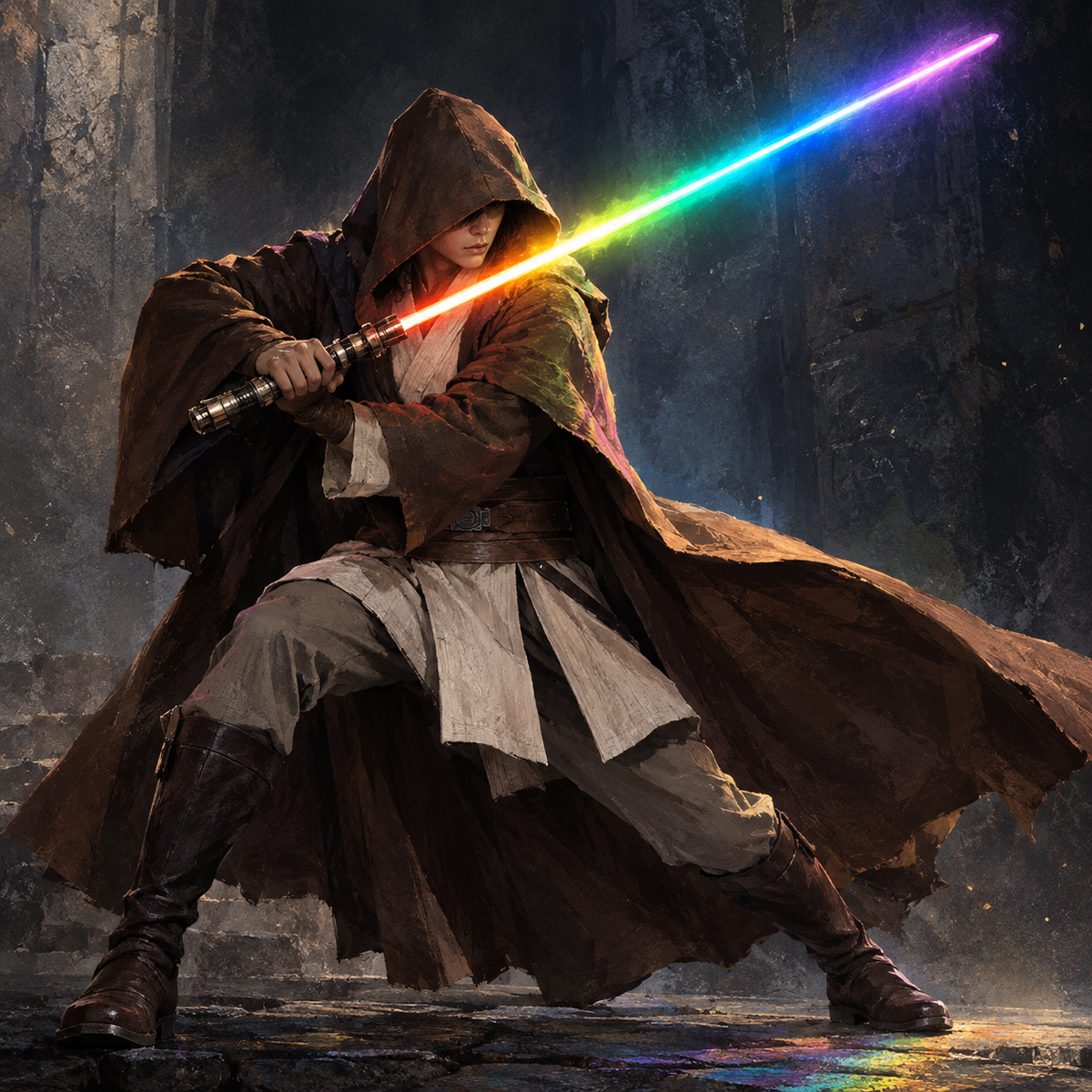
Quick Answers
- Star Wars unique lightsabers stand out for unusual blade colors, hilt construction, multiple emitters, historical significance, cultural meaning, or their owners' fighting style.
- The Genesis Lightsaber is not a widely established official canon weapon name. Treat it as a custom, fan-created product, game, or context-specific term unless a reliable official Star Wars source proves otherwise.
- The Darksaber is a genuine canon artifact with a distinctive black blade and a history closely connected to Tarre Vizsla, Mandalore, House Vizsla, and later wielders.
- Other famous rare lightsaber types include double-bladed saberstaffs, crossguard sabers, curved-hilt lightsabers, shoto blades, lightsaber pikes, white-bladed sabers, and the rotating weapons used by Imperial Inquisitors.
- An unusual lightsaber is not automatically more powerful than a standard one. Its value usually comes from how its design fits its owner, combat purpose, or story.
- Canon status depends on official storytelling, not on how convincing a custom design looks or how frequently a name appears online.
Proof & Sources
The most reliable way to understand Star Wars special sabers is to separate officially documented weapons from custom or fan-created terminology. Official Star Wars material clearly establishes several unusual lightsabers and the characters or histories attached to them.
What makes a lightsaber truly unique in Star Wars: a rare color, an unusual shape, a legendary owner, or the story that gives the weapon meaning?
Why unique lightsabers matter so much in Star Wars
The standard lightsaber is already one of the most recognizable fictional weapons ever created. A simple hilt and a single glowing blade are enough to identify a Jedi or Sith across an entire battlefield. That familiarity is precisely why unusual designs make such a strong impression. When a weapon adds a second blade, changes the hilt geometry, introduces a black blade, uses a crossguard, or spins around a circular mechanism, the difference becomes immediately visible.
Yet the most memorable Star Wars lightsabers are rarely special for appearance alone. Their unusual features normally connect to a character, culture, combat style, or historical event. The Darksaber matters because its story reaches into Mandalorian identity and leadership. Darth Maul's saberstaff matters because its double-bladed form supports his distinctive combat style. Count Dooku's curved hilt reflects his preference for precise dueling, while Kylo Ren's unstable crossguard saber reinforces his volatile visual identity.
This relationship between weapon and story is essential. A rare lightsaber type becomes memorable when viewers understand why it looks different, not just that it does. That is also what separates established canon artifacts from custom designs that use the same visual language without belonging to an official Star Wars narrative.
The Genesis Lightsaber is a useful place to begin.
The term Genesis Lightsaber illustrates the difference between a convincing Star Wars-style name and an established canon weapon. "Genesis" sounds exactly like the kind of word that might belong to an ancient Jedi relic. It suggests beginnings, creation, forgotten history, or perhaps even the earliest stage of lightsaber development.
That makes the name extremely believable.
However, the Genesis Lightsaber is not a widely established canon artifact comparable to the Darksaber or a clearly documented character weapon. Without a specific official source, you shouldn't describe it as the first lightsaber, a lost Jedi weapon, an ancient Sith relic, or the personal saber of a known character.
The name may appear in custom saber culture, fan art, game modifications, product naming, role-playing communities, or other unofficial contexts. Any individual Genesis design can still be interesting, but its history should reflect its actual source rather than retroactively inserting it into canon.
This is an important lesson for every discussion of rare lightsaber types: rarity, visual quality, and canon status are three different things.
Read more: Terraria’s Lightsaber: How Star Wars-Inspired Weapons Entered Gaming Culture
Why the Genesis name causes so much confusion
The Star Wars universe is large enough that almost any dramatic term can sound plausible. A fan who hears about a "Genesis Lightsaber" may reasonably assume it comes from an obscure comic, a forgotten game, an Old Republic story, or a reference book they have never read.
That uncertainty creates ideal conditions for unofficial lore to spread. A custom saber builder may create a hilt called Genesis. Someone reposts the image without the original store or artist context. Another person describes it as an ancient Jedi weapon. Soon the weapon appears across search results with increasingly elaborate explanations that all trace back to one unsupported assumption.
This does not require deliberate deception. Context disappears as information travels.
The best way to judge such a weapon is therefore to trace the name backward. If the source is a custom builder, then Genesis is a custom saber name. If it comes from a fan project, it belongs to that project. If an official Star Wars story eventually uses the name, then the official source defines its canon meaning.
The Darksaber is the opposite kind of case.
The Darksaber demonstrates what a truly established special lightsaber looks like. Its black blade is immediately unusual, but the weapon matters not just because the color is rare. Its history is directly tied to Tarre Vizsla, the first Mandalorian inducted into the Jedi Order, and later becomes deeply connected to House Vizsla and Mandalorian leadership.
That history gives possession of the weapon political meaning. The Darksaber passes through different hands, and its ownership becomes connected to legitimacy, challenge, inheritance, and control over Mandalore. Pre Vizsla, Maul, Sabine Wren, Bo-Katan Kryze, and Din Djarin all become part of that evolving history.
This makes the weapon one of the clearest examples of how a lightsaber can become an artifact rather than merely personal equipment.
Its uniqueness is therefore layered. The blade is visually unique, the weapon has a documented historical origin, and its later story gives it cultural significance far beyond ordinary combat.
That combination is why the Darksaber belongs among the most important Star Wars special sabers.
Why the Darksaber blade looks so different
The Darksaber's blade does not resemble a conventional cylindrical lightsaber blade. It has a flatter, more sword-like silhouette, a black center, and a bright border that makes it visually unmistakable.
The design helps communicate that the weapon belongs to a different tradition. It is still a lightsaber, but it doesn't look like one produced by the most familiar Jedi pattern.
That visual difference becomes especially effective when the weapon passes between Jedi, Mandalorians, Sith, and others. No matter who carries it, the audience immediately understands it's the same historical object.
Its rarity is therefore not simply a matter of blade color. The Darksaber combines color, blade shape, construction, history, and symbolism into one recognizable identity.
This is one reason it is difficult to compare the Darksaber directly with a custom term such as Genesis. One has a deeply documented narrative lineage. The other needs source verification before anyone can claim a comparable history.
Darth Maul's double-bladed saber changed the visual language of lightsabers.
When Darth Maul activates the second blade of his weapon in The Phantom Menace, it expands what mainstream audiences understand a lightsaber to be. Instead of a conventional single blade, Maul carries a long saberstaff with an emitter at each end.
The weapon matters partly because it changes combat. A double-bladed saber lets the user threaten both directions with one connected hilt. Rotations can shift between offense and defense, while the second blade forces opponents to think about space very differently than in a conventional duel.
Maul's combat style suits this configuration perfectly. His movement integrates kicks, body rotation, rapid angle changes, and control of multiple opponents. The weapon does not feel like a standard saber with an extra blade added for spectacle. It shapes the entire choreography.
This is a defining feature of the best rare lightsaber types: their design affects what the character can do.
Double-bladed lightsabers are rare, but Maul isn't the only one who can use them.
The saberstaff is strongly associated with Maul because he made the design iconic, but the concept is not limited to one individual. Other Star Wars stories have shown related double-bladed weapons used by different dark-side fighters and specialized combatants.
The configuration offers several advantages, but it also creates significant risk. During many movements, a blade extends behind the user, so spatial awareness becomes critical. The long hilt also needs room to move, which can make the weapon awkward in confined environments.
A second blade therefore does not automatically make the weapon stronger than a standard lightsaber.
Its value depends on the person using it. Maul succeeds because he can integrate both blades into his movement. A less experienced fighter might find the same weapon dangerous.
This relationship between design and skill is central to understanding Star Wars' unique lightsabers.
Savage Opress shows how the same saber type can feel completely different.
Savage Opress also uses a double-bladed red saberstaff, creating an immediate visual connection with Darth Maul. Yet Savage's weapon doesn't feel identical in motion because his physicality and combat priorities differ.
Maul uses the saberstaff with more technical variation, rapid transitions, and positional control. Savage relies much more heavily on exceptional strength, broad attacks, and forward pressure.
The same basic weapon type therefore creates two distinct combat identities.
This matters because lightsaber classification tells only part of the story. Calling both weapons "double-bladed sabers" is technically useful, but it doesn't explain how differently they behave in their owners' hands.
Savage makes the saberstaff feel heavy and punishing. Maul makes it feel fast and geometrically unpredictable.
The comparison shows why the user often matters more than the category.
Kylo Ren's crossguard lightsaber uses instability as a design element.
Kylo Ren's lightsaber introduced another immediately recognizable silhouette. His main red blade is flanked by two smaller lateral blades that visually function as a crossguard.
The side vents connect to the weapon's unstable energy rather than serving merely as decorative additions. That distinction makes the design more interesting because the unusual appearance reflects an internal technical condition.
The rough, unstable blade also complements Kylo himself. His character is emotionally volatile, and the weapon seems almost physically unable to remain calm. The visual relationship between owner and saber is therefore unusually strong.
This makes Kylo's weapon a good example of how Star Wars special sabers can use apparent imperfection as part of identity.
A perfectly smooth standard blade would communicate something very different. The unstable crossguard weapon looks dangerous even when it is not touching anything.
Crossguard lightsabers are more than one character's signature.
Kylo Ren is the most famous modern example, but the crossguard concept extends beyond his personal weapon. Star Wars has explored crossguard-style lightsaber variations in other contexts.
The key point is that the structure changes the silhouette and could affect how the weapon is handled. Side emitters add energy near the hand, creating both possibilities and risks.
That means a crossguard saber follows a different design philosophy than a standard cylindrical hilt, even when the central blade remains familiar.
A custom Genesis saber could theoretically use a similar configuration, but borrowing a canon design principle would not make the custom weapon itself canon.
This distinction matters when evaluating fan-made Star Wars lightsabers. Familiar technology can inspire original designs without transferring official narrative status.
Count Dooku's curved lightsaber proves subtle changes can matter.
Not every unique lightsaber requires a second blade or a rare color. Count Dooku's curved hilt is one of the best examples of a weapon becoming distinctive through ergonomics.
The curve changes the angle at which the weapon sits in the hand, supporting Dooku's elegant, precision-focused approach to dueling. His combat style emphasizes economy of movement, timing, blade control, and direct engagement with other lightsaber users.
The hilt therefore communicates refinement rather than raw spectacle.
This works especially well because Dooku's entire character follows the same visual logic. His posture, movement, speech, and fighting style all suggest control. The lightsaber fits the man.
Among rare lightsaber types, curved-hilt designs are interesting because the uniqueness comes mainly from handling rather than the blade itself.
The blade can stay conventionally red while the hilt changes the weapon's entire personality.
Ahsoka Tano's white lightsabers make color part of character history.
Ahsoka's white lightsabers stand out because white is uncommon compared with blue, green, and red. Yet the color's importance goes beyond visual rarity.
The white blades are tied to purified kyber crystals that were once affected by the dark side. That history gives the color meaning within Ahsoka's personal journey after leaving the Jedi Order.
The result is a weapon identity that matches her position outside the traditional Jedi-Sith division. She no longer functions as a conventional Jedi Knight, but she hasn't embraced the dark side either.
The blades become a visual shorthand for that independence.
This shows why rare blade colors shouldn't be interpreted through generic personality charts. Canon color meaning is strongest when an official story explains the circumstances surrounding the weapon.
Learn more: All 8 Lightsaber Colors in Star Wars, Ranked by Power
Mace Windu's purple blade is rare and doesn't require a strange hilt.
Mace Windu's lightsaber demonstrates another path to uniqueness. Its hilt remains recognizable as a conventional lightsaber, while the purple blade immediately distinguishes the weapon from the blue and green blades commonly associated with Jedi in the prequel era.
Purple became one of the most recognizable exceptions in Star Wars visual design.
However, don't treat every fan interpretation of the color as official lore. Purple has generated enormous discussion about personality, philosophy, and supposed balance between light and dark, but not every popular explanation is an explicit canon rule.
This illustrates a recurring problem with rare lightsaber types: audiences naturally want unusual features to have equally unusual explanations.
Sometimes the strongest confirmed fact is simply that a particular character carries an uncommon blade color.
Yellow lightsabers show that rarity can depend on era and role.
Yellow blades occupy an interesting position: they are clearly established in Star Wars but less common than traditional Jedi blue and green in the most familiar films.
Jedi Temple Guards are strongly associated with yellow-bladed weapons, giving the color an institutional visual identity. Rey later reveals a yellow lightsaber of her own, placing the color into a very different personal context.
This shows why blade color cannot always be reduced to a single character type. The same color may appear in different circumstances without implying that every wielder has the same personality or function.
The weapon's owner and story remain essential.
A yellow blade may be rare in one era or context while being more familiar in another. Rarity is therefore partly historical, not absolute.
Lightsaber pikes change the silhouette completely.
Lightsaber pikes extend the concept toward polearm-like weapons. Instead of placing the user's hands close to the emitter on a relatively compact hilt, the design can incorporate a significantly longer shaft.
That changes reach, spacing, and visual presence.
The weapon begins to feel less like a futuristic sword and more like a hybrid between a saber and a spear or staff. This is one of the clearest examples of how lightsaber technology can adapt to a completely different weapon silhouette while staying recognizable.
Pike-style weapons are especially useful when discussing Star Wars special sabers because they prove the lightsaber concept isn't restricted to one basic handle length.
They also show why custom saber builders have so much room for experimentation. Official Star Wars itself has already expanded the technology far beyond the original cylindrical hilt.
Shoto lightsabers show the opposite approach.
A shoto is shorter than a standard lightsaber. Shorter blades can serve as secondary weapons or support specialized fighting styles.
Ahsoka Tano's use of a shorter supporting blade provides one of the most recognizable examples of how different blade lengths can work together. Instead of treating every saber as an identical full-length weapon, this configuration lets one blade serve a different role than the other.
This demonstrates that uniqueness can emerge from proportion rather than dramatic technology.
A shorter blade changes reach, speed, defensive options, and how both hands work together when used alongside another weapon.
It also reinforces a broader point: a rare lightsaber does not need to be stronger to be useful. It may simply be optimized for another purpose.
Inquisitor lightsabers are among the strangest canon mechanisms.
The rotating double-bladed lightsabers used by Imperial Inquisitors are visually unlike most Jedi weapons. Their large circular guards and spinning blade assemblies make them instantly identifiable.
The design communicates institutional identity. An Inquisitor carrying such a weapon can often be recognized before anyone knows the character's name.
The mechanism also suggests these fighters belong to a specific system rather than independently constructing completely personal weapons in the traditional Jedi manner.
That makes Inquisitor sabers unusual for a different reason from the Darksaber. One is a unique historical artifact. The other is associated with a group and role.
Both qualify as unique Star Wars lightsabers, but their uniqueness comes from entirely different lore.
Ezra Bridger's early lightsaber blurred the line between saber and blaster.
Ezra Bridger's early weapon is notable because it incorporates blaster functionality into the hilt. That combination immediately separates it from more traditional Jedi weapons.
The design fits Ezra's stage of development and environment. He is not introduced as a fully trained Jedi emerging from an established Order. His weapon reflects improvisation, limited training, and the practical needs of someone learning under unusual circumstances.
That connection between design and biography is exactly what makes a special saber memorable.
The blaster component is not simply an extra feature added because it looks different. It tells the audience something about Ezra's situation.
Another useful standard for evaluating unusual lightsabers: the strongest designs usually answer the question, "Why would this particular character carry this particular weapon?"
The Darksaber is rare because only one exists.
Some lightsaber types can be repeated. Multiple characters can use double-bladed sabers, curved hilts, or yellow blades.
The Darksaber is different because its identity is attached to one specific artifact.
That makes "Darksaber" a proper name rather than a category like "black lightsaber." If someone built another custom black-bladed weapon, it wouldn't automatically become another Darksaber in canon.
This distinction matters enormously when discussing rarity. A weapon type may be uncommon, while a historical artifact can be genuinely singular.
By contrast, the Genesis Lightsaber lacks that established singular canon identity. Several unrelated creators could use the same Genesis name for completely different designs.
That is why the Darksaber provides such a useful benchmark.
Rare does not mean more powerful
One of the most common assumptions about special weapons is that unusual design must correspond to greater power.
Star Wars does not consistently support that idea.
An elite Jedi can make a standard single-bladed lightsaber more dangerous than an exotic weapon used poorly. Obi-Wan Kenobi does not need a rotating guard or crossguard to become one of the most formidable defensive fighters of his era. Yoda does not need a saberstaff to challenge Sith Lords.
Weapon design creates possibilities. Skill determines whether those possibilities become advantages.
A double blade can increase spatial control but also raise the risk of self-injury. A long pike can increase reach but become awkward in confined spaces. A crossguard can introduce additional threats while complicating handling.
Rarity creates difference, not automatic superiority.
Don't confuse blade color with weapon type.
Fans often combine two different categories when discussing unusual lightsabers. Blade color describes one visual property, while weapon type describes the physical configuration.
A purple single-bladed saber and a blue single-bladed saber may have almost identical structures despite appearing very different. Maul's red saberstaff and a conventional red Sith saber share a color while behaving very differently in combat.
The same distinction applies to black, white, yellow, orange, and other colors.
This matters for rare lightsaber types because the question "What is the rarest saber?" can mean several things. It may ask about the rarest blade color, the rarest hilt construction, or the rarest historical artifact.
Those questions do not necessarily have the same answer.
Why there is no simple official ranking of the rarest lightsabers
Star Wars doesn't provide a universal chart ranking every saber type from common to rare.
Different eras contain different traditions. A weapon uncommon during the prequel era might appear more frequently in another historical period. Certain designs may be associated with specialized institutions rather than being individually rare.
Historical survival also matters. A unique ancient artifact like the Darksaber is rare in a different sense than a combat configuration like a saberstaff.
This is why articles claiming a definitive "top ten rarest lightsabers" often mix incompatible categories.
A more useful approach is to ask why each weapon is unusual.
Is the design mechanically rare? Is the blade color uncommon? Is the weapon historically unique? Is it associated with a specific group? Or is it simply famous because one character made the configuration iconic?
Special sabers often reveal character faster than dialogue.
Star Wars uses costume, silhouette, color, and weapons very efficiently. A character can enter a scene and communicate identity before speaking.
Maul's double red saber creates one impression. Dooku's curved hilt creates another. Ahsoka's paired white blades communicate a different stage of her journey than the green weapons she used earlier.
Kylo Ren's unstable crossguard saber looks volatile before the audience understands his internal conflict.
This is one reason lightsaber design remains such a powerful storytelling tool. The weapon can carry visual information about the person holding it.
A good special saber therefore does not merely make the character look cooler. It tells the audience how to read them.
Why custom saber culture fits Star Wars so naturally
The idea that Jedi build personal lightsabers creates an unusually strong foundation for fan creativity. If every canon Jedi carried the same standardized factory-issued weapon, original saber design would feel less natural.
Instead, the franchise repeatedly demonstrates variation. Hilts reflect personal preference, historical tradition, available materials, combat needs, and individual identity.
Fans therefore have a clear invitation to imagine their own weapons.
A custom saber can use weathered metal to suggest a survivor, polished ornamentation to suggest ceremonial status, a long grip for staff-inspired combat, or an exposed crystal chamber for dramatic display.
The resulting weapon may be completely original while still feeling authentically Star Wars-inspired.
That is exactly the kind of space where a name like Genesis can thrive.
Why Genesis should remain separate from the Darksaber
Because both names sound like proper nouns, it may be tempting to treat Genesis and Darksaber as equivalent lore categories.
They are not.
The Darksaber is supported by canon storytelling, identifiable historical owners, and explicit cultural significance. Genesis lacks a comparably universal, official history under that name.
Placing them in the same article is still useful because the contrast teaches readers how to distinguish different levels of authenticity.
One is a canon artifact. The other shows how convincingly unofficial naming can imitate canon language.
That does not make Genesis uninteresting. It simply means its significance depends on the specific custom, product, fan, or game context in which the name appears.
What would make a Genesis Lightsaber canon?
The answer is surprisingly simple: an official Star Wars story would need to establish it.
If a future series introduced a Jedi carrying a weapon explicitly called the Genesis Lightsaber, that story would define its canon identity. If an official game introduced the weapon as canon, the same principle would apply.
The weapon's owner, color, age, purpose, and history would then come from that source.
Existing custom designs using the Genesis name would not automatically become canon versions of the same artifact. Shared names can occur without shared continuity.
This is why current explanations should avoid inventing a definitive Genesis origin in anticipation of something official that has not happened.
What makes Star Wars special sabers memorable
The strongest unusual lightsabers usually combine several qualities at once. The design is recognizable, the weapon clearly relates to its owner, and the story provides enough context for the audience to understand why the difference matters.
The Darksaber combines unique visuals with historical symbolism. Maul's saberstaff combines a distinctive silhouette with a specialized combat style. Dooku's curved hilt reflects his identity as a duelist. Ahsoka's white blades connect to personal transformation. Kylo Ren's unstable weapon visually reinforces character instability.
None of these weapons is memorable merely because it is rare. They are memorable because their rarity serves a narrative purpose. That is the most useful way to understand Star Wars special sabers.
Unique lightsabers are really unique stories.
A lightsaber can be copied visually, but its full identity comes from what happens around it. A black blade without Tarre Vizsla and Mandalorian history would not carry the same weight as the Darksaber. A double-bladed red weapon without Maul's choreography would not automatically recreate the impact of his first appearance.
That distinction explains why custom sabers can be visually extraordinary without replacing canon artifacts.
The object is only one layer.
The story gives it memory, ownership, consequence, and meaning.
This is also why individual character lightsabers become emotional objects for fans even when their construction is relatively conventional. What the weapon has witnessed can matter more than how unusual the emitter looks.
Genesis, Darksaber, and the difference between design and lore
Putting Genesis beside the Darksaber highlights the topic's central lesson. Both names can sound important and attach to visually dramatic weapons, but their relationship to Star Wars continuity is fundamentally different.
The Darksaber carries established canon history. Unless tied to a specific, verified official source, Genesis should be treated as a context-dependent custom or unofficial term.
That distinction lets fans appreciate both without confusion.
Custom creativity does not need fake canon status to be worthwhile. In fact, openly original designs can be more interesting because their creators can build entirely new histories instead of forcing the weapon into an existing character's biography.
👉 Explore more lightsabers here.
Why rare lightsaber types keep expanding
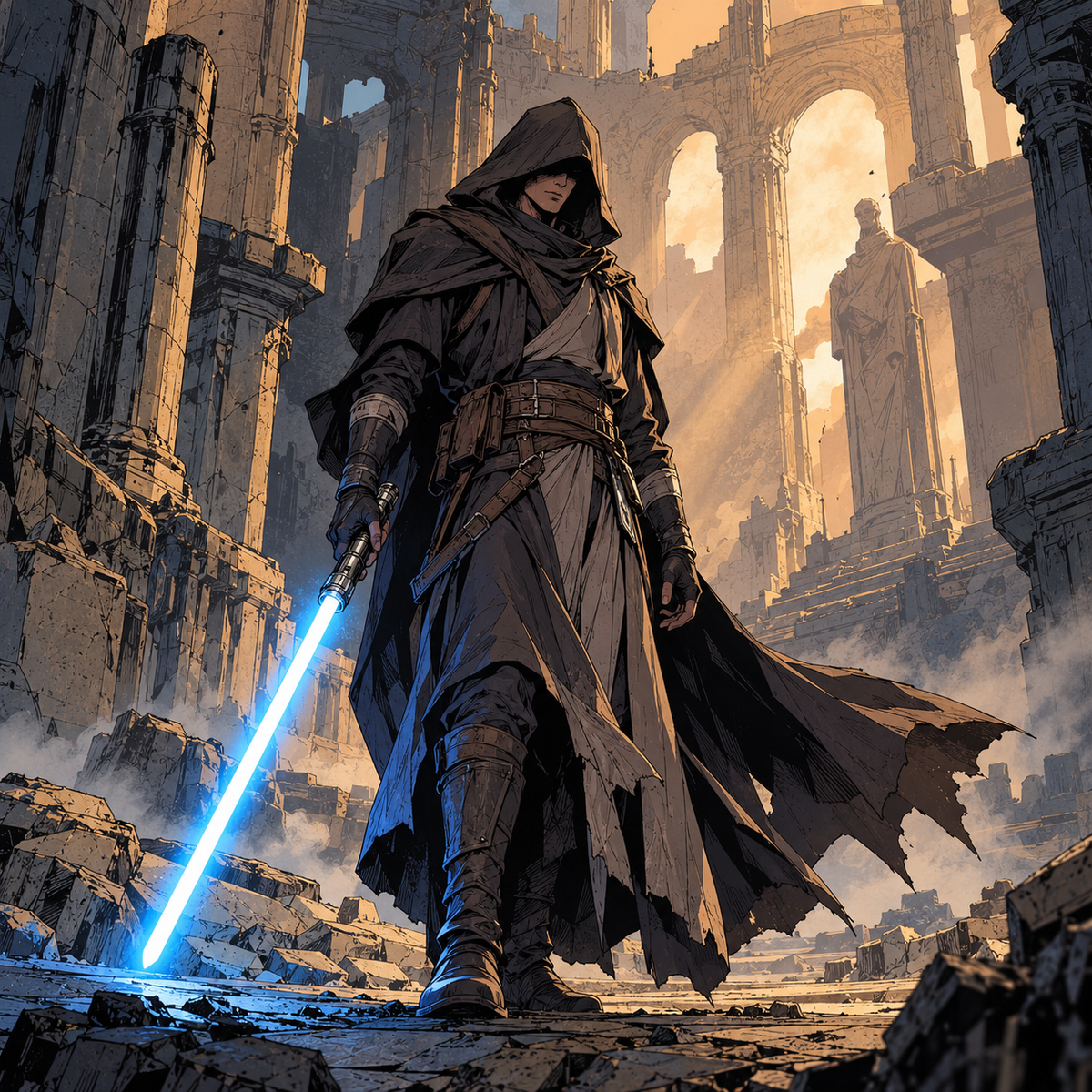
Star Wars has enough visual flexibility to keep introducing new saber forms without losing the weapon's basic identity. A lightsaber can become shorter, longer, curved, double-ended, crossguarded, rotating, black, white, yellow, or otherwise unusual while remaining immediately recognizable.
That flexibility ensures rare lightsaber types will keep attracting attention in both official stories and fan culture.
The key is to evaluate a new design on two separate levels. First, what makes the weapon visually or mechanically different? Second, where does its story come from?
Answering both questions keeps design analysis from becoming accidental misinformation.
What Star Wars' unique lightsabers ultimately tell us
The best Star Wars unique lightsabers reveal something about the people, cultures, or eras surrounding them. Their value is not determined by how many blades they have or whether their color appears on a rarity chart.
The Darksaber matters because history transformed it into a Mandalorian symbol. Maul's saberstaff matters because it changed his combat geometry. Dooku's curved hilt reinforces precision. Ahsoka's white blades reflect a personal transformation. Kylo Ren's unstable crossguard weapon communicates instability before the character says a word.
Genesis belongs in this discussion for a different reason. It demonstrates how easily Star Wars design language can inspire convincing unofficial creations and how important source verification becomes when fan culture, products, games, and canon all use similar terminology.
The deeper lesson is simple: a lightsaber becomes special when design and story reinforce each other. Sometimes that story comes from official canon. Sometimes it comes from a fan or custom creator. Understanding which is which makes both sides of Star Wars saber culture more interesting, not less.
FAQs
What are the most unique lightsabers in Star Wars?
Well-known examples include the Darksaber, Darth Maul's double-bladed saberstaff, Kylo Ren's crossguard lightsaber, Ahsoka Tano's white blades, Count Dooku's curved-hilt saber, and the rotating weapons used by Imperial Inquisitors.
Is the Genesis Lightsaber canon?
Genesis Lightsaber is not a widely established canon weapon name. Treat it as unofficial or context-dependent unless a reliable official source identifies a specific version as canon.
Is the Genesis Lightsaber the first lightsaber?
No reliable canon evidence shows that a weapon called the Genesis Lightsaber was the first lightsaber ever created.
Is the Darksaber canon?
Yes. The Darksaber is an established canon artifact with a documented history connected to Tarre Vizsla and Mandalore.
Why is the Darksaber unique?
It has a distinctive black blade, an unusual shape, and a major historical and political role in Mandalorian culture.
What is a double-bladed lightsaber?
A saber with a long central hilt and an emitter at both ends, producing two blades in opposite directions. Darth Maul is its most famous user.
Are crossguard lightsabers rare?
They are much less common than conventional single-bladed weapons. Kylo Ren's unstable crossguard saber is the best-known example.
What is a curved-hilt lightsaber?
A curved-hilt saber uses a grip that bends rather than remaining completely straight. Count Dooku's weapon is the most famous example and complements his precision-focused dueling style.
What is a shoto lightsaber?
A shoto is a shorter lightsaber that can serve as a secondary weapon or be used in specialized combat styles.
What is a lightsaber pike?
A lightsaber pike puts lightsaber technology into a longer, polearm-like weapon, increasing reach and changing how it's handled.
Why are Ahsoka Tano's lightsabers white?
Their white color comes from purified kyber crystals that were previously affected by the dark side.
Is Mace Windu's purple lightsaber rare?
Purple is an uncommon blade color in the most familiar Star Wars stories, making Windu's weapon visually distinctive.
Are Inquisitor lightsabers unique?
Yes. Their circular guards and rotating double-blade mechanisms make them one of the most unusual standardized lightsaber designs in canon.
Does a rare lightsaber mean it is more powerful?
No. Unusual construction can create tactical advantages and disadvantages, but skill and context matter more than rarity.
Are all fan-made lightsabers non-canon?
A fan-created design isn't canon just because it resembles official Star Wars weapons. Canon status requires official adoption or appearance in recognized Star Wars storytelling.
Can a custom saber have a canon blade color?
Yes. A custom weapon can use blue, green, red, white, yellow, purple, or another Star Wars-inspired color without the weapon itself becoming canon.
What makes a lightsaber special in Star Wars?
It can be special because of its history, owner, blade color, hilt design, construction, combat function, cultural meaning, or connection to a particular story.
Could Genesis become canon later?
A future official Star Wars story could introduce a weapon called the Genesis Lightsaber. Until then, the name shouldn't be assigned an invented canon history.
Join the Nsabers Community
Bring the Force into your world with Nsabers.
✨ Follow Nsabers across the galaxy:
💬 We'd love to hear from you!
Share your thoughts, leave a comment below, or tag us on social media.
May the Force be with you!

Commenta
Questo sito è protetto da hCaptcha e applica le Norme sulla privacy e i Termini di servizio di hCaptcha.