

Quick Answers
- Star Wars droid names often look like technical model codes, but fans treat famous characters like R2-D2 and C-3PO as individuals rather than anonymous machines.
- “Droid” is the standard Star Wars term for a robot, while terms like astromech, protocol droid, battle droid, and security droid describe different functions or classes.
- People commonly say R2-D2 is Artoo, C-3PO is Threepio, and C1-10P is better known by the nickname Chopper.
- Not every letter or number in a droid designation has a confirmed story meaning. Fans should distinguish official naming information from interpretations based only on appearance.
- Informal expressions such as clanker are tied to specific contexts, especially battle droids, rather than serving as universal names for every droid.
- If you are searching Star Wars robot names, the most useful distinction is between a droid’s individual name, model designation, functional class, and informal nickname.
Proof & Sources
Official Star Wars materials consistently use “droid” as the broad in-universe term for robotic beings while identifying individual characters through designations, names, nicknames, and functional categories.
Why do names like R2-D2, C-3PO, BB-8, and K-2SO feel as memorable as Luke Skywalker or Darth Vader, even though they originally sound more like serial numbers than personal names?
Why Star Wars Droid Names Feel Different from Human Names
One of the smartest ideas behind Star Wars droid names is that they sound manufactured before they sound personal. Luke Skywalker, Leia Organa, and Obi-Wan Kenobi immediately register as individual names, while R2-D2 looks like something printed on an industrial component. Yet after spending time with the character, the designation no longer feels mechanical. “R2-D2” becomes the name of a stubborn, loyal, adventurous companion rather than the label attached to a machine.
That transformation is central to the way Star Wars handles droids. Their designations remind us that they are manufactured beings, but their personalities encourage both the characters and the audience to treat those designations like ordinary names. By the end of the original trilogy, hearing “Artoo” feels no less personal than hearing “Luke.” The technical appearance remains, but repeated use and shared history have completely changed the emotional meaning.
This pattern also means Star Wars doesn't need a single universal naming system for every machine. Some droids are identified almost entirely by alphanumeric designations, others have spoken nicknames, and many background units are known mainly through their class or function. Understanding Star Wars droid terminology therefore requires looking at several layers of naming rather than assuming every robot follows the same rule.
“Droid” Is the Main Star Wars Word for Robot
The first term to understand is simply droid. In ordinary English, we might use “robot” as the broad category, but in Star Wars the everyday in-universe term is droid. Characters speak naturally about buying droids, repairing droids, sending droids on missions, or identifying unfamiliar machines as droids. The word is so deeply embedded in the setting that it rarely needs explanation.
That is why searching for Star Wars** robot names** can lead to confusing results. Star Wars certainly has robotic characters, but the franchise usually doesn't call them “robots” first. The more natural term is droid, followed by a specific class such as astromech, protocol, medical, battle, or security. The word “robot” may work for a real-world audience, but “droid” sounds native to the galaxy.
This distinction helps separate Star Wars vocabulary from general science fiction. A casual viewer might describe BB-8 as a small robot, but a character in the story is far more likely to describe him as a droid or an astromech unit. The same object can fit both descriptions, but only one reflects the franchise’s normal language.
***Read more: ***20 of the Star Wars Galaxy's Greatest Droids
R2-D2 Shows How a Serial-Looking Code Becomes a Personal Name
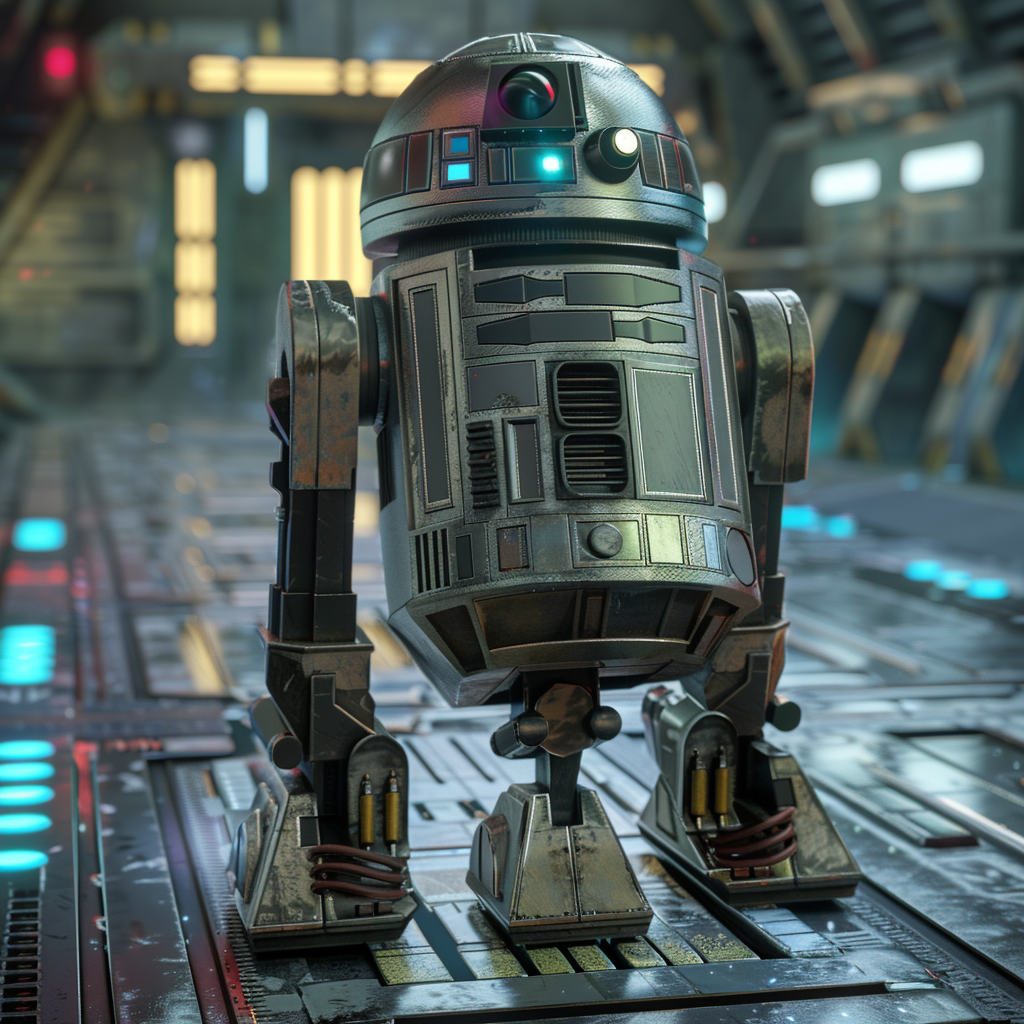
R2-D2 is perhaps the clearest example of a machine designation becoming emotionally personal. Written on the page, the name looks technical. Spoken aloud as Artoo, however, it becomes warm, compact, and unmistakably individual. Characters who have known him for years do not treat “R2-D2” as an inventory code. They use it exactly the way they would use a friend’s name.
This is important because fans sometimes try to decode every letter and number as if the designation must reveal a complete technical specification. Star Wars does have model families and categories, but not every famous droid name should automatically be interpreted as a detailed engineering formula. When official material doesn't explain a particular element, it is safer to treat the full designation as the character’s established name than to invent a precise breakdown.
R2-D2’s identity is also strengthened by contrast with other astromechs. The galaxy contains many droids with similar body plans, yet Artoo remains immediately recognizable because personality overrides category. His stubbornness, initiative, courage, and tendency to know more than the people around him make the name refer to an individual rather than merely a type of machine.
Why C-3PO Becomes “Threepio”
C-3PO follows the same basic pattern but demonstrates how pronunciation can soften a mechanical designation. Threepio turns the letters and number into something that sounds almost like a conventional personal name. The spelling may still remind us that he is manufactured, but the spoken version fits naturally into conversation.
That is especially appropriate for a protocol droid whose defining traits are communication and social interaction. Threepio speaks constantly, worries constantly, interprets situations through etiquette and probability, and develops recognizable relationships with the people around him. His technical designation therefore sits beside an almost exaggeratedly social personality.
The result illustrates a broader principle in Star Wars** droid names**. The more prominent a droid becomes as a character, the less important its mechanical classification feels during ordinary conversation. Fans certainly know that C-3PO is a protocol droid, but almost nobody discussing a scene says “the protocol unit” when “Threepio” immediately identifies the character.
Astromech, Protocol, Battle and Security Are Categories, Not Personal Names
A major source of confusion comes from mixing a droid’s class with its individual identity. Astromech describes a technical droid type associated with spacecraft assistance, navigation support, maintenance, and repairs. **Protocol droids **are designed for communication, translation, customs, and social interaction. Battle and security droids, meanwhile, serve very different operational roles.
These terms are useful because many droids in Star Wars never become major named characters. If a machine appears briefly repairing a starfighter, its function may matter more than an individual designation. Fans can discuss “an astromech” without needing to know the exact unit. The same applies to groups of battle droids or security units.
This creates a layered naming system. R2-D2 is an individual droid and also an astromech. C-3PO is an individual and also a protocol droid. K-2SO is an individual character associated with a security-droid design. The personal name tells us who the character is, while the class explains what kind of machine it was designed to be.
BB-8 Shows That Not Every Droid Needs a Nickname
BB-8 contrasts with Artoo and Threepio because his designation is already short, rhythmic, and easy to say. Fans generally call him BB-8 rather than converting it into a separate spoken nickname. The original designation works perfectly well as a name, so everyday usage doesn't need to change it.
This illustrates how informal naming tends to develop for convenience rather than by strict rules. R2-D2 naturally becomes Artoo because the spoken form is smoother. C-3PO becomes Threepio for the same reason. BB-8 is already simple enough to remain essentially unchanged, demonstrating that not every droid needs a second identity layered over the technical designation.
The character’s spherical design also reinforces how flexible the word droid really is. R2-D2 has a cylindrical body, C-3PO has a humanoid form, and BB-8 rolls on a ball-shaped chassis, yet all three belong comfortably under the same broad term. Star Wars droid terminology therefore depends more on the being's nature and function than on a single required body shape.
C1-10P and the Importance of the Name “Chopper”
If R2-D2 shows how a technical designation can become a familiar name, C1-10P demonstrates an even stronger transformation. Most fans know the droid as Chopper, and that nickname is so dominant that the formal designation can feel secondary.
Chopper’s personality explains why. He is temperamental, independent, frequently impatient, and willing to solve problems in ways that make other characters nervous. A purely technical label would not capture the experience of watching him. “Chopper” feels like the name of a specific individual with habits, loyalties, grudges, and a recognizable attitude.
This example proves that Star Wars does not treat droid naming as a rigid engineering convention. A machine may have an official designation and still acquire a completely different everyday name through relationships and experience. In that sense, droid nicknames work much like human nicknames: the socially useful name can become more important than the formal one.
K-2SO Sounds Technical but Functions Like a Character Name
K-2SO offers another variation. His name retains the full mechanical feel of an Imperial security-droid designation, yet fans rarely need a separate nickname to recognize him. The designation itself has become inseparable from his sarcastic personality and his relationship with Cassian Andor.
In casual discussion, people may shorten the name to K-2 or write it as K2, but the original K-2SO remains familiar enough to function as a personal identity. Again, the emotional meaning doesn't come from decoding every component of the designation. It comes from the story attached to the droid.
K-2SO is particularly useful for understanding the difference between model and individual. A security-droid body suggests one set of functions and origins, but reprogramming and lived experience make the machine much more specific. The same chassis category can produce different narrative identities depending on memory, programming, relationships, and circumstances.
IG-11 and Why Similar Designations Do Not Mean Identical Characters
Names such as IG-11 show another side of Star Wars** droid terminology**. Some droids clearly belong to recognizable design families, yet the individual character is still defined by more than the shared structure. An audience may recognize a visual connection between different IG-series machines without assuming that every unit has the same personality or history.
This is useful when thinking about droids as manufactured beings. Two people don't share a model number, but two droids can belong to the same design family. Their bodies may start from a standardized template, even as later experiences create distinct identities.
Star Wars repeatedly uses this tension. A droid can be mass-produced and still become unique. The designation reminds the audience of its industrial origin, while memory and behavior make that origin only one part of the character’s identity.
Why Some Droids Are Known Mainly by Their Function
Not every machine receives enough narrative attention to develop a memorable personal name. Many droids exist to perform clear roles in the world, so fans refer to them primarily by function. Mouse droids, medical droids, probe droids, battle droids, loader droids, and interrogation droids are often easier to understand by what they do than by their individual serial numbers.
This makes the fictional universe feel larger. If every machine needed a famous character name, droids would feel like rare special beings rather than ordinary technology integrated into galactic life. Functional terminology suggests that hospitals, military bases, starships, ports, and households rely on different types of machines in much the same way real societies rely on specialized tools.
At the same time, any one of those functional machines can become a character if the story gives it enough personality. Star Wars therefore moves comfortably between “a droid” as equipment and “this droid” as an individual.
Battle Droids Developed Their Own Naming Culture
Battle droids are especially interesting because they often appear in enormous numbers. B1 battle droids can seem interchangeable at first glance, yet their dialogue and behavior frequently give them surprising individuality. They complain, misunderstand orders, react to danger, and occasionally sound almost painfully aware that their survival prospects are poor.
Fans often distinguish larger categories with model shorthand such as B1 and B2, rather than using the full formal label every time. This is typical of fandom language: once a technical term becomes familiar, conversation naturally shortens it.
The same process happens throughout Star Wars discussions. Fans say “astromech” instead of “astromech droid,” “B1” instead of a longer model description, and “K-2” when the context already makes K-2SO obvious. Informal terminology develops because communities optimize familiar language.
Read also: BD-1: Cal Kestis’s Loyal Droid Companion
What Does “Clanker” Mean?
Among informal Star Wars terms, clanker is one of the most recognizable. It is strongly associated with battle droids, particularly in Clone Wars-era contexts, and carries a dismissive or insulting tone. The word evokes metallic movement and reduces the droid to machinery.
It is important not to overgeneralize the term. “Clanker” is not simply another official word for droid. R2-D2, C-3PO, and BB-8 are all droids, but calling every one a clanker ignores the specific context in which the expression is normally used.
The term matters because it shows that Star Wars** droid terminology** can convey attitude as well as classification. “Battle droid” tells us what kind of machine we are discussing. “Clanker” tells us something about how the speaker views that machine.
Is “Bot” an Informal Star Wars Droid Name?
“Bot” can be used as a casual abbreviation for robot in ordinary English, so someone outside the fictional universe may describe a droid as a bot. In a crossword-style clue asking for an informal word for a robot or droid, “bot” may be exactly the intended answer.
Within Star Wars itself, however, droid is usually more natural. There is little need to shorten “robot” to “bot” when characters already possess a short, established word for machines. That makes “bot” understandable but less characteristically Star Wars than droid, astromech, or a specific personal name.
This distinction is especially important for search queries. Someone searching “what is a Star Wars droid informally called?” may be asking a general vocabulary question rather than a lore question. The correct answer depends on context, not a single universal slang term.
What About “Bucket of Bolts”?
“Bucket of bolts” is a general insult for an old, damaged, unreliable, or unimpressive machine. It isn't unique to Star Wars, so it shouldn't be treated as an official droid class. In a science-fiction setting, it emphasizes perceived mechanical inferiority rather than identifying a specific model.
That makes it very different from terms such as astromech or protocol droid. Those words contain useful information about design and function. “Bucket of bolts” expresses an opinion.
Understanding that difference helps prevent a common SEO problem in articles about Star Wars** robot names**: mixing official classifications, fan shorthand, character nicknames, and insults as though they belonged in the same category. They do not. Each type of word answers a different question.
Do the Letters and Numbers Always Have a Hidden Meaning?
Fans naturally enjoy decoding fictional technology, so alphanumeric droid names invite speculation. It is tempting to assume that every letter identifies a manufacturing series, every number describes a precise technical category, and every position in the code has a known engineering definition.
Sometimes expanded Star Wars material does provide useful model information. However, that does not justify inventing explanations wherever official sources remain silent. A famous designation can be an established name, even if the audience doesn't know a complete in-universe decoding system.
This is particularly important when writing about lore. Saying that R2-D2 belongs to an astromech tradition is well supported. Claiming a detailed meaning for every character in “R2-D2” requires specific evidence. The safest approach is to distinguish confirmed model terminology from fan interpretation.
Why Star Wars Makes Machine Codes Easy to Remember
Even when names look technical, Star Wars tends to give major droids rhythmically memorable designations. R2-D2, C-3PO, BB-8, K-2SO, IG-11, and L3-37 look machine-like but stay short enough to stick after a few repetitions.
This balance is important. A truly realistic industrial serial number could contain dozens of characters and be impossible for an audience to remember. Star Wars instead creates designations that suggest mass production without sacrificing character recognition.
The result is a unique naming style. Droids sound different from humans, Wookiees, Mandalorians, or Sith Lords, yet their names remain easy to say. The mechanical identity survives while storytelling practicality shapes the final form.
Droid Names Can Reveal How Characters See Machines
The way someone refers to a droid can reveal their relationship with it. Calling R2-D2 “Artoo” signals familiarity. Calling an unknown machine “the astromech” creates distance because the speaker cares more about function than identity. Using a dismissive term like clanker reduces the machine further to a category of enemy equipment.
This is one reason naming matters beyond trivia. Language becomes part of the larger question of how Star Wars societies treat artificial beings. Some droids are trusted friends, while others are bought, sold, assigned jobs, memory-wiped, or destroyed without much consideration.
The same machine can therefore be described differently depending on context. A technician may care about model and function, a military officer about unit type, and a friend only about the familiar name.
Memory Helps Turn a Droid into an Individual
Names become especially meaningful when combined with memory. A droid that accumulates years of experience can develop habits, preferences, knowledge, and relationships that distinguish it from an otherwise similar machine. This is one reason long-lived characters such as R2-D2 feel much more like people than interchangeable equipment.
Memory wiping complicates this identity. If a machine’s experiences shape personality, removing those experiences may change the individual even while the physical chassis remains. Star Wars has repeatedly used memory and reprogramming to explore the boundary between manufactured function and personal identity.
The name therefore becomes a convenient anchor. “Artoo” means more than a cylindrical astromech body. It refers to a continuous history of missions and relationships. “Chopper” refers to far more than the C1-10P designation printed on technical documentation.
Why Fans Remember Droid Names So Easily
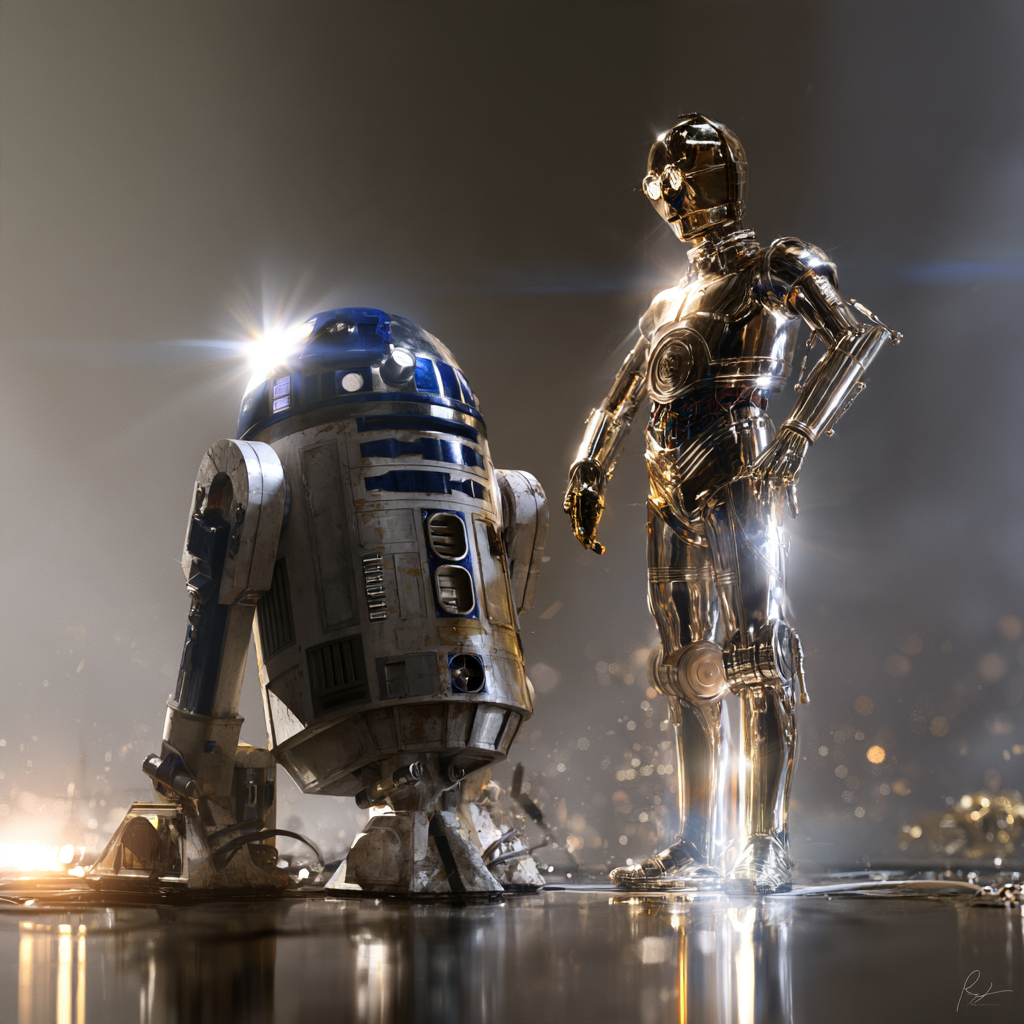
Visual design and naming work together. R2-D2’s blue-and-white body immediately distinguishes him from C-3PO’s gold humanoid form. BB-8’s spherical body, Chopper’s compact shape, and K-2SO’s tall black frame each create a visual silhouette that reinforces a short verbal identity.
The droid name therefore does not need to explain everything technically. Its main storytelling job is to give viewers a compact label they can attach to a distinctive design and personality. Once those elements become linked, recognition is almost instant.
That is why even casual viewers who cannot explain the difference between an astromech and a protocol droid often still know R2-D2 and C-3PO. Character memory is stronger than taxonomy.
Why “Robot Name” and “Droid Name” Are Not the Same Search
Someone searching Star Wars robot names is often looking for a list of recognizable characters. They may want R2-D2, C-3PO, BB-8, K-2SO, Chopper, IG-11, or other famous machines. By contrast, someone searching Star Wars** droid terminology** may want to understand the vocabulary behind those characters.
These are related but different questions. Character names identify individuals. Terminology explains categories, model families, occupations, nicknames, and informal language. A good understanding requires both.
This distinction also explains why no one answer is ideal to “What are Star Wars robots called?” At the broadest level, they are droids. More specifically, they might be astromechs, protocol droids, battle droids, security droids, or another specialized class. At the personal level, they may be Artoo, Threepio, Chopper, or BB-8.
Famous Droids Show That Manufactured Beings Can Still Have Identity
The larger importance of droid naming lies in what it says about Star Wars as a story. A machine may be manufactured for a defined purpose, given a technical designation, and assigned to an owner. Still, none of those facts prevent it from developing a recognizable individual identity.
R2-D2 is memorable because he repeatedly makes decisions and participates in history. C-3PO has such a distinct temperament that viewers can often predict his reaction before he speaks. Chopper feels impossible to confuse with another astromech because his personality dominates every scene. K-2SO turns an Imperial security-droid design into a uniquely sarcastic member of a Rebel mission.
The names become containers for those accumulated traits. A technical designation starts as a classification and ends as a biography.
Why Informal Names Matter So Much in Star Wars
Nicknames make droids easier to treat as companions. “Artoo” sounds friendlier than an inventory number, and “Chopper” sounds like a personality rather than a product. These informal forms help close the emotional distance created by machine-like bodies and serial-style designations.
This doesn't mean every droid needs a nickname. BB-8 proves that an original designation can already work perfectly well as a personal name. The broader point is that language adapts once characters develop relationships with machines.
That same process exists elsewhere in Star Wars. Ships acquire names that make them feel almost alive, weapons become associated with specific owners, and armor becomes part of identity. Through stories and relationships, the galaxy repeatedly turns objects and machines into symbols. 👉 Explore more lightsabers here.
How to Read a Star Wars Droid Name Correctly
The easiest approach is to ask what kind of term you are seeing. If it identifies a particular character such as R2-D2 or K-2SO, treat it primarily as an individual designation unless official material provides a more detailed explanation. If it says astromech or protocol droid, you are probably looking at a functional class rather than a personal name.
If the word is Chopper, Artoo, or Threepio, you are dealing with familiar everyday naming. Suppose the term is clanker; the speaker’s attitude and historical context matter. If it is simply “bot,” you are more likely dealing with general informal English than uniquely Star Wars vocabulary.
Keeping these levels separate makes the naming system much easier to understand. It also prevents fans from accidentally treating interpretation as official lore.
What Star Wars Droid Names Ultimately Tell Us
The most interesting thing about Star Wars droid names is not how many letters or numbers they contain. It is how quickly those mechanical codes stop feeling mechanical once a character develops enough personality. R2-D2 becomes Artoo, C-3PO becomes Threepio, and C1-10P becomes Chopper because relationships reshape how both characters and audiences understand them.
At the same time, the galaxy still preserves a technical vocabulary of astromechs, protocol units, battle droids, security droids, and other specialized machines. That creates a believable tension between droids as manufactured technology and droids as individuals.
Understanding Star Wars droid terminology therefore means recognizing all of those layers at once. A machine can have a model family, a job, an individual designation, a nickname, and even an insulting slang term depending on who is speaking. That complexity is precisely why the franchise’s robotic characters feel like part of a living galaxy rather than a collection of interchangeable machines.
FAQs
What are robots called in Star Wars?
The standard in-universe term is “droid.” More specific categories include astromech droids, protocol droids, battle droids, security droids, and many other specialized types.
What are the most famous Star Wars droid names?
R2-D2, C-3PO, BB-8, Chopper, K-2SO, and IG-11 are among the best-known examples across different eras of Star Wars.
Why is R2-D2 called Artoo?
“Artoo” is the natural spoken form of R2 in R2-D2 and functions as a familiar personal name in conversation.
Why is C-3PO called Threepio?
“Threepio” turns the latter part of C-3PO’s designation into a smoother spoken nickname that other characters use naturally.
What is Chopper’s official droid name?
Chopper’s designation is C1-10P, but “Chopper” is the name most characters use.
Is BB-8 a nickname?
BB-8 is the character’s established designation and is already short enough that fans usually use it without creating another common nickname.
What is an astromech droid?
An astromech is a technical droid associated with tasks such as starship maintenance, navigation support, and repairs. R2-D2 and BB-8 are famous examples.
What is a protocol droid?
A protocol droid specializes in communication, languages, etiquette, and social interaction. C-3PO is the best-known example.
What does “clanker” mean in Star Wars?
“Clanker” is an informal, dismissive term, especially for battle droids in Clone Wars-era contexts.
Are all Star Wars droids called clankers?
No. “Clanker” is not a universal synonym for droid and should not be applied to every robotic character.
Do the numbers in every droid name have an official meaning?
Not necessarily. Some designations match known model terminology, but fans shouldn't assume every letter and number has a fully documented meaning unless an official source explains it.
Is “bot” a Star Wars term for droid?
“Bot” is informal English for robot, but “droid” is the more natural and distinctive term in Star Wars.
Is K-2SO a security droid?
K-2SO is associated with an Imperial security-droid design, although his reprogramming and personality make him a distinct individual character.
Why do droid names often use letters and numbers?
The alphanumeric style emphasizes the fact that droids are manufactured machines while still giving important characters short, memorable identities.
Join the Nsabers Community
Bring the Force into your world with Nsabers.
✨ Follow Nsabers across the galaxy:
💬 We’d love to hear from you!
Share your thoughts, leave a comment below, or tag us on social media.
May the Force be with you!

Commenta
Nota che i commenti devono essere approvati prima di essere pubblicati.
Questo sito è protetto da hCaptcha e applica le Norme sulla privacy e i Termini di servizio di hCaptcha.