

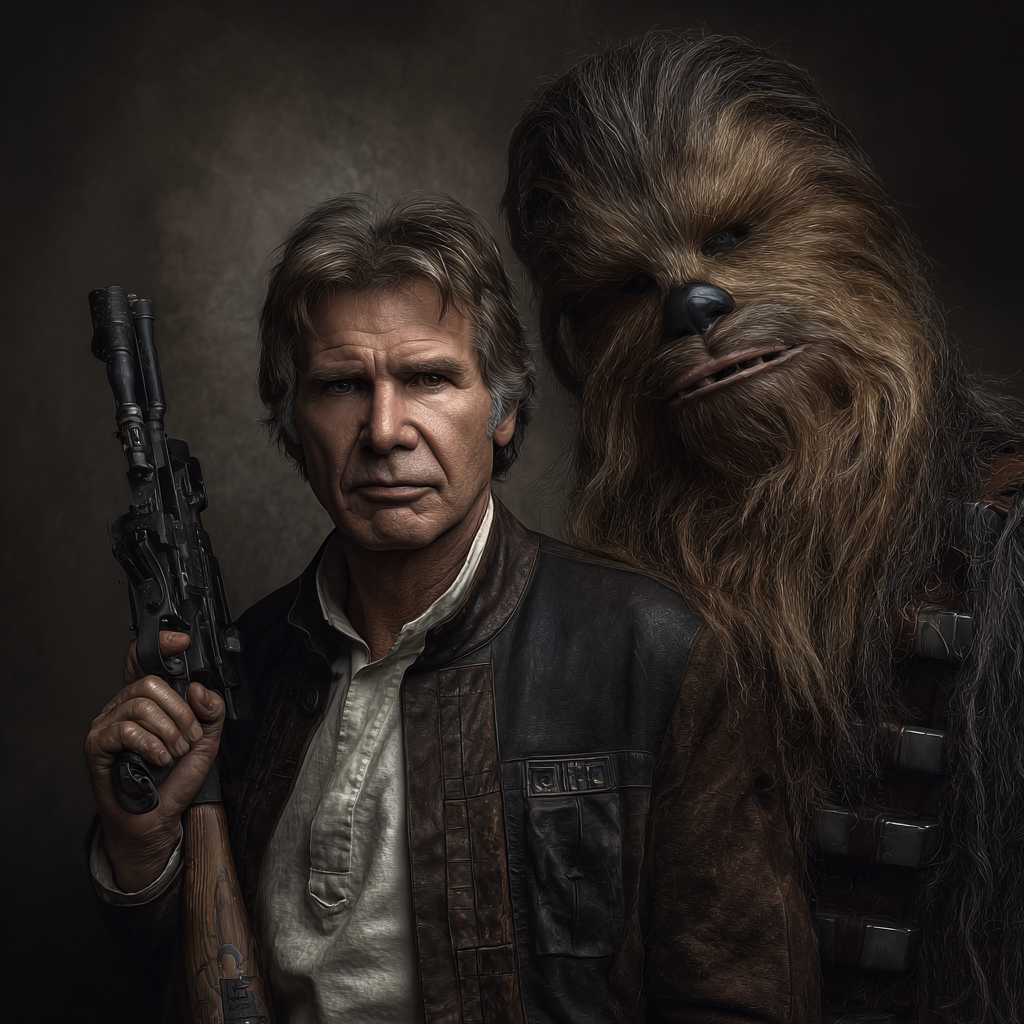
Quick Answers
- Harrison Ford’s relationship with Star Wars was more complicated than simple dislike or refusal. He valued Han Solo as a character but repeatedly suggested that Han’s story needed a meaningful ending rather than endless continuation.
- During the original trilogy era, Ford supported Han sacrificing himself because he believed death could give the character greater dramatic purpose.
- Ford ultimately returned for Return of the Jedi, but Han survived, leaving the character’s story open for decades.
- His Harrison Ford Star Wars return in The Force Awakens became more attractive because the new story gave older Han an emotional role involving Leia, Chewbacca, Rey, and especially his son Ben Solo.
- Han’s death in The Force Awakens fulfilled an idea Ford had discussed long before the sequel trilogy: giving the character a sacrifice with meaningful consequences for the other heroes.
- Ford later returned in The Rise of Skywalker, suggesting his attitude toward returning was influenced less by franchise nostalgia than by whether Han had a useful dramatic purpose.
Proof & Sources
Harrison Ford’s history with Han Solo is best understood through the films themselves, official Star Wars character material, and Ford’s documented public discussion of the role. These sources show a more nuanced story than the common claim that Ford “hated Star Wars.”
Why would the actor behind one of the most beloved characters in movie history repeatedly question whether Han Solo should keep coming back at all?
The Real Story Is More Complicated Than “Harrison Ford Hated Star Wars”
The story of Harrison Ford’s return to Star Wars is often reduced to easy fan trivia: Ford supposedly disliked Han Solo, wanted the character killed, and had to be persuaded to come back. That version is memorable, but it oversimplifies a relationship that spanned decades and multiple stages of Ford’s career. His public comments suggest something more specific. Ford was often less interested in preserving Han indefinitely than in making sure the character had a dramatic purpose.
That distinction matters because Ford repeatedly returned when he believed Han had a reason to be present. He completed the original trilogy, returned decades later for The Force Awakens, and even appeared again in The Rise of Skywalker. Those choices do not fit comfortably with the idea that he wanted nothing to do with Star Wars. What does fit is the idea that Ford preferred stories in which Han’s presence changed something rather than functioning only as fan service.
Han Solo's history therefore becomes as much a story about character closure as it is about actor reluctance. Ford was not primarily asking whether audiences still loved Han. That answer was obvious. The more interesting question was whether another appearance could add something meaningful to the Han Solo story in Star Wars.
Ford Did Not Begin Star Wars as a Franchise Icon
When the original Star Wars opened in 1977, Harrison Ford wasn't yet the kind of actor whose return could shape a billion-dollar franchise. He had appeared in films and had previously worked with George Lucas on American Graffiti, but Han Solo helped transform him into a major international star.
That historical context changes how we understand Ford’s later attitude. He did not enter the franchise after decades of fame because he needed a familiar blockbuster role. Star Wars itself was one of the projects that created the screen identity audiences would later associate with him. Han’s confidence, irritation, physicality, humor, and reluctance to admit vulnerability became closely connected with Ford’s emerging star persona.
The success of the film also changed the scale of the commitment. What began as a role in an unusual science-fiction adventure quickly became the foundation of a cultural phenomenon. Sequels, merchandising, conventions, interviews, and fan expectations turned Han Solo into something much larger than a single performance.
For an actor looking to keep developing different characters, that kind of success can create an unusual problem. The role gives enormous opportunity while also threatening to define everything that follows. Understanding this tension is essential to understanding later stories about Ford wanting Han’s arc to end.
Learn more: Star Wars Smugglers Outpost Guide: What It Is & Why Fans Love It
Han Solo Was Designed to Change, Not Remain the Same Forever
The original Star Wars gives Han a clear arc. He starts as a smuggler focused on money and survival, openly skeptical of the Rebellion and dismissive of the Force. By the final battle, however, he returns to help Luke destroy the Death Star. The decision proves that his cynical self-description no longer tells the full story.
The Empire Strikes Back builds on that development. Han still speaks like an outsider and initially prepares to leave the Rebels, but his actions reveal a deep attachment to Leia, Luke, Chewbacca, and the people around him. He gradually becomes someone who belongs to a cause, even while pretending to remain independent.
This raises a natural question for any actor considering long-term character development. Once the selfish smuggler has become a hero, what happens next? If Han repeats the same jokes and escapes the same kinds of danger forever, the qualities that originally made him interesting can turn into repetition.
Ford’s interest in a more decisive ending can therefore be understood as a dramatic concern. Han’s death would not merely remove a popular character. A sacrifice could complete the movement from self-preservation to selflessness in the strongest possible way.
Why Ford Thought Han Solo Could Die
Over the years, Ford has said he believed Han could have served the story by sacrificing himself. People often take this as evidence that the actor disliked the character, but dramatically it makes a lot of sense.
Han begins the saga focused on survival. A final act in which he knowingly gives up his life for others would completely reverse that starting point. The man who once wanted payment before accepting danger would ultimately choose danger with no possibility of reward.
That ending could also increase the emotional stakes for the surviving heroes. Luke and Leia would not simply win another battle; they would carry forward the loss of someone whose transformation had become intertwined with their own stories.
Ford’s argument therefore appears less like a desire to erase Han than a desire to give him consequence. Death in a story can give a character finality, especially when it reflects the central change the character has undergone.
This interpretation becomes especially important decades later, because The Force Awakens eventually gives Han an ending surprisingly close to that dramatic logic.
Why Han Survived Return of the Jedi
Whatever ideas were discussed around Han’s future, Return of the Jedi ultimately chose a different direction. Han survives the mission on Endor, helps the Rebels shut down the second Death Star’s shield generator, reunites with Leia, and joins the celebration after the Empire’s defeat.
For audiences in 1983, this provides a satisfying ending to the original trio. Luke survives his confrontation with Vader and the Emperor, Leia discovers her connection to the Skywalker family, and Han fully commits himself to the fight against the Empire.
From a franchise perspective, keeping Han alive also preserves the emotional completeness of the victory. Return of the Jedi ends with reunion rather than sacrifice. After the darker events of The Empire Strikes Back, the final film offers release and celebration.
For Ford, however, Han’s survival meant that the character never received the kind of irreversible dramatic conclusion he had considered. The trilogy had ended, but Han himself remained available for another story if Star Wars ever returned to that generation.
For more than thirty years, that possibility remained largely theoretical.
Harrison Ford Built an Entire Career Beyond Han Solo
What happened during those decades is crucial to the Star Wars actor history behind his later return. Ford did not spend the years after Return of the Jedi waiting to revisit Han. He became one of Hollywood’s most recognizable leading actors through an extraordinary variety of films.
Indiana Jones gave him another iconic adventure hero, but even that character differed sharply from Han. Ford also appeared in science-fiction dramas, thrillers, action films, political stories, and more grounded character-driven projects. His screen identity expanded far beyond the smuggler who first made him globally famous.
This success gave Ford unusual freedom when returning to Star Wars eventually became possible. He didn't need to come back to revive his career or reconnect with a famous franchise. Any new appearance had to justify itself in another way.
That helps explain why nostalgia alone wouldn't have been enough. Audiences might have been thrilled to see Han return to the Millennium Falcon. Still, an actor who had spent decades proving he could play many roles had little creative reason to repeat the original performance without development.
The question became not “Can Han return?” but “What has happened to Han, and why does the story need him now?”
The Disney Era Changed the Possibility of a Return
When Lucasfilm began developing a new trilogy set after the original films, Han, Luke, and Leia immediately changed; their roles were no longer simply characters whose stories had ended in 1983. They could become bridges between generations.
That created a fundamentally different opportunity for Ford. A return did not have to mean recreating the younger Han Solo. An older version could carry decades of unseen history, regret, experience, and changed relationships.
This is one reason The Force Awakens made Harrison Ford's return to Star Wars feel significant. Han is immediately recognizable, but he is not frozen in time. He still knows how to joke, improvise, argue with Chewbacca, and fly the Falcon, yet the life behind those familiar behaviors has become much more complicated.
The actor is therefore not being asked only to reproduce an old performance. He plays what happens when the charming young smuggler becomes an older man who won a war, built a family, lost much of that family, and retreated into familiar habits.
That is far richer material than simple reunion.
The Force Awakens Gives Han a Reason to Exist Beyond Nostalgia
When Han appears in The Force Awakens, the film initially delivers exactly the pleasure audiences expect. He stands beside Chewbacca. He returns to the Millennium Falcon. His humor feels familiar, and the rhythm of Ford’s performance immediately connects the new film with the original trilogy.
But the story gradually reveals that this older Han is carrying serious emotional damage. His relationship with Leia has strained, their son Ben has fallen to the dark side, and Han has returned to smuggling rather than continuing as a victorious Rebel hero.
That regression is important. Han has not simply been preserved as the man audiences last saw during the celebration on Endor. He has experienced failure.
For Ford, this gives the role something new to explore. Younger Han’s central struggle was learning that he cared about people and causes beyond himself. Older Han already knows that love matters. His problem is what to do after those relationships become sources of pain.
The answer eventually requires him to do the opposite of running away.
Ben Solo Makes Han’s Return Necessary
The most important reason for Han’s presence in The Force Awakens is not the Millennium Falcon, Rey, or even nostalgia for the original trilogy. It is Ben Solo.
By making the new antagonist Han and Leia’s son, the film transforms Han’s return from a franchise event into a family tragedy. Kylo Ren is not merely another dark-side warrior threatening the heroes. He represents a personal failure for Han.
That relationship gives Ford the dramatic purpose he had long wanted for the character. Han now has something to do that no other returning hero can do in the same way. Leia can reach Ben as his mother, and Luke as his former teacher and uncle, but Han confronts him as the father he has become emotionally separated from.
The eventual meeting on Starkiller Base therefore becomes the real reason Han returns. Without it, his role could have remained largely nostalgic. With it, his entire history becomes relevant to the new trilogy.
The smuggler who once avoided responsibility must now face the most painful responsibility of his life.
Han’s Death Finally Gives Ford the Dramatic Ending He Had Wanted
Han’s death in The Force Awakens is often discussed primarily as a shocking franchise moment. It also culminates an idea tied to Ford’s view of the character for decades: if Han dies, the death should mean something for the people around him.
The scene fulfills that principle almost perfectly. Han does not die randomly in battle. He chooses to approach Ben and tries to bring his son home. He knowingly places himself in a position where personal vulnerability matters more than physical safety.
The emotional logic returns Han to the central transformation of his life. In 1977, survival comes first. In 2015, he risks everything for another person.
His death then affects multiple characters. Leia loses Han. Chewbacca loses his closest friend. Rey witnesses the cost of Kylo Ren’s choice. Ben himself remains haunted by what he has done. The event changes the story rather than simply removing an older hero.
That is why the ending makes Ford’s earlier reluctance so interesting. A character death he once believed could strengthen Star Wars eventually became part of the story more than three decades later.
Ford’s Performance Makes the Death More Than a Franchise Decision
The Starkiller Base sequence works because Ford changes the way he plays Han. Much of the character’s usual defense mechanism disappears. He needs little sarcasm when he speaks to Ben.
Instead, the scene depends on hesitation, recognition, hope, and fear. Han understands what his son has become, but he still chooses to believe that Ben might return.
Ford’s physical performance is particularly important. Han approaches slowly. He isn't entering a duel or acting as if his blaster will solve the problem. The entire confrontation is based on emotional risk.
Even after Ben wounds him, Han’s response remains tied to their father-son relationship. That moment keeps the scene from becoming a conventional hero-versus-villain death.
That is precisely the kind of material that distinguishes a meaningful return from a nostalgic cameo. Ford doesn't just appear as Han Solo again. He completes the character’s longest emotional arc.
The Return Was Therefore Not a Simple Change of Heart
It's tempting to describe The Force Awakens as the moment Harrison Ford finally changed his mind about Star Wars. That framing is too simple.
The more useful interpretation is that the circumstances changed. The new film offered a different Han Solo, a different stage of life, and a story in which the character could reach an ending with lasting emotional consequences.
Ford didn't need to pretend no time had passed. The aging of both actor and character became part of the narrative. Han could be funny and familiar while also carrying regret that the younger version had never experienced.
That difference helps explain why his return feels so natural despite the enormous gap between films. The audience isn't asked to imagine that 1983 Han has suddenly walked onto the screen unchanged. We see what decades of life have done.
The Han Solo story in Star Wars therefore gains a second arc rather than merely receiving an extended epilogue.
Read more: Why Harrison Ford Always Wanted Han Solo to Die
Ford’s On-Set Injury Did Not End the Return
Production on The Force Awakens included a serious incident in which Ford was injured during filming involving the Millennium Falcon set. The accident interrupted his work and became part of the movie's public history.
It would have been understandable to speculate that the veteran actor’s return had become too physically demanding. Instead, Ford recovered and completed the film.
That matters because Han’s comeback wasn't simply a symbolic appearance recorded in a controlled cameo. Ford participated in a major adventure film that expected him to move through action scenes, interact physically with elaborate sets, and carry substantial portions of the narrative.
The finished movie uses his age rather than attempting to hide it. Han remains capable, but the film doesn't present him as an unchanged thirty-year-old action hero. The performance gains credibility by letting time show.
That approach became increasingly common in later legacy sequels, but The Force Awakens demonstrated how effective it could be when the older character’s history mattered directly to the new plot.
Why Ford Could Joke About Star Wars Yet Still Return
Harrison Ford has often displayed a dry public attitude toward questions about Star Wars lore. Fans sometimes interpret this humor as hostility toward the franchise itself.
A more careful distinction is useful. An actor doesn't need to share a fan’s interest in every fictional detail to care about a character, a performance, or a scene's dramatic function. Ford’s relationship with Star Wars has often appeared to operate at the level of acting and story rather than encyclopedic fandom.
That is not unusual. A performer may think about motivation, dialogue, relationships, and dramatic structure while audiences spend decades studying starship models or fictional history.
Ford’s humor about Star Wars therefore shouldn't automatically translate into contempt for Han Solo. His repeated participation in the franchise suggests that, when the drama was compelling, he was willing to return.
The difference between loving a fictional universe as a fan and valuing a role as an actor matters for understanding the history accurately.
Han Solo Was Never Ford’s Only Legacy
Another reason a return could not be taken for granted is that Ford’s career never depended exclusively on Han. By the time the sequel trilogy was being developed, he had already become inseparable from several major characters and films outside Star Wars.
For audiences, this makes his Star Wars appearances special rather than routine. Ford is not an actor who spent his career continually returning to Han between other projects. Long periods passed in which the character belonged primarily to the memory of the original films.
The distance also changed audience expectations. A younger generation had grown up watching the trilogy on home video, television, and later digital platforms. For them, Ford’s return connected a character from an established classic with a brand-new theatrical experience.
That generational bridge became one of The Force Awakens’ most important strengths. New protagonists could enter the saga while Han and Chewbacca's presence provided direct emotional continuity.
Why Han Could Return After Dying
Ford’s appearance in The Rise of Skywalker may seem surprising after The Force Awakens gave Han such a definitive ending. The scene works because it does not simply reverse the death.
Han appears during Ben Solo’s emotional turning point, functioning through Ben’s memory rather than returning as though the events of Starkiller Base never happened. The film revisits the father-son confrontation and changes its emotional direction.
This gives Ford another very specific dramatic purpose. Han’s appearance isn't about putting him back on the Millennium Falcon or restoring the old trio. It exists because Ben’s relationship with his father remains central to his guilt and potential return from the dark side.
The scene also echoes Ford’s broader pattern with Star Wars. He comes back when the appearance serves a character moment. Han has already died, so that another conventional adventure would weaken the finality of The Force Awakens. A brief memory-driven scene can instead deepen the meaning of that death.
Ford’s return therefore does not contradict the idea that Han needed an ending. It depends on that ending having already happened.
Han Solo’s Story Becomes More Powerful Because It Ends
Long-running franchises naturally resist endings. Popular characters have financial, emotional, and cultural value, so there is always an incentive to bring them back.
Han Solo demonstrates why finality can also create value. Because his death is real within the story, earlier choices gain additional weight. His return to help Luke on Yavin, his relationship with Leia, his loyalty to Chewbacca, and his confrontation with Ben all become parts of a completed life rather than episodes in an indefinitely renewable series.
Ford’s long-standing interest in giving Han a meaningful sacrifice therefore aligns with a basic principle of storytelling: an ending can define everything that came before it.
This does not mean Han disappeared from Star Wars culture. Younger versions, novels, comics, animation, games, merchandise, and memories within later stories can continue exploring the character. What ends is the older Han’s forward-moving personal journey.
That difference lets the character remain important without requiring Harrison Ford to keep returning indefinitely.
The Harrison Ford Return Also Changed How Legacy Characters Could Work
The sequel trilogy arrived as Hollywood became increasingly interested in reviving older franchises. Bringing back an original actor wasn't revolutionary. What mattered was how they integrated Han into the new story.
He was not protected from failure. His life after victory was not ideal. He had lost his son emotionally, separated from Leia, and retreated into familiar habits. Some viewers criticized those choices, but they gave Ford real dramatic material rather than turning Han into a museum exhibit.
Legacy characters become difficult when a film is afraid to let them change. If you treat them only as symbols of earlier movies, every scene can become an exercise in recognition. Han’s return works differently because recognition is only the entry point.
The Falcon is familiar. Chewbacca is familiar. Han’s humor is familiar. But beneath those elements sits a story about aging, regret, family, and whether a person can confront a failure they once tried to escape.
That is why the Harrison Ford Star Wars return remains more interesting than a simple reunion.
Ford’s Reluctance Ultimately Protected What Made Han Interesting
Ford's reluctance to preserve Han may have helped the character. If an actor believes a role should continue indefinitely because audiences love it, repetition can replace development.
Ford’s emphasis on dramatic purpose pushes in the opposite direction. Han should appear because something important is happening to him, not merely because applause will follow his entrance.
That perspective matches the character surprisingly well. Han Solo himself would probably have little patience for ceremony surrounding his own legend. He is most compelling when forced to make a difficult choice, improvise through danger, or reveal feelings he would rather hide.
A return based only on celebration could therefore flatten the character. A return involving failure, family conflict, and sacrifice gives Ford something recognizably human to play.
In that sense, the actor’s complicated relationship with the role may have helped Han get a stronger ending than a more straightforward, nostalgia-driven revival would have produced.
The Story Was Always About More Than the Millennium Falcon
Fans understandably associate Han with the Falcon, Chewbacca, his blaster, and some of the franchise's most memorable lines. Those elements are essential to his identity, but they don't explain why his return ultimately matters.
Han matters because of the movement beneath the iconography. He starts by trying to avoid responsibility and gradually builds relationships he can no longer abandon. Decades later, when those relationships become painful, he briefly retreats again before making the same fundamental choice: he goes back.
That repetition gives the character’s life a meaningful shape. Young Han returns to help Luke. Older Han returns to Leia and then confronts Ben. The circumstances change, but the moral decision remains the same.
Ford’s performance makes those decisions feel consistent without turning Han into a simple symbol of selflessness. He remains nervous, sarcastic, flawed, and reluctant. Heroism matters precisely because it does not come naturally or comfortably.
👉[ Explore more lightsabers here.](https://nsabers.com/collections/master-saber)
Why Harrison Ford Almost Didn’t Return Becomes the Wrong Final Question
When you consider the full history, the most useful question isn't simply why Ford almost stayed away. The better question is what eventually made returning worthwhile.
The answer lies in story purpose. Ford had already played Han’s transformation from selfish smuggler to Rebel hero. Repeating that arc would offer little. An older Han dealing with his family's collapse created something different, and letting him sacrifice himself for his son gave the character the kind of irreversible consequence Ford had long believed could be valuable.
That does not mean every rumor about Ford’s reluctance is accurate or that every public joke should be treated as a statement of hostility. The documented pattern is more nuanced. He was willing to question whether Han still had somewhere meaningful to go.
When a story finally gave him that destination, he returned.
What the Harrison Ford Star Wars History Really Tells Us
The Star Wars history surrounding Harrison Ford ultimately teaches the difference between fame and dramatic value. Han Solo was famous enough to return at almost any time. That did not automatically mean he should.
Ford’s relationship with the character seems guided by a recurring concern: Han needed a purpose. During the original trilogy era, sacrifice offered one possible conclusion. Decades later, the sequel trilogy created a new emotional context in which that idea could finally work.
The result is a character whose ending reflects his beginning. Han enters Star Wars insisting that survival and payment matter more than ideals. He leaves it after walking toward his fallen son with no guarantee that he will survive and no reward waiting if he succeeds.
That is why the history of Harrison Ford’s Star Wars return is more compelling than the familiar claim that an actor had to be convinced to revisit an old franchise. Ford’s repeated hesitation kept the central question where it belonged: not whether Han Solo was popular enough to return, but whether returning could complete his story.
FAQs
Why did Harrison Ford almost not return to Star Wars?
Ford has long said Han Solo needed meaningful dramatic purpose and previously supported the idea of the character making a major sacrifice rather than continuing indefinitely.
Did Harrison Ford hate playing Han Solo?
That description oversimplifies his relationship with the role. His public comments often show less interest in Star Wars lore than fans have, but he repeatedly returned when Han had a meaningful part in the story.
Did Harrison Ford want Han Solo to die?
Ford has publicly said he believed Han sacrificing himself could give the character more dramatic weight and benefit the other characters.
Why didn’t Han Solo die in Return of the Jedi?
The final film instead gave Han a victorious ending alongside Leia, Luke, Chewbacca, and the Rebel Alliance after the Empire's defeat.
Why did Harrison Ford return for The Force Awakens?
The film gave an older Han a substantial emotional role centered on his fractured family, especially his relationship with Ben Solo, and ultimately gave the character a consequential ending.
How long was Harrison Ford away from playing Han Solo?
More than three decades passed between Return of the Jedi and Ford’s major return as Han in The Force Awakens.
Why is Han Solo a smuggler again in The Force Awakens?
The film presents his return to smuggling as part of his retreat after his family's collapse and Ben Solo’s fall to the dark side.
Why does Han Solo confront Kylo Ren?
Han approaches Kylo as his son Ben and tries to convince him to leave the dark side and return home.
Why does Han Solo die in The Force Awakens?
His death completes an emotional confrontation with Ben and creates lasting consequences for Leia, Chewbacca, Rey, and Ben himself.
Did Harrison Ford return after Han Solo died?
Yes. He appears again in The Rise of Skywalker during a memory-like scene connected to Ben Solo’s emotional transformation.
Was Han Solo resurrected in The Rise of Skywalker?
The scene isn't a conventional physical resurrection. Han appears through Ben’s memory during a pivotal emotional moment.
Did Ford’s injury stop him from finishing The Force Awakens?
No. He was injured during production, recovered, and completed his role.
Why is Harrison Ford so important to Han Solo’s legacy?
Ford established Han’s distinctive mix of confidence, skepticism, humor, vulnerability, and reluctant loyalty, shaping how audiences have understood the character for decades.
What makes Han Solo’s final arc different from his original trilogy story?
The original films show Han learning to care about people beyond himself. The sequel-era story asks whether an older Han can confront personal failure and risk himself for the family he nearly lost.
Join the Nsabers Community
Bring the Force into your world with Nsabers.
✨ Follow Nsabers across the galaxy:
💬 We’d love to hear from you!
Share your thoughts, leave a comment below, or tag us on social media.

Deixar comentário
Os comentários precisam ser aprovados antes da publicação.
Este site é protegido por hCaptcha e a Política de privacidade e os Termos de serviço do hCaptcha se aplicam.