

Quick Answers
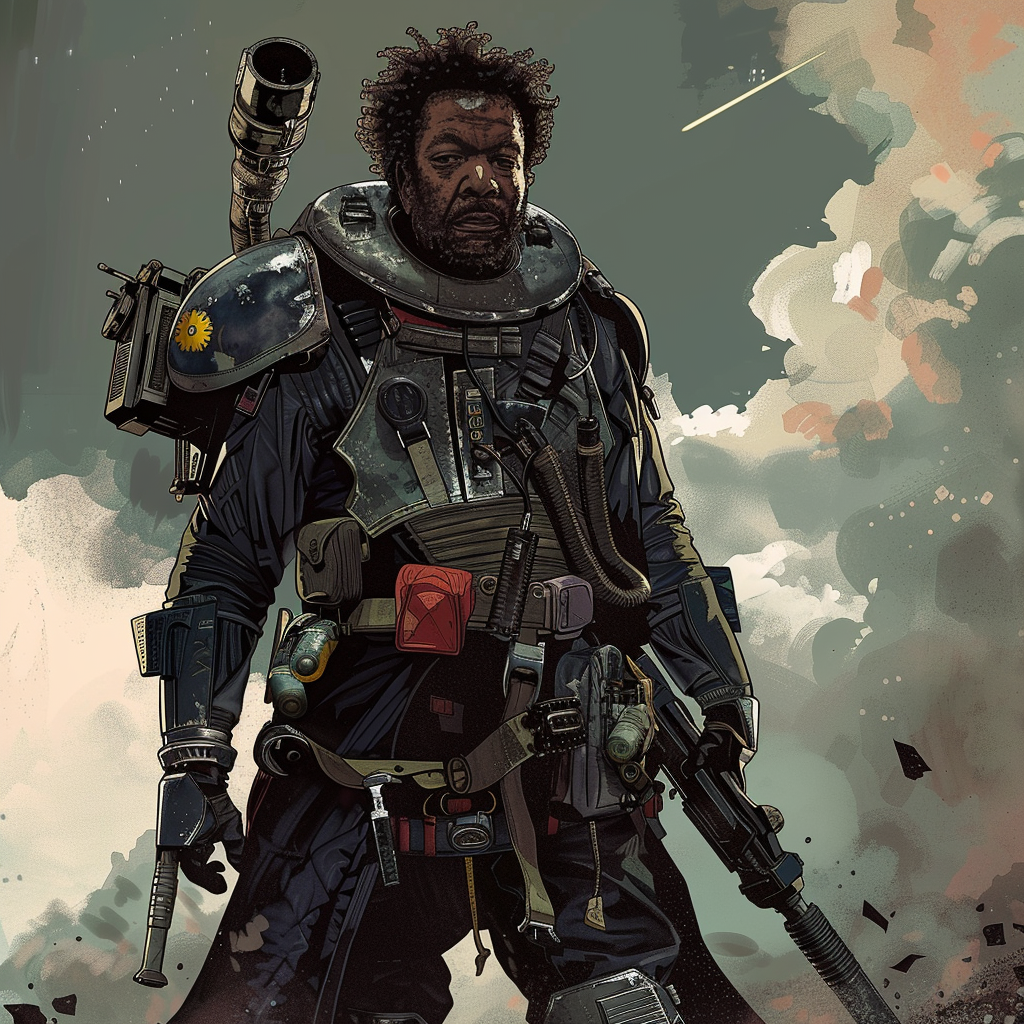
● Identity: Saw Gerrera, revolutionary extremist and founder of the Partisans
● Era: Fall of the Republic to early Galactic Civil War
● Affiliation: Rebel-aligned but fiercely independent resistance leader
● Core Theme: Freedom at any cost — moral compromise in asymmetric warfare
● Why He Matters: The living bridge between idealistic rebellion and brutal insurgency
Proof & Sources
- Wookieepedia: Saw Gerrera
What does rebellion look like before it becomes heroic, organized, and easy to romanticize?
Long before the Rebel Alliance gained symbols, speeches, and starfighters, resistance meant something far darker. It meant hiding, bleeding, sacrificing, and making choices no one wanted to claim responsibility for. That is where Saw Gerrera lives in Star Wars history — not as a polished hero, but as the raw nerve of rebellion itself.
Saw Gerrera did not wait for hope to arrive. He forced resistance into existence, long before the galaxy agreed on what freedom should cost.
Onderon: Where Resistance Was Born
Saw Gerrera’s story begins on Onderon, a world torn apart by civil war during the Clone Wars. As a young fighter, Saw did not learn rebellion from philosophy or prophecy. He knew it through loss.
When Separatist forces and political corruption destroyed his home, Saw took up arms alongside his sister, Steela Gerrera. Under the guidance of Anakin Skywalker and Obi-Wan Kenobi, the Onderon rebels were trained to fight an occupying force using guerrilla tactics rather than traditional military doctrine.
For Saw, resistance was never theoretical. It was survival.
Steela’s death during the uprising marked a permanent shift in his worldview. Where others mourned and moved on, Saw hardened. From that moment forward, compromise became synonymous with weakness.
From Clone Wars to Imperial Darkness
When the Clone Wars ended, and the Empire rose from the Republic’s ashes, many fighters laid down their weapons, believing the war was over. Saw Gerrera never did.
To him, the Empire was simply the next occupier.
As Imperial rule spread, Saw reorganized his fighters into what would become the Partisans, an uncompromising resistance cell operating outside any centralized command. Unlike future Rebel leaders, Saw did not believe unity required consensus. He thought fear was as powerful a weapon as hope.
His tactics escalated. Sabotage turned into terror. Intelligence gathering turned into an assassination. The line between resistance and extremism blurred — and Saw crossed it willingly.
Learn more: Sorry, But I'll Never Think This One Star Wars Rebel Was A Good Person
The Cost of Fighting Without Limits
Saw’s physical condition tells the story that his words never soften. Cybernetic limbs, damaged lungs, constant pain — these were not accidents. They were the accumulated price of decades spent on the front lines.
Each injury reinforced his belief that freedom demanded total commitment. If he suffered, it meant the enemy was hurting too.
But this mentality isolated him. Other rebel cells began to distance themselves, fearing that association with Saw would delegitimize their cause. To them, he was dangerous. To Saw, they were cowards.
This ideological rift would define his legacy.
Partisans vs. the Rebel Alliance
The Rebel Alliance, led by figures like Mon Mothma, sought legitimacy. They needed allies, public support, and moral clarity. Saw Gerrera rejected all three.
To him, politics delayed action—diplomacy diluted purpose.
Saw’s Partisans operated independently, striking Imperial targets without approval or coordination. This made them compelling — and unpredictable. It also made them expendable in the eyes of Alliance leadership.
The rebellion did not begin cleanly. It became clean later. Saw existed in the phase of history that people prefer to forget.
Jedha: Faith, Kyber, and Extremism
Saw’s final stand on Jedha reveals the full complexity of his character. By this point, he had become deeply entwined with Kyber Crystal resistance movements, seeing the Empire’s exploitation of the Force itself as a moral abomination.
Living among the ruins, breathing poisoned air, Saw had transformed into a symbol — half man, half warning.
When Jyn Erso confronts him, she does not see a monster. She sees a broken idealist who never stopped fighting, even when the galaxy moved on without him.
Saw knows he has gone too far. He also knows he cannot stop.
👉 Explore more lightsabers here.
Saw Gerrera’s Relationship with Jyn Erso
Saw’s role as Jyn’s surrogate father complicates any simple judgment of his extremism. He rescued her. He trained her. He also abandoned her — believing emotional attachment was a liability.
This contradiction defines Saw. He cares deeply, but believes care must be sacrificed for the mission. In that sense, he mirrors the darkest tendencies of both Jedi detachment and Sith obsession, without fully belonging to either.
His final moments are not heroic. They are honest.
He refuses rescue. He accepts the consequence. He stays where he stands.
Why Saw Gerrera Matters to Star Wars
Saw Gerrera forces Star Wars to confront an uncomfortable truth: revolutions are not born noble. They become noble only after victory rewrites memory.
Without fighters like Saw, there is no rebellion. Without restraint, there is no future worth winning.
He is the question the saga rarely asks out loud — how much darkness is acceptable in the fight against darkness?
Read more: How Rogue One Fits Into the Star Wars Timeline
The Legacy of a Relentless Fighter
Saw Gerrera does not live to see the Death Star destroyed. He does not attend victory ceremonies. His legacy survives in fragments — tactics adopted quietly, lessons learned reluctantly.
The Rebel Alliance succeeds in part because it learns what Saw could not accept: that survival sometimes requires unity over purity.
But it never forgets that someone fought first, when fighting meant standing alone.
FAQs
Who is Saw Gerrera?
A resistance leader and revolutionary who fought oppression from the Clone Wars through the rise of the Empire.
Was Saw Gerrera part of the Rebel Alliance?
He supported rebellion but operated independently from the Alliance.
Why is Saw considered extreme?
Because he embraced violence and fear as tools without moral compromise.
Did Saw Gerrera use the Force?
No, but he believed deeply in protecting Force-related traditions and kyber.
What is the Partisans group?
Saw’s militant resistance faction is dedicated to direct action against the Empire.
How is Saw connected to Jyn Erso?
He raised her after rescuing her from Imperial forces.
Why did the Rebels distance themselves from him?
His methods threatened political legitimacy and civilian safety.
What planet is Saw most associated with?
Onderon and later Jedha.
Is Saw Gerrera a hero or a villain?
He is neither entirely — he is a necessary contradiction.
Why does Saw Gerrera still matter?
Because he represents the cost of resistance before hope becomes organized.
Join the Nsabers Community
Saw Gerrera reminds us that rebellion is not born from speeches, but from scars. Before banners, some fighters were never expected to be remembered.
✨ Follow Nsabers across the galaxy:
💬 Share your thoughts on Saw Gerrera, resistance ethics, or the untold cost of rebellion.

Zostaw komentarz
Wszystkie komentarze są moderowane przed opublikowaniem.
Ta strona jest chroniona przez hCaptcha i obowiązują na niej Polityka prywatności i Warunki korzystania z usługi serwisu hCaptcha.