

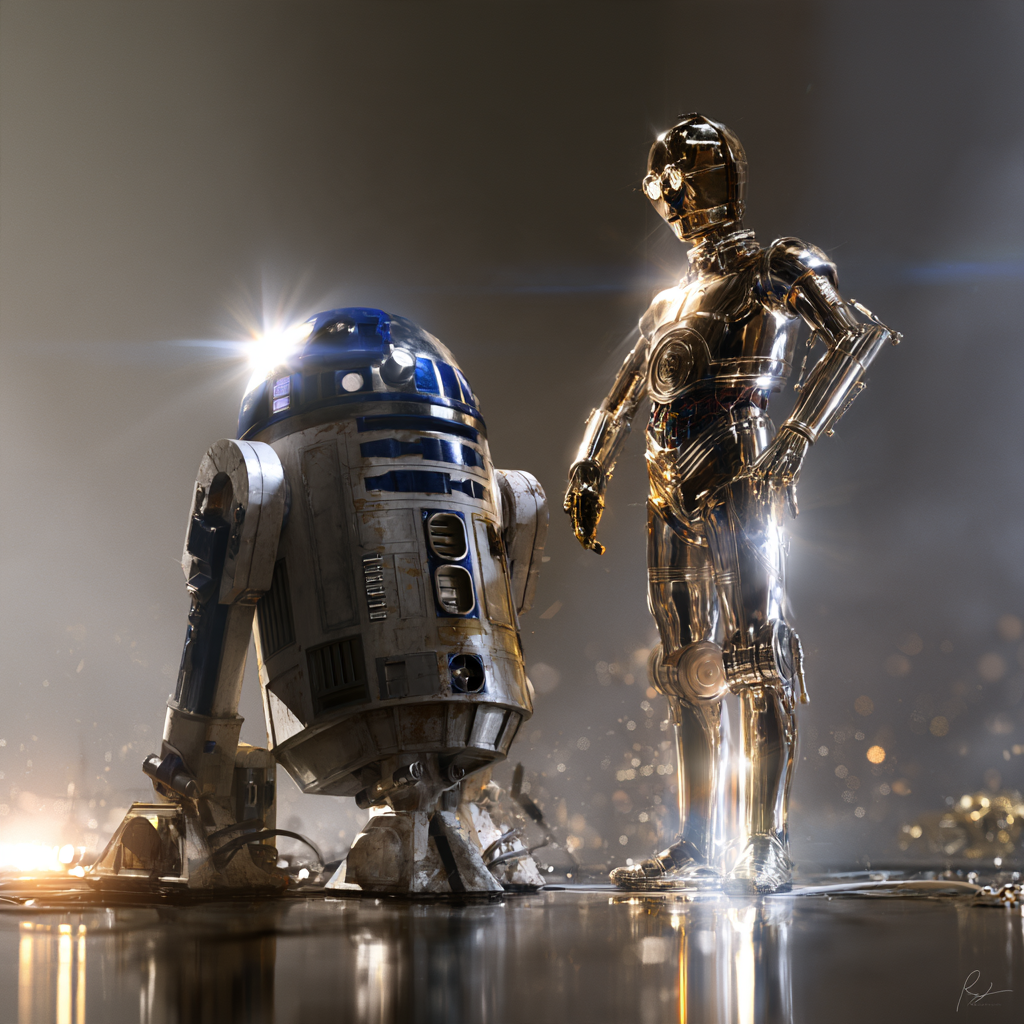
Quick Answer
- In Star Wars, droid is already the standard everyday term for a robotic being, so fans do not normally replace it with another universal nickname.
- If a crossword or word puzzle asks for “droid, informally,” the expected answer may be bot, although “bot” is general English rather than a distinctive Star Wars expression.
- Their names or spoken designations usually call famous droids: R2-D2 becomes Artoo, C-3PO becomes Threepio, and C1-10P is much better known as Chopper.
- Terms such as astromech, protocol droid, and battle droid describe a droid’s class or function rather than serving as universal nicknames.
- Clanker is informal slang, especially associated with battle droids, and shouldn't be treated as a universal term for every droid in the galaxy.
- No single universal Star Wars droid nickname exists. The natural term changes depending on whether fans are talking about a specific character, a type of machine, or a particular social context.
Proof & Sources
Official Star Wars material consistently uses “droid” as the standard term for robotic beings while distinguishing individual characters through names, designations, and functional classes. Characters such as R2-D2 and C-3PO show how technical identifiers can gradually function like personal names within the story.
When someone in the Star Wars galaxy says “Artoo,” “astromech,” “clanker,” or simply “droid,” are those words describing the same thing—or are they revealing how that particular machine is understood?
What Does “Star Wars Droid Informally” Actually Mean?
The phrase “Star Wars droid informally” suggests there should be one special piece of Star Wars slang fans use instead of “droid.” In practice, that is not how the language of the galaxy works. Droid is already the ordinary term for robotic beings, both for characters inside the stories and for fans discussing them outside the franchise. A pilot might talk about needing a droid aboard a ship, a mechanic might refer to an astromech, and a friend might call R2-D2 by name.
The confusion usually comes from the word “informally.” In general English, robot can be shortened to bot, which means a crossword-style clue such as “droid, informally” may reasonably expect “bot” as its answer. That works as wordplay, but it does not mean Star Wars characters normally refer to R2-D2 or C-3PO as bots. Within the franchise, “droid” already sounds casual and natural enough that another generic abbreviation is rarely necessary.
Context therefore changes the answer. If the question appears in a crossword, bot may be exactly right. If two Star Wars fans are discussing robotic characters, droid will usually sound more authentic. If they are discussing a famous individual such as R2-D2, then the category itself becomes less important, and the character’s actual name becomes the natural choice.
Why R2-D2 Becomes Artoo and C-3PO Becomes Threepio
One of the most distinctive features of Star Wars droids is the way mechanical-looking designations gradually stop feeling mechanical. R2-D2 looks like a product code when written on a page, yet characters rarely treat him as an anonymous piece of equipment. Spoken aloud, R2 becomes Artoo, transforming a sequence of letters and numbers into something that functions almost exactly like a personal name.
C-3PO follows the same pattern. His designation becomes Threepio, and after decades of stories, the name carries personality rather than technical meaning. Fans do not hear “Threepio” and imagine an interchangeable machine from a production line. They imagine a particular golden protocol droid with recognizable habits, anxieties, relationships, memories, and a long history alongside some of the saga’s most important characters.
This is an important clue to understanding **what droids are called in **Star Wars. A designation doesn't have to be replaced before it becomes personal. Language itself changes how the designation feels. The audience may still see letters and numbers, but repeated use turns those symbols into something like a familiar name.
BB-8 demonstrates the same idea from another direction. His designation is already short and easy to pronounce, so there is little reason to transform it further. K-2SO can naturally become K-2 in conversation, while IG-11 is often left unchanged because the designation is already compact. Star Wars therefore has no rigid rule for turning a droid code into a nickname. The easiest, most recognizable form takes over.
Read more: 20 of the Star Wars Galaxy's Greatest Droids
Chopper Shows What Happens When the Nickname Takes Over
C1-10P offers an even clearer example because many viewers may recognize his nickname long before they remember his official designation. To most fans, he is simply Chopper. In this case, the informal name does more than make a mechanical identifier easier to pronounce. It becomes the primary identity through which the audience understands the character.
That works particularly well because Chopper has such a distinctive personality. He can be impatient, argumentative, mischievous, stubborn, fiercely loyal, and unexpectedly resourceful. Constantly calling him C1-10P would remind the audience that he is a manufactured machine. Calling him Chopper encourages the opposite response: it makes him feel like another unpredictable member of the crew.
This difference reveals something important about Star Wars droid culture. Technical designations explain where a machine belongs within a manufactured system, but personal names reflect relationships. Once characters spend enough time with a droid, the language around that machine can shift from classification to identity. Chopper is still a droid, but “droid” alone no longer tells us very much about who he is.
Astromech, Protocol Droid and Battle Droid Are Not Nicknames
Another source of confusion comes from words such as astromech, protocol droid, battle droid, medical droid, and security droid. These terms can sound informal because fans frequently use them without adding the word “droid,” but they are better understood as classifications. They tell us what a machine is designed to do rather than giving that machine a personal nickname.
R2-D2 is an astromech droid, so fans can naturally describe him as an astromech. Yet saying “Artoo” and saying “an astromech” communicate different kinds of information. Artoo identifies an individual. Astromech places that individual inside a wider category of technical droids associated with spacecraft operations, navigation support, maintenance, and repair.
C-3PO works the same way. He belongs to the protocol droid category, which explains his emphasis on communication, translation, etiquette, and interaction. When fans discuss the type of machine, “protocol droid” makes sense. When they discuss the character who traveled with Luke, Leia, Han, and the others, “Threepio” feels far more natural.
Battle droids make the distinction even clearer. B1 and B2 describe recognizable types within a broader military category. An individual machine could theoretically have a more specific identifier, but when thousands of similar units appear together, classification becomes more useful than personality. Star Wars shifts between these levels constantly, allowing some droids to remain part of a group while others emerge as recognizable individuals.
Is “Clanker” Really Another Word for Droid?
Clanker is one of the most recognizable pieces of informal droid language in Star Wars, but treating it as a universal synonym for droid removes the context that gives the word its meaning. It is especially associated with battle droids and Clone Wars-era attitudes toward the mechanical armies used by the Separatists.
The word itself evokes the metallic clanking of machinery, which helps explain why it can sound dismissive. Rather than recognizing a machine as an individual, the speaker reduces it to the noise and material of its construction. In that sense, “clanker” communicates an attitude as much as it identifies a target.
A B1 battle droid can therefore be a droid, a battle droid, a B1, and a clanker at the same time, but those labels are not interchangeable. “Droid” identifies the broad category. “Battle droid” describes function. “B1” identifies a particular model. “Clanker” adds social tone. Calling R2-D2 or C-3PO a clanker would consequently sound very different from using the term for an enemy battle droid.
That distinction is useful because Star Wars repeatedly shows that the words used for machines can reveal how organic characters think about them. A personal name can suggest familiarity, while a dismissive label can create emotional distance. The vocabulary is part of the world-building rather than merely a collection of alternative words for robot.
Is “Bot” the Informal Name for a Star Wars Droid?
The answer depends almost entirely on where the question appears. In ordinary English, bot is an obvious shortened form of robot, so there is nothing wrong with interpreting “droid, informally” as “bot” in a word puzzle or crossword. It is short, familiar, and fits the general meaning.
Inside Star Wars, however, it sounds less specific. The franchise has spent decades establishing droid as its natural in-universe vocabulary. Replacing it with bot does not make the language more casual; it often makes it sound more like contemporary technology terminology than something a character in the galaxy would normally say.
That is why someone might naturally say, “There’s an astromech aboard the ship,” rather than, “There’s a bot aboard the ship.” Both sentences are understandable, but only one immediately feels connected to Star Wars. When the machine is a known character, the distinction becomes stronger still. “Artoo fixed the ship” feels personal, while “the bot fixed the ship” removes that identity.
Read also: T3-M4: The Forgotten Droid of KOTOR
Droid Names Reveal How Star Wars Turns Machines into Characters
Why do technical codes such as R2-D2, C-3PO, K-2SO, BB-8, IG-11, and L3-37 remain so memorable when most real-world model numbers are instantly forgettable? The answer lies partly in characterization. Star Wars repeatedly takes names that initially sound like manufacturing labels and attaches memories, relationships, choices, humor, fear, loyalty, and sacrifice to them.
The process creates an interesting contrast with human characters. Luke Skywalker sounds like a person immediately. R2-D2 initially sounds like a machine. Yet after enough shared adventures, that distinction becomes less emotionally meaningful. Artoo is no longer defined primarily by being an astromech. His history with other characters has become more important than the category he belongs to.
Chopper pushes the process further by allowing the technical designation to recede almost completely, while BB-8 shows that even an unchanged model-style name can become deeply personal. The mechanism is different, but the result is similar: a manufactured identity becomes a social identity through repeated interaction.
That is one reason droids occupy such a distinctive place in Star Wars. The stories rarely need to declare that a particular machine should be viewed as a person. Instead, they allow language and relationships to do the work. The moment other characters stop referring to a droid purely by function and begin using its familiar name, the audience understands that something has changed.
What a Droid Is Called Can Reveal How Others See It
The contrast becomes especially meaningful because not every character in Star Wars treats droids the same way. Some see them primarily as tools, equipment, property, or replaceable machines. Others develop long-lasting friendships with them. The words they choose can quietly reflect that difference without requiring an explicit explanation.
Calling R2-D2 “Artoo” acknowledges an individual with a shared history. Calling an unknown unit “the astromech” identifies its role. Calling a battle droid “clanker” strips away individuality and emphasizes machinery. None of these expressions changes what the machine physically is, but each changes the relationship being communicated.
This helps explain why there cannot be one universal Star Wars** droid nickname**. The galaxy contains too many different relationships between organic beings and machines. A nameless background unit, a mass-produced soldier, a diplomatic protocol droid, and a beloved astromech companion may all technically belong to the same broad category. Yet the stories don't ask audiences to understand them in the same way.
Why Some Droid Names Are Shortened, and Others Are Not
Everyday language naturally moves toward what is easiest to say and recognize. R2-D2 becoming Artoo and C-3PO becoming Threepio follows that instinct. K-2SO can become K-2 because the shortened version remains immediately identifiable, while BB-8 already requires so little effort to say that another nickname would add little value.
No droid needs a personal nickname. Background machines often remain defined by class because the story gives audiences no reason to know them individually. The more important a droid becomes as a character, however, the more likely its designation will begin functioning as a name rather than merely technical information.
This mirrors ordinary social behavior. People shorten names, adopt nicknames, preserve some formal names, and replace others entirely. Star Wars applies that familiar linguistic behavior to machines, making its robotic characters easier to understand emotionally without requiring them to stop looking or behaving like machines.
Why Droids Matter Beyond Their Mechanical Functions
Droids have been present since the earliest moments of Star Wars, but their narrative importance has never been limited to technology. C-3PO can provide humor and anxiety in situations where a Jedi might remain composed. R2-D2 can solve technical problems while simultaneously acting with remarkable independence. Chopper can turn routine mechanical assistance into personality, while K-2SO can turn blunt programming and loyalty into both comedy and emotional weight.
Their variety also allows the franchise to communicate information quickly. An astromech beside a starfighter suggests technical support and navigation. A protocol droid suggests communication. Rows of battle droids immediately establish military scale. A security droid changes a scene's physical atmosphere simply through its size and purpose.
Yet the most memorable droids eventually become larger than those functions. Fans remember what they did, who they helped, how they reacted, and how other characters treated them. Their category explains their design, but their names carry their stories.
Droid Names Work Like Other Star Wars Icons
Star Wars often gives functional objects identities that become inseparable from the characters around them. The Millennium Falcon is technically a starship, yet fans rarely think of it as merely one model of spacecraft. Its history, appearance, pilots, damage, repairs, and adventures have turned its name into something with personality.
Lightsabers work similarly. A lightsaber is a weapon category, but individual designs immediately evoke Luke, Vader, Obi-Wan, Ahsoka, Maul, or other characters. The object remains functional, yet its history creates identity. Droid names follow the same pattern: a manufactured designation can accumulate enough story that the technical meaning becomes secondary.
For fans, this is why hearing “Artoo” doesn't conjure the image of a generic astromech model. It recalls a specific character and decades of adventures. The same process turns Threepio, Chopper, BB-8, and K-2SO into identities rather than specifications. 👉 Explore more lightsabers here.
So What Should You Actually Call a Star Wars Droid?
The most natural answer is to follow the level of identity the story gives you. If you mean R2-D2 specifically, R2-D2 or Artoo works naturally. If you mean the wider family of machines like him, astromech is more useful. If you mean C-3PO as a character, Threepio makes sense; if you mean what he was built to do, protocol droid is clearer.
The same principle applies elsewhere. Battle droid describes a military role, B1 identifies a more specific type, and clanker adds an informal and dismissive tone. Bot may answer a general English puzzle clue, but it is not the distinctive Star Wars substitute for droid that the keyword sometimes suggests.
Ultimately, droid remains the simplest and most accurate general term. Star Wars does not need a universal informal replacement because its robotic characters quickly become more specific than the category itself. Once a droid gains enough personality, history, and relationships, fans naturally stop asking what kind of machine it is and start calling it by name.
FAQs
What are robots called in Star Wars?
They are generally called droids. The franchise uses the term for a wide range of robotic beings with different functions, designs, and levels of independence.
What does “droid, informally” mean?
In general English or crossword contexts, it may mean bot. In Star Wars discussion, however, droid itself remains the normal term.
Is “bot” a Star Wars term for droid?
Bot can mean robot informally in English, but it is not the characteristic in-universe replacement for droid in Star Wars.
What is R2-D2 called informally?
R2-D2 is commonly called Artoo, a spoken form of the R2 portion of his designation that functions like a personal name.
What is C-3PO called informally?
C-3PO is commonly called Threepio, turning the technical-looking 3PO portion of his designation into a familiar spoken name.
What is Chopper’s official droid designation?
Chopper’s official designation is C1-10P, although Chopper is far more commonly used when referring to the character.
What does “clanker” mean in Star Wars?
Clanker is an informal and often dismissive term associated particularly with battle droids, especially in Clone Wars-era contexts.
Are all Star Wars droids called clankers?
No. Clanker is not a universal synonym for droid and would sound very different when applied to characters such as R2-D2, C-3PO, or BB-8.
What is an astromech droid?
An astromech is a technical droid class associated with spacecraft maintenance, repairs, navigation support, and related tasks. R2-D2 is the most famous example.
What is a protocol droid?
A protocol droid specializes in communication, translation, etiquette, and interaction between different beings and cultures. C-3PO is the best-known example.
Why do Star Wars droids have letters and numbers for names?
Their names often resemble manufactured model designations, reinforcing their mechanical origins. Through repeated use, many of those codes begin functioning like personal names.
Why is BB-8 usually still called BB-8?
BB-8 is already short, distinctive, and easy to pronounce, so there is little practical need for another shortened nickname.
Is “droid” the same as “robot”?
The meanings overlap, but Star Wars overwhelmingly uses droid as its own standard term for robotic beings.
Join the Nsabers Community
Bring the Force into your world with Nsabers.
✨ Follow Nsabers across the galaxy:
💬 We’d love to hear from you!
Share your thoughts, leave a comment below, or tag us on social media.
May the Force be with you!

Zostaw komentarz
Wszystkie komentarze są moderowane przed opublikowaniem.
Ta strona jest chroniona przez hCaptcha i obowiązują na niej Polityka prywatności i Warunki korzystania z usługi serwisu hCaptcha.